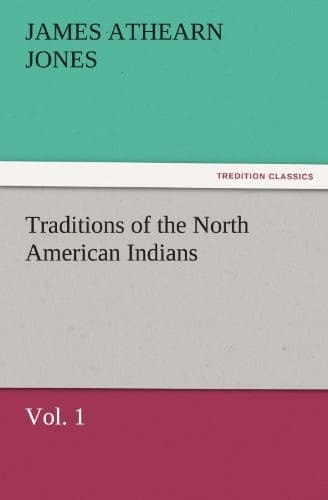
Traditions of the North American Indians, Vol. 1 — John Shaqi
Traditions of the North American Indians, Vol. 1Jones, James Athearn
History
Traditions of the North American Indians, Vol. 1
Jones, James Athearn
Indians of North America -- Folklore
_canis sibericus_, which is known to possess these singular traits of
canine sagacity and ferociousness. Additional proof was found in the
fact, that an Indian dog of the same species bit M. Verdier in his heel,
setting his teeth in precisely the same spot, where, some years before,
a Tartar dog had placed his, making but a single scar. He caused an
Iroquois cur to be tied by his tail to a log of wood, and the celerity
with which he drew it, yelping and screaming over a bed of ice, fully
convinced M. Verdier that he was a legitimate descendant from those
which perform the part of dray-horses among the Tartars. So much for
canine resemblances, which one would think of little importance, yet
were the chief prop to a learned theory upon this very subject,
published some years ago by an erudite American gentleman.
His inquiries concerning the other object of his mission were as deep,
and his conclusions as profitable. It may be remembered, that the
principal aim of the Society in sending M. Verdier to America, was to
ascertain who were its primitive inhabitants, and the builders of the
stupendous mounds found there. Having, by severe study, mastered the
Indian language and its numerous dialects, he assumed the dress of a
chief, and set out for the Ohio. He took with him seven Indian chiefs
belonging to the Seneca tribe, great warriors, great talkers, and great
smokers, who could live seven days without food, and feast the next
seven without intermission. Their names, rendered into English, were The
Flying Medicine, The Hollow Bear, The Little Dish, The Wicked Cow, The
Black Mocassins, The Big Thief, and The Guard of the Red Arrows. The
party were provided with parched corn and jerked beef, the common
hunting provisions of the Indians. Though filled with pacific
intentions, and meaning to rely for safety principally on the calumet,
or pipe of peace, they nevertheless went completely armed. It would have
ill suited Indian ideas of dignity and honour had they left behind what
they believe to be the essential emblems of both.
Public-domain text, read in full here on John Shaqi.
Reviews
Reviews
No reviews yet
Be the first to share your thoughts on this work.
Join the Discussion
Join the discussion
Sign in to leave a comment or review.
Sign InorCreate an account