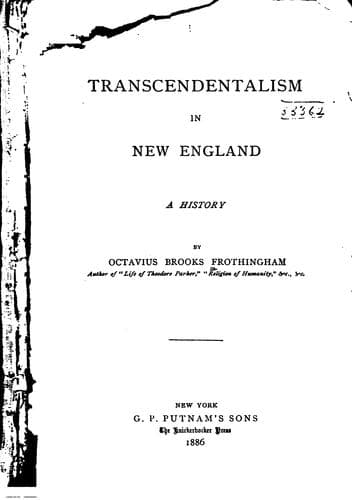
Transcendentalism in New England: A HistoryFrothingham, Octavius Brooks
Philosophy
Transcendentalism in New England: A History
Frothingham, Octavius Brooks
Transcendentalism (New England)
"Conversation presupposes a common sympathy in the subject, a great
equality in the speakers; absence of egotism, a tender criticism of
what is spoken. Good discourse wins from the bashful and discreet
what they have to speak, but would not, without this provocation.
The forbidding faces are Fates to overbear and blemish true
fellowship. We give what we are, not necessarily what we know;
nothing more, nothing less, and only to our kind; those playing
best their parts who have the nimblest wits, taking out the
egotism, the nonsense, putting wisdom, information in their place."
Mr. Alcott therefore forsook the platform, seldom entered the pulpit,
adopted the parlor, and made it what its name imports, the talking
place. Collecting a company of ladies and gentlemen, larger or smaller,
as nearly as possible of similar tastes and culture, he started a topic
of general interest and broad scope--usually one of social concern with
deep roots and wide branches,--and began his soliloquy in a calm and
easy strain, throwing out suggestions as he went on, and enticing
thoughts from the various minds present. If none responded or
accompanied, the discourse proceeded evenly till the measure of an hour
was filled. If the company was awake, and sympathetic, the soliloquy
became conversation and an evening full of instruction and entertainment
followed. When circumstances favored--the room, decorations, atmosphere,
mingling of elements--the season was delightful. The unfailing serenity
of the leader, his wealth of mental resource, his hospitality of
thought, his wit, his extraordinary felicity of language, his delicacy
of touch, ready appreciation of different views, and singular grace in
turning opinions towards the light, made it clear to all present that to
this especial calling he was chosen. For years Mr. Alcott's
conversations have been a recognized institution in Eastern and Western
cities. Every winter he takes the field, and goes through the Northern
and North Western States, with his scheme of topics. The best minds
collect about him, and centres of influence are established that act as
permanent distributors of culture. The noble idealism never pales or
falters. Neither politics, science, financial convulsion, or civil war,
disturb the calm serenity of the soul that is sure that mind is its own
place, and that infinite and absolute mind is supreme above all.
XI.
THE CRITIC.
Public-domain text, read in full here on John Shaqi.
Reviews
Reviews
No reviews yet
Be the first to share your thoughts on this work.
Elsewhere in the archive
Join the Discussion
Join the discussion
Sign in to leave a comment or review.
Sign InorCreate an account