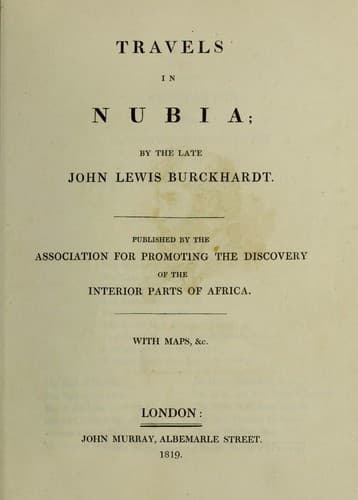
Burckhardt, John Lewis, 1784-1817; Nile River Valley -- Description and travel; Nubia -- Description and travel
The Bosnian soldiers built the three castles, or rather repaired
the existing fabrics, at Assouan, Ibrim, and Say; and those who
garrisoned the castles obtained certain privileges for themselves,
and for such of their descendants as should continue to occupy the
castles, and the territory attached to them; one of these privileges
was an exemption from all kind of land tax, which Selym had then
for the first time imposed throughout his dominions; and as the
country was thought incapable of affording food sufficient for the
soldiers, an annual pension was likewise assigned to them out of the
Sultan’s treasury at Cairo; the pay of the garrison of Ibrim was
four purses, now equal only to £100., but then probably worth four
times that sum. They were also made independent of the Pashas of
Egypt. While the Pashas had any influence in Egypt, these pensions
were paid; but the Mamelouks generally withheld them. Hassan Coosy,
with his forces, chiefly cavalry, governed Nubia, while he lived,
and was constantly moving from place to place; he paid an annual
Miry to the Pasha of Egypt, but in other respects was independent of
him. The descendants of such of the Bosnian soldiers as intermarried
with the Gharbye and Djowabere tribes still occupy the territories
assigned to their ancestors at Assouan, Ibrim, and Say; and they
continue to enjoy immunity from taxes and contributions of every
kind. They call themselves Kaladshy, or the people of the castles,
but are distinguished by the Nubians by the appellation of Osmanli
(Turks). They have long forgotten their native language; but their
features still denote a northern origin, and their skin is of a
light brown colour, while that of the Nubians is almost black. They
are independent of the governors of Nubia, who are extremely jealous
of them, and are often at open war with them. They are governed by
their own Agas, who still boast of the Firmauns that render them
accountable only to the Sultan.
Public-domain text, read in full here on John Shaqi.
Reviews
Reviews
No reviews yet
Be the first to share your thoughts on this work.
Elsewhere in the archive
Join the Discussion
Join the discussion
Sign in to leave a comment or review.
Sign InorCreate an account