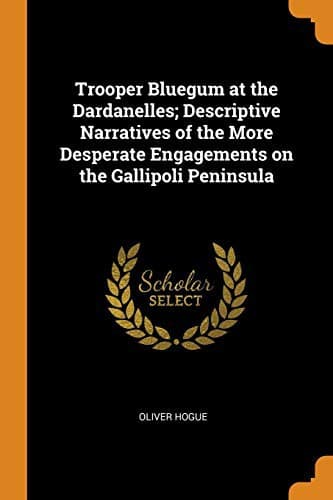
Trooper Bluegum at the Dardanelles: Descriptive Narratives of the More Desperate Engagements on the Gallipoli PeninsulaHogue, Oliver
History
Trooper Bluegum at the Dardanelles: Descriptive Narratives of the More Desperate Engagements on the Gallipoli Peninsula
Hogue, Oliver
World War, 1914-1918 -- Campaigns -- Turkey -- Gallipoli Peninsula; World War, 1914-1918 -- Personal narratives, Australian
Just as I walked out of my dug-out this morning two men were shot by a
machine-gun not ten yards off--one in the shoulder and the other in the
eye. Two seconds ago a big shrapnel shell burst right in front of our
dug-out. The bullets flew everywhere, and we bolted to shelter. No one
was injured. It is marvellous. Up to the present it has been the most
wonderful week in my life--full of excitement and hair-breadth escapes.
Sunday came--May 30. The day dawned peacefully, minus the artillery
duel which ordinarily heralds the coming day. The blue Mediterranean
lay like a sea of glass at our feet. Imbros Island, opposite Anzac
Cove, lay wreathed in the morning mists. Torpedo boats glided to and
fro across the waters, lest some adventurous submarine should attack.
All was peaceful. Ashore, the wild flowers blossomed on the hillsides.
Birds chirruped contentedly in the scrub. Soldiers released from a
night's vigil in the trenches sauntered along the winding road to the
beach, dived in and sported freely in the sea. The transport mules
munched contentedly, and the Indians lay back smoking hubble-bubbles.
Light Horsemen (minus their horses) and infantrymen emerged from their
dug-outs and stretched themselves lazily in the sun.
It was too good to last--too good altogether. Some activity behind the
Turkish trenches attracted the attention of our artillery observation
officers, and our guns boomed out a warning. It was evidently
disregarded by the enemy, for more of our guns opened fire. Then the
Turks replied. The hills around spat fire, and the valleys echoed and
re-echoed with peals of thunder. Shrapnel shells and "Jack Johnsons"
went screaming overhead, to burst with a deafening report over our
trenches and bivouacs. Our guns were so cunningly concealed that the
German artillery officers could not locate them, and for the most part
their shells ploughed up the unoffending earth, or made harmless rents
in the atmosphere. Our artillery had better success. Our guns tore down
the Turkish trenches, and the Turks flying to shelter were met with a
devastating fire from our machine-guns. Still, we did not have it all
our own way. Now and then a shell landed in our trenches, and the story
of it was told in the casualty lists.
About one o'clock the artillery duel began, and it continued without
cessation for over an hour. The roar was awful. Bullets spattered
everywhere. The marvel was that our losses were so few. Gradually
the big guns grew silent. Our warships aimed a few salvos on to the
enemy's position, then drew off. Soon there was comparative calm. There
remained but the interminable fusillade of musketry which never wholly
ceased on the trenches round Anzac.
Public-domain text, read in full here on John Shaqi.
Reviews
Reviews
No reviews yet
Be the first to share your thoughts on this work.
Join the Discussion
Join the discussion
Sign in to leave a comment or review.
Sign InorCreate an account