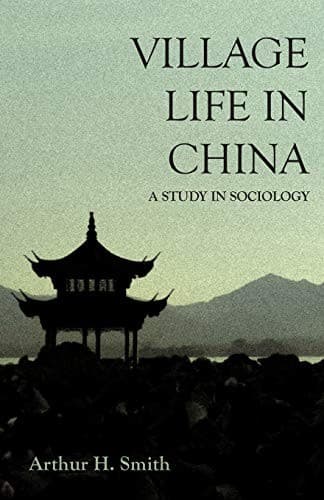
Village Life in China: A Study in SociologySmith, Arthur H.
General
Village Life in China: A Study in Sociology
Smith, Arthur H.
China -- Social life and customs; Villages
Of the affairs which concern the government, the most important is the
imperial land or grain-tax, the nature of which and the mode of collecting
which vary greatly. Calls are constantly made by the local officials for
government transportation, provision for the entertainment of officers on
government business, materials for the repairs of the banks of rivers,
work on river-banks, patrols for the Imperial roads at the season of year
when travel is at its maximum, and many other similar objects.
The medium through whom the District Magistrate communicates with the
village, is the "local constable," (called the _ti-fang_ or _ti-pao_,) and
this individual has necessarily intimate relations with the headmen, who
constitute the executive board, through which alone definite action is
taken.
Among affairs which relate to a village as such, are to be named the
construction and repair of the wall (if it has one), and the care of the
gates (if they are closed at night), the establishment and supervision of
fairs and markets, the engagement of theatrical companies, the organized
watching of the crops, together with the punishment of persons detected in
violating the rules which have been agreed upon, the building and repair
of temples, the sinking of wells for the use of the village, or the
cleaning of those which are already in use, and a great variety of other
similar duties, depending upon the situation of the village and its
traditions and circumstances.
It is a noteworthy fact that the government of China, while in theory more
or less despotic, places no practical restrictions upon the right of free
assemblage by the people for the consideration of their own affairs. The
people of any village can if they choose meet every day in the year. There
is no government censor present, and no restriction upon liberty of
debate. The people can say what they like, and the local Magistrate
neither knows nor cares what is said. The government has other security
for itself than espionage, and by a system of graded responsibility, is
able to hold all its subjects under strict control. But should
insurrection break out, these popular rights might be extinguished in a
moment, a fact of which all the people are perfectly well aware.
The methods of Chinese management being what they are, it is not
surprising that those who are in the position of headmen find it, or
rather make it to their advantage to stay in it. The ways in which this
comes about are numerous.
There is in every village an unceasing supply of matters which do not
belong to the public, but which must be adjusted by some man or men who
are in the habit of transacting business, and who not only know what is to
be done but how to do it. There are always Chinese who like to engage in
these affairs, such as the adjustment of domestic quarrels, differences
between neighbours, and the like. The headmen of the village will be
certain to be frequently called upon for services of this sort.
Public-domain text, read in full here on John Shaqi.
Reviews
Reviews
No reviews yet
Be the first to share your thoughts on this work.
Elsewhere in the archive
Join the Discussion
Join the discussion
Sign in to leave a comment or review.
Sign InorCreate an account