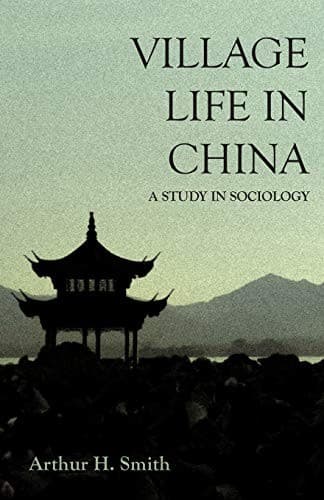
Village Life in China: A Study in SociologySmith, Arthur H.
General
Village Life in China: A Study in Sociology
Smith, Arthur H.
China -- Social life and customs; Villages
The world is still large, and it has, and for ages will doubtless continue
to have, ample room for all the additional millions which its existing
millions can produce. The world was never so much in need of the Chinese
as to-day, and never, on the other hand, were the Chinese more in need of
the world. But if China is to hold its own, much more if it is to advance
as other nations have advanced and do advance, it must be done under the
lead of new forces. Confucianism has been a mighty power to build up, and
to conserve. But Confucianism with its great merits has committed many
"Deadly Sins," and of those sins it must ultimately suffer the penalty.
Confucianism as a developing force is a force, which is spent. Sooner or
later it must give way to something stronger, wiser, and better.
XXIV
THE MONOTONY AND VACUITY OF VILLAGE LIFE
It is difficult to project ourselves backward to the times of our
great-grandfathers when mails were carried on horseback, the postman
leisurely knitting stockings as he rode. Yet however slow, measured by
modern standards, the rural life of a century and more ago, it was a
varied life, ultimately anastomosing with the great currents of the age.
The rate of progress of thought has no necessary correlation to the
versatility or the virility of mental processes. Our ancestors may perhaps
have been peasants, but they were an integral part of the land in which
they dwelt, and they rose and fell with the national tides of life like
boats in a harbor.
A Chinese village is physically and intellectually a fixture. Could one
gaze backward through a vista of five hundred years at the panorama which
that vast stretch of modern history would present, he would probably see
little more and little less than he sees to-day. The buildings now
standing are not indeed five hundred years old, but they are just such
houses as half a millennium ago occupied the same sites, "similar and
similarly situated." Some families that then lived in adobe dwellings now
flourish under roofs of tile in houses of brick. Other families have
become extinct. Now and then a new one may have appeared, but this is
irregular and exceptional. Those who now subsist in this collection of
earth-built abodes are the lineal descendants of those who lived there
when Columbus discovered America. The descendants are doing just what
their ancestors did, no more, no less, no other. They cultivate the same
fields in the same way (albeit a few of the crops are modern); they go to
the same markets in the same invariable order; buy, sell, and wear the
same articles; marry and are given in marriage according to the same
pattern.
Public-domain text, read in full here on John Shaqi.
Reviews
Reviews
No reviews yet
Be the first to share your thoughts on this work.
Elsewhere in the archive
Join the Discussion
Join the discussion
Sign in to leave a comment or review.
Sign InorCreate an account