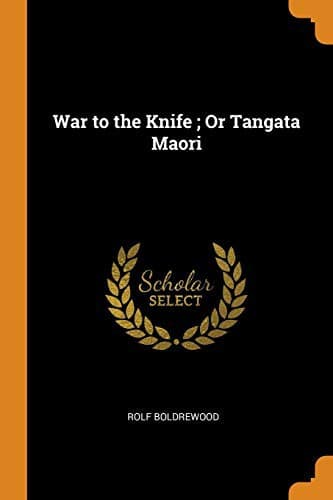
"War to the Knife;" or, Tangata MaoriBoldrewood, Rolf
General
"War to the Knife;" or, Tangata Maori
Boldrewood, Rolf
Māori (New Zealand people) -- Fiction; New Zealand -- Fiction
Orakau was abandoned. The Gate Pah had been lost and won. It had also
been avenged at Te Ranga, where a hundred and twenty Ngaiterangi
warriors lay dead in the trenches, and the 43rd had full _utu_ for the
slaughter of their officers and comrades. With few exceptions, all the
high chiefs were among the slain. The boastful Rawiri, the chivalrous
Te Oriori, the Christian convert Henare Taratoa, had fought their last
fight. On the body of the latter was found a letter in the native
language, and the text, "If thine enemy hunger, give him food; if he
thirst, give him water."
Orakau was the Flodden of the Maori nation. As the fugitives from the
blood-stained pah trooped across the fords of the Puniu on the night
succeeding the fight, the parallel may well have occurred to Sir Walter
Scott's countrymen, so many of whom have adopted New Zealand as their
home.
"Tweed's echoes heard the ceaseless splash,
While many a broken band,
Disordered through her currents dash,
To gain the Scottish land."
The war was practically over after the fall of Te Ranga. The turbulent
Waikato tribes had lost their high chiefs, their bravest young men. The
flower of the land of Maui lay low. The universal wail rose high in
a hundred kaingas. Taught by bitter experience, the more intelligent
natives had arrived at the conclusion that the resistless pakeha must
be obeyed. His soldiers and his sailors, his volunteers and his allies
(leading tribes of their own blood), his guns and his mortars, were all
too powerful. Their chiefs who had visited England and seen the might
of Britain had told them as much before. But, strong in the pride of
their own power and the oracles of the Tohungas, they did not believe
it. Now it was too plain to be disputed. Defeat was written in the
burned and disabled pahs, in the ruined farms, in the confiscated lands
of their ancestors, which they had no power to redeem. This, however,
was in strict accordance with Maori usage, with the law and custom of
Rauparaha, of Hongi Ika, of Te Waharoa, those ruthless conquerors and
their ancestors who had ravaged and annexed the lands of tribal foes
from time immemorial. _Væ Victis_ was one of the oldest of human laws.
It was theirs also. One grim feature of a returning and successful
expedition, the train of downcast or weeping slaves, driven along with
blows and shouts of derision, was wanting in this campaign. No heads of
chiefs or warriors were tossed out or stuck on poles as village after
village was passed. No bound captive was handed over to the relations
of the fallen for slow and dreadful torture. On the contrary, all the
combatants, save those convicted of murder or outrage, were dismissed
to their homes, while their wounded were tended in the hospitals of
these strangely constituted pakehas with the same care and skilfulness
as their own.
Public-domain text, read in full here on John Shaqi.
Reviews
Reviews
No reviews yet
Be the first to share your thoughts on this work.
Elsewhere in the archive
Join the Discussion
Join the discussion
Sign in to leave a comment or review.
Sign InorCreate an account