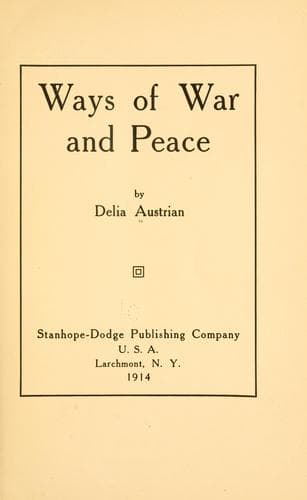
Peace; World War, 1914-1918 -- Personal narratives
Before leaving the Hostel I was invited into a garden gay with roses and
carnations and the merry voices of happy girls. They were gathered in
little groups, drinking tea, chatting French, and discussing the work
they had accomplished that day. A pretty American girl approached me,
saying, "Will you have tea, bread and butter?" In a few minutes she
brought me tea on a pretty Chinese tray.
We laughed and chatted in turn, telling of our work and aspirations. As
we sat in the beautiful twilight of that summer day we never dreamed
that Paris would be threatened in a few weeks and the Students' Hostel,
so dear to American artists and students, would become deserted.
PARIS, PAST AND PRESENT
I hate to think of Paris in a sombre tone, for Paris likes to be gay at
all times. It is the natural tempo of the city, for whatever may be the
follies of this Parisian capital, she is always beautiful, lively and
gay. Her large, wide boulevards are now deserted, except for an
occasional regiment of French and English troops that hurry along, or
now and then an auto-car speeding up the boulevard carrying some high
officials on an important mission.
Most of the fine shops in the Avenue de L'Opera and the Rue de La Paix
are closed and heavily shuttered while their handsome stock of pearls
and other jewels, fine dresses and furs, are hidden in vaults and put
away in packing trunks. Even at noontime, when the streets are usually
thronged with the working-girls hurrying to their luncheon or out for a
half an hour's exercise, the streets are deserted except for the
appearance of some tired-looking shopgirl trying to earn a few cents in
spite of present conditions. The beautiful hotels, always crowded this
time of the year, are empty except for a few Americans who are
lingering, waiting for a boat to take them home. The large cafés on the
boulevard are all closed. It is only the small tea-rooms and bars that
dare hope for any business.
The smart people who live out near the Bois have heard too much about
German Zeppelins to venture out on a beautiful day, and forbid their
nurses taking the children into the park. It is only the poorer people
in the Latin Quarter who insist in taking their children in the
beautiful gardens of the Luxembourg for an airing. As night falls, the
people gather in crowds to watch the skies. They have let their
imaginations dwell so long on Zeppelins and bombs that many imagine they
see these awful implements of war when they are watching harmless stars.
Public-domain text, read in full here on John Shaqi.
Reviews
Reviews
No reviews yet
Be the first to share your thoughts on this work.
Join the Discussion
Join the discussion
Sign in to leave a comment or review.
Sign InorCreate an account