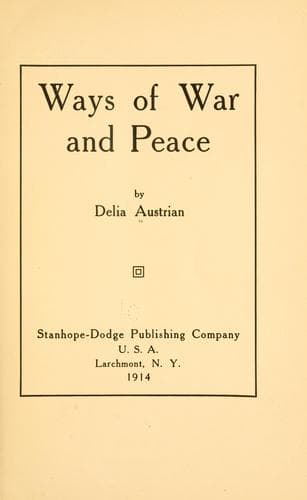
Peace; World War, 1914-1918 -- Personal narratives
At the other end of the city, they gather round the Eiffel Tower, which
now bears the highest artillery in the world. Here are placed immense
machine guns. Up at Montmartre, the people gather in little circles to
read the letters they have received from their soldier boys and to
discuss the possibility of Paris being captured. They have forgotten all
about their once lively dance-halls and cabarets. There are but few
artists left in this quarter now, for they have either gone home or to
the front, while the women and children amuse themselves reading the
last extra or listening to an organ-grinder giving them many patriotic
airs for a few sous.
How lonely and sad these vacant streets and boulevards look, contrasted
with their appearance on the 15th of July, which is France's national
holiday. Then there was dancing on nearly every street corner, made
livelier by the throwing of confetti, careless laughter and much
kissing. The Queen of Beauty ruled then, while now havoc and the
cruelties of war are in supremacy. Except for a few soldiers and
officers moving up and down in the Bois, that splendid park is quite
deserted. The famous cafés, such as Madrid and Armoneville, have closed
their doors. It is hard to imagine that these restaurants were visited
by no less than five thousand people during an afternoon of the races.
Less than two months ago, the great markets of Paris were crowded with
country people hurrying in with their carts, horses and mules. In a
short time they had distributed their splendid supply of meats,
vegetables, fruits, flowers and small merchandise without and within. By
seven o'clock the place was crowded with women of all social classes and
wealth. Now the great crowds have dwindled, for the markets only display
the barest necessities and the women only come and buy as they actually
need them.
It is said that thousands of women have been thrown out of employment,
for more than sixty per cent. of the women in Paris were working women.
No sooner had war been declared than most of the small shops closed
their doors and this threw hundreds of women out of work. A few of the
leading dressmaking establishments carried their main business over to
London, but they could not give employment to all their people. A few of
the large stores kept open for a while, but soon their men were called
to the front and so their business did not pay. I wonder what has become
of the great numbers of designers and artists who were dependent on
foreign purchase for their livelihood? Occasionally a pale, haggard girl
passes by, as though she was seeking employment in a designer's studio
or in an artist's atelier. But business is at a standstill and there is
only employment for a very few out of many.
Public-domain text, read in full here on John Shaqi.
Reviews
Reviews
No reviews yet
Be the first to share your thoughts on this work.
Join the Discussion
Join the discussion
Sign in to leave a comment or review.
Sign InorCreate an account