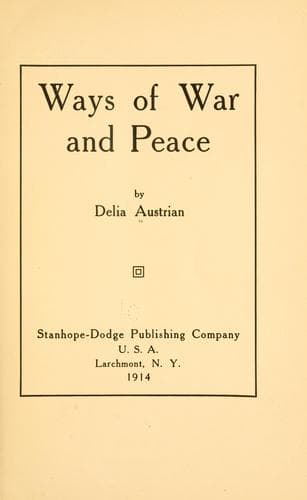
Peace; World War, 1914-1918 -- Personal narratives
I was told that the cannon-balls, bombs and other explosives were
carried into the country at night, as they did not want to take any
chance of igniting and killing the soldiers.
Besides those designed for active warfare, many were used to carry
messages over the battlefields and for the Red Cross service. I saw
dozens and dozens of handsome automobiles lined up on these car-trucks
carrying messengers and doctors across the frontier.
But German mobilization means every precaution possible for their
country as well as foreign aggression. Now and then I passed gangs of
workmen making ditches and trenches, repairing railroad tracks and
laying new ones. Every station was guarded by one or more sentries,
according to its size. They kept their eyes on every passenger who went
in and out of the station, and when they were the least bit doubtful
they asked for one's passport on short notice. I shall never forget a
picture of the morning I breakfasted at six o'clock in Erfurt. I and
some friends were just seated at table when a sentry approached us and
asked for our passports. He scrutinized each one carefully, and when he
was satisfied we were not spies he left us and approached a group of
Russians. They looked as exhausted as they were frightened as they
explained they had gotten permission to go home. When they reached the
frontier they were told they could not go across, and they found so many
of their countrymen on the border that there was not half room enough
for them, and they were on their way back.
Everywhere there were vigilant watchers looking for spies. Some were so
alert that they tried to make Russians out of harmless American
refugees, while others went so far as to accuse them of being spies. I
myself was sometimes accused of being a Russian, and had hard work to
prove my identity. Those Americans who had the daring to venture out in
their automobiles got the worst of it. The soldiers on watch thought
nothing of shooting at their cars and taking the innocent occupants
prisoners. A gentleman and his wife who went from Baden-Baden in the
Black Forest to Bad Kissingen were shot at and arrested five times
before they got there. Word was brought to the village that some French
spies were coming and that they should wait for them. The mob was there
to greet them with pitchforks and axes, and when they saw the French car
the peasants were sure that these were the people they were after.
Public-domain text, read in full here on John Shaqi.
Reviews
Reviews
No reviews yet
Be the first to share your thoughts on this work.
Join the Discussion
Join the discussion
Sign in to leave a comment or review.
Sign InorCreate an account