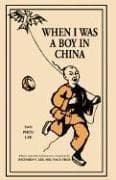
China -- Social life and customs -- 1644-1912; Lee, Yan Phou, 1861-1938?
Confucianism, the religion taught by Confucius, a great philosopher
who lived about five hundred years before the birth of Christ—is the
religion of the Emperor, of the large body of officials, and of the
educated classes generally. This system is mainly moral and practical,
in opposition to the spiritual and the speculative. It teaches mankind
to perform certain duties; for instance, to honor and serve one’s
parents, to be obedient and deferential towards one’s elders, to be
loyal to one’s lawful sovereign and to live harmoniously with one’s
wife. These precepts are expanded and extended so that they are adapted
to all the requirements of modern society. Confucius never taught the
existence of God, for he felt that he did not know anything about
Him; nor did he advance any theories concerning heaven and hell.
He simply taught men to love goodness for its own sake. But this
lofty philosophy, however it might have suited the character of the
philosopher and his personal disciples, never was popular in the sense
that people generally accepted it and practised it. Still the Chinese
have a real reverence for Confucius and his precepts, and, excepting
the few who are professed Buddhists and Taoists, will call themselves
Confucianists, although they may not understand all that this master
taught, and in spite of the fact that they worship gods of the other
systems of religion. The gods of the Confucianists, pure and simple,
are heaven and earth, the spirits of the winds and of the five great
mountains, the household gods (answering to the Penates of the Romans)
and one’s ancestors.
Public-domain text, read in full here on John Shaqi.
Reviews
Reviews
No reviews yet
Be the first to share your thoughts on this work.
Join the Discussion
Join the discussion
Sign in to leave a comment or review.
Sign InorCreate an account