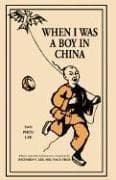
China -- Social life and customs -- 1644-1912; Lee, Yan Phou, 1861-1938?
Taoism was formerly a pure system of philosophy, but it by degrees
sadly degenerated into a sect which borrowed its doctrines from
Buddhism and Confucianism and has had engrafted upon it from time to
time innumerable superstitions. The priests of this sect are men whose
business is to impose on the people, and who make a living out of their
superstitious fears. Thus, if a person falls sick, or is supposed to be
possessed by an evil spirit, a Taoist priest is summoned to intercede
for him and to offer up vows for his recovery. So also when a person
dies, one of them rings a bell in front of the corpse, and, by mumbling
a lot of gibberish, pretends to open the gate of the lower world for
the departed soul to enter. A piece of silver is previously put in the
mouth of the dead person to pay toll with. Almost everything imaginable
is worshiped by the Taoists and those who believe in the efficacy of
their intercessions. Everything has a spirit or spiritual counterpart
in the next world; and this spirit, according as it is propitiated by
offerings, or offended by lack thereof will work good or evil to the
man. There are the gods of war, literature, wealth, and medicine; and
there are the goddesses of married women and of seamen. These are a few
of the nobler specimens of the idols which are worshiped. The fertile
imagination of the Chinese fills every lake and river with spirits,
every street and house with ghosts, and every wood and mountain with
deities. They believe the next world to be a shadow of this; that the
dead have everything in the world below which they had on earth—only
these premises exist as shadows instead of substance.
Buddhism entered China about the time of Christ. One of the Emperors
of the Han dynasty, having heard of the rise of a great sage in the
West, sent an embassy to see him and to bring back his teachings.
Doubtless the reputation of the marvelous Nazarene had been spread in
the northern part of China by European and Arabian traders and had
reached the ears of the Chinese monarch. The embassy set out on their
long, tedious and perilous journey. But while passing near India, they
heard of Buddha and his sublime teachings. They supposed him to be the
sage they were seeking, and they turned aside into India. Buddha had by
that time been absorbed in Nirvâna—he was dead; and the embassadors
contented themselves with carrying back his books to China. Under the
lead of the emperor, Buddhism was accorded a cordial reception in the
empire. But modern Buddhism is not what Buddha intended it to be. For
instance, idolatry which he never taught, is practised.
Public-domain text, read in full here on John Shaqi.
Reviews
Reviews
No reviews yet
Be the first to share your thoughts on this work.
Join the Discussion
Join the discussion
Sign in to leave a comment or review.
Sign InorCreate an account