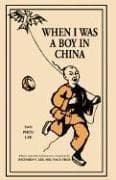
China -- Social life and customs -- 1644-1912; Lee, Yan Phou, 1861-1938?
Buddhist priests and nuns live apart from other people in monasteries
and nunneries. They wear a different costume, and have their heads
entirely shaven. They live on a vegetable diet, and obtain their food
by their chants, by singing masses and often by begging. People believe
that wealth, happiness and longevity can be procured through them, and
so, according to their means, they offer these priests and nuns money
with which to buy incense for Buddha and oil to burn in his lamps,
also that a number of prayers shall be offered up in their behalf.
Accordingly these priests and nuns are enabled to live a life of sloth.
Sometimes, however, as if to break the monotony of their existence,
they commit crimes which expose them to the vengeance of outraged law.
The Buddhist monasteries and nunneries were formerly houses of refuge
for a certain class of criminals. Those who went there and became
professed Buddhists were exempt from punishment.
The educated classes despise both Taoists and Buddhists. Nevertheless
in sickness, or in death, they patronize them. This shows that our
religious instinct is so strong that a man will worship anything rather
than nothing.
As I said, there is nothing in Chinese religions corresponding to the
Christian Sabbath. In none of our festivals, holidays or anniversary
celebrations, does the idea of rest enter. Instead of churches, we
have temples which embody the highest architectural skill of the
Chinese. They are built of brick, one story in height, oftentimes very
spacious, comprising a series of buildings with alternate courts, and
flanked by others designed as living-rooms, for the priests or nuns.
The presiding idol is enshrined in the innermost hall, and dressed in
real clothes fashioned in accordance with its character. There are
usually placed in every temple a large number of idols inferior in
power to the chief idol. Before the chief idol is burnt incense-sticks
and candles and costly sandalwood. Food is offered on stated days,
as well as on ordinary days; the worshipers believe that the essence
of the food is eaten by the spirit of the god and that the substance
remains for their own enjoyment. From the fact that the devotees
themselves eat the food offered to the idol, people reconcile economy
with profuse expenditure, by pretending to be religious with the view
to gratifying their own appetites. Idolatry in China is _not_
founded on the belief that wood and stones and other inanimate objects
are in themselves worthy of worship; but on account of the spirits
which reside or take up their abode therein.
Thus the idolatry of the Chinese is superior to the brutal worship of
India, and to the brutish worship of the Egyptians. But still it exerts
a baneful influence on the minds and hearts of its subjects.
Public-domain text, read in full here on John Shaqi.
Reviews
Reviews
No reviews yet
Be the first to share your thoughts on this work.
Join the Discussion
Join the discussion
Sign in to leave a comment or review.
Sign InorCreate an account