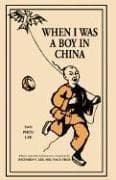
China -- Social life and customs -- 1644-1912; Lee, Yan Phou, 1861-1938?
Our servants having, after much haggling, procured the wherewithal for
breakfast, let us return to our kitchen and see the meal prepared. Your
first exclamation is sure to be, “How smoky it is! Oh, stifling! Let us
come away!” Well, this kitchen certainly is not so cosey and neat as
American kitchens usually are. The smoke does not go out by chimney,
but through the skylight and wherever it finds an outlet. The walls
are black with the accumulation of years of soot. That large stove in
the corner is built of brick. The smoke issues through an aperture in
the back and curls upward through the opening into the clear sky. On
the top of this stove is a large round iron spider about three feet
in diameter. In this rice is cooking. Straw being cheaper, is burnt
in this stove instead of wood, and some one is required to feed the
fire constantly. Turning to the left, we see little clay stoves, on
which food is frying in spiders, or boiling in earthen pots, over a
wood fire. Grandmother and her daughters are superintending the various
preparations. Vegetables are cut into bits and boiled with pork or
mutton, making a soup. Greens are boiling. Fish is steaming, frying, or
stewing with or without vegetable. Meat is cut fine; when the spider
becomes heated lard is put in it, then pieces of onion, then the shred
meat, and all is stirred till well embrowned; then turnips, potatoes,
and sometimes other vegetables are added and, after boiling water is
poured in, the whole is left to simmer and stew. All food, we observe,
is cut in pieces before being cooked, or else before serving. For no
knives, no forks, are used.
At ten A. M. the tables are set; those for men either in
the wings, or in their rooms; those for the women in their common
sitting-room or parlor. Each table will seat eight persons. No table
linen is used. Chop-sticks and spoons are placed before each place.
The food is brought in large bowls or plates. Rice is carried to the
table in a wooden pail or wicker basket, from which it is served in
small bowls. The servants summon the inmates to breakfast. The younger
ones do not presume to sit till their elders are seated; then after
making a show of asking permission to eat, when the elders gravely nod
assent, the breakfast begins. Soup is taken first; then each person,
holding the chop-sticks in the right hand and the bowl of rice in the
left, lifts his food to his mouth, pushes the lumps in with the sticks,
alternating this motion with picking meat, fish or vegetables from the
dishes which are common to all. One must take only from that side of
the plate which is nearest to him, however. It is a breach of etiquette
to reach over to the opposite side. When one finishes, he bids the
rest to “eat leisurely,” which is our mode of saying, “Excuse me!” The
Chinese invariably wash their hands and faces after every meal.
Public-domain text, read in full here on John Shaqi.
Reviews
Reviews
No reviews yet
Be the first to share your thoughts on this work.
Join the Discussion
Join the discussion
Sign in to leave a comment or review.
Sign InorCreate an account