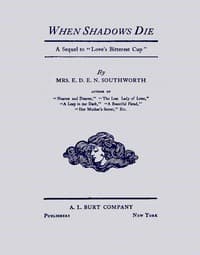
When shadows dieSouthworth, Emma Dorothy Eliza Nevitte
General
When shadows die
Southworth, Emma Dorothy Eliza Nevitte
American fiction -- 19th century
“You need not stir, young sir,” said the earl; and turning to his
brother-in-law, he added: “Your apartments are secured, Force. As soon
as I received your telegram saying that you would join me here, I sent
off a dispatch to secure them for you. I hardly need to remind you that
you are all my guests while we are together. But you traveled by the
night express. You must have done so to reach this place so early in the
day; so you will want to go to your rooms. After you have refreshed
yourselves, join me here at breakfast.”
Le arose at the earl’s request, and pulled at the bell knob with a vigor
lent by his impatience at being called from the side of his beloved, and
which soon brought a servant to the room.
“Show these ladies and gentlemen to the apartments prepared for them,”
said the earl.
The man, with many bows, preceded the party from the room and conducted
them to a large family suit of rooms on the third floor, overlooking the
New Promenade.
The travelers remained some weeks at Baden-Baden. The baths were doing
the earl much good. Mr. Force also needed their healing powers.
Somewhere on his travels with the young people, not having his wife to
look after him, he had contracted rheumatism; he could not exactly tell
when or where or how, whether from exposure or rain and mist on the
mountains, or from fishing on the lakes, or from sleeping in damp
sheets, and drinking the sour wine of the country, or from all these
causes put together, he could not say, so gradually and insidiously had
the malady crept upon him, taking its chronic and least curable form. He
had not mentioned one word of this in any of his letters, nor had he
spoken of it on his arrival.
“Indeed,” as he afterward explained, “never having had any experience to
guide me, I did not recognize the malady at first, but merely took the
feeling of heaviness in all my frame for over-fatigue, and even when
that heaviness, being increased, became a general aching, I still
thought it to be the effect of excessive fatigue. I was slow to learn
and slower to confess that I had the special malady of age—rheumatism.
However, I thank Heaven it is not acute. It has never laid me up for a
day,” he added, laughing at his misfortune.
Indeed, his troubles seldom kept him from making up parties for
excursions to the various objects of interest in the town and its
environs.
Only when the days were both cold and wet, as is sometimes, not often,
the case in early autumn there, did Abel Force allow his young folks to
go forth alone under the care of their mother and the escort of
Leonidas, while he stayed within doors and played chess with the invalid
earl.
In this way the brothers-in-law became better acquainted and more
attached.
“I wish you were an Englishman, Force,” said the earl one day, when he
had just checkmated Abel and was resting on his laurels.
“Why?”
“Not because I do not admire and respect your nationality, but simply
for one reason.”
“What is that?”
Public-domain text, read in full here on John Shaqi.
Reviews
Reviews
No reviews yet
Be the first to share your thoughts on this work.
Join the Discussion
Join the discussion
Sign in to leave a comment or review.
Sign InorCreate an account