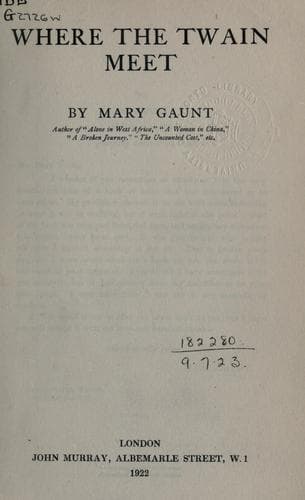
Black people -- Jamaica; Jamaica; Slavery -- Jamaica
At Little River in 1670 the lands were surveyed by Richard and Mary
Rutledge, and other people took to themselves parcels of land there,
varying in size from 50 to 200 acres. It is a rich country, this island
that the Spaniards held so long, with rivers running down from the
wooded mountains and in the rich river-bottoms almost any tropical plant
will grow. The farther I went to the north-west the more fertile I found
the country, and at Lucea, Lucea with the lovely little harbour well
sheltered from storms, they grow yams, yams that are a byword in a land
that will always grow yams. All along the road by the sea, that lovely
road, came creaking great carts drawn by oxen--yes, even in these days
of motors, bullock drays driven by shouting black drivers, piled high
with Lucea yams. Yam, I may interpolate, is a valuable foodstuff. I want
butter and milk to it, but the natives, the Creole descendants of the
slaves, eat it with coconut oil. The food values of the yam and the
potato--the Irish potato, as they quaintly call it in Jamaica--are
probably about the same, but you get a great deal more for your money
in a yam. It is _the_ food of the common people, while the potato is a
luxury. A black man once brought me, as a Christmas present, a cardboard
box neatly tied up with pink ribbon, and in it wrapped up in white
tissue paper were four “Irish” potatoes! But even potatoes will grow in
this goodly land--what will not grow here--I believe they cannot raise
primroses--and yet these early settlers were not a success.
“In the second generation,” says the author of _Old St James_, “they had
all died out or gone, and the only memorials were the graves.”
They used to say in those days, and indeed long after, that unless the
population were recruited from the Old Country every white would have
gone in seven years. We may take that statement for what it is worth.
The Briton, wanderer as he is, has a fixed idea in his own mind that
the only place where children can really be reared properly is in those
islands in the North Atlantic that he himself quitted in his youth. Even
so late as when I was a young woman, I have heard battles royal on
the subject of the degeneration of Australia, and there were men from
England who held, and held strongly, that Australia cut off from Britain
for ten years would degenerate into the savagery of the people the
English had found there at the first settlement! There was no stamina,
said these ultra English, in young Australia, in young New Zealand; even
the animals became degenerate. But behold, over Australia's plains range
the largest flocks of sheep in the world with the very best wool (at
least it fetches the highest prices in London), and at Gallipoli the
stalwart sons of Anzac proved once for all that they too were Britons,
worthy sons of the Empire whose flag they were upholding.
Public-domain text, read in full here on John Shaqi.
Reviews
Reviews
No reviews yet
Be the first to share your thoughts on this work.
Join the Discussion
Join the discussion
Sign in to leave a comment or review.
Sign InorCreate an account