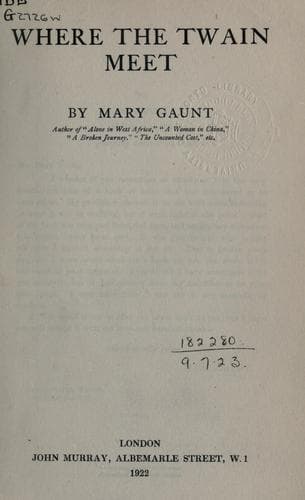
Black people -- Jamaica; Jamaica; Slavery -- Jamaica
who have never seen a glorious sunset and know not the scent of a
pimento grove.
That meant for Columbus a weary time of waiting among dissatisfied
men, for what adventurer, who had come out seeking gold and silver and
precious stones, would be content to lie sweltering--rotting, I expect
they called it--even in the most beautiful cove in the world. Presently
the story went round that Columbus had been banished, his prestige was
gone, and two brothers named Porras rose as leaders of the mutineers.
Even the life of the veteran was in danger. As I write this on my
verandah, looking out over the blue Caribbean, with a little pauperised
tingting bird sitting on the rail calling aloud that I have always
provided his breakfast and that even little slim black birds with bright
yellow eyes can be led astray by too much ease and comfort, I seem to
realise with what bitterness the iron entered into the soul of the
old man. There was no actual danger, they had enough to eat, and could
sleep, sheltered and in peace, and sooner or later he thought help would
come. Patience, he preached, patience. But the mutineers would have
their way. They built or stole ten canoes and went out along the coast,
ravaging and pillaging. The first of the pirates who ravaged the coasts
of Jamaica and their victims, were not the white people but the gentle
brown folk whom Columbus had designed to make peacefully their slaves.
“They wandered from village to village,” says his chronicler, “a
dissolute and lawless gang, supporting themselves by fair means or foul,
according as they met with kindness or hostility, and passing like a
pestilence through the land.”
I can almost understand it and forgive. Almost anything was better than
sitting still watching the sun climb over the mountain in the morning
and sink into the sea in the evening, waiting, waiting, waiting, for the
relief that was so long in coming.
For Mendez having got to Hispaniola had then to make his way to Spain,
and it was not till the 28th June 1504 that relief ships came sailing in
and Columbus was able to leave Jamaica. He died in 1506, and by way of
recompense, I suppose, in 1508 his son Diego was appointed Governor of
the Indies, and in 1509 went out to San Domingo, taking with him his
wife, who was a cousin of King Ferdinand.
Public-domain text, read in full here on John Shaqi.
Reviews
Reviews
No reviews yet
Be the first to share your thoughts on this work.
Join the Discussion
Join the discussion
Sign in to leave a comment or review.
Sign InorCreate an account