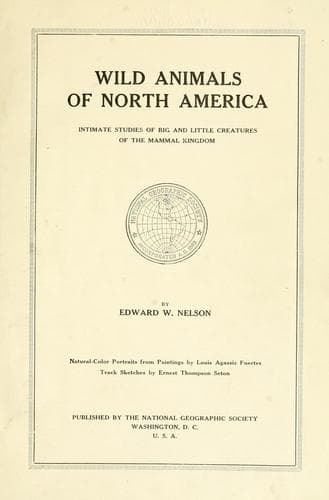
Wild Animals of North America: Intimate Studies of Big and Little Creatures of the Mammal KingdomNelson, Edward William
Science
Wild Animals of North America: Intimate Studies of Big and Little Creatures of the Mammal Kingdom
Nelson, Edward William
Mammals -- North America
Throughout its range the gray-sided jack rabbit is preyed upon by a
host of enemies, including wolves, coyotes, wildcats, eagles, and
several species of hawks and owls. As a result it has become extremely
cunning and watchful. It is a beautiful sight to observe the cautious
grace with which one that suspects danger but thinks itself unobserved
will quietly move out of its form, pause like a statue for a few
seconds, then raise its body into a sitting posture and look keenly
about, its great upstanding ears turning sensitively to one side and
the other, delicately testing the air for sound waves, which may spell
approaching peril.
If not alarmed it may then move slowly along by a series of easy little
hops, occasionally varied by the single-footed gait of most other
mammals. At such times the ears are often raised and lowered as though
worked by some mechanism. If the rabbit becomes alarmed, however, it
leaps away in quick, springy and graceful bounds, now and then making a
high soaring leap as if to command a better view.
These occasional high leaps mark the first stages of alarm. In greater
stress, when pursued by a coyote or other swift-footed enemy, the jack
rabbit indulges in no such showy performances, but gets down to serious
work, and developing marvelous action in a continuous series of
rapid, low stretching leaps, with ears lying flat along the shoulders,
it skims over the ground almost as swiftly as a bird. Coursing jack
rabbits with greyhounds was for many years a favorite sport in
different parts of the West. No other dog has much chance for success
in the open pursuit of these animals.
[Illustration: THE TRACKS OF THE JACK RABBIT
The tracks of the western jack rabbit resemble those of the cottontail
(see page 492), but the feet are seldom paired; a typical set is seen
in the lower left-hand corner. The bounds cover 10, 12, or even 15
feet each. The tail is held down, so that it leaves a mark in the snow
between each bound. Sometimes the animal makes a spy-hop--that is, hops
up high to look around. This is seen in the track.]
Ordinarily jack rabbits are mute, but when wounded and caught they not
infrequently utter a series of long-drawn wailing shrieks which are
movingly expressive of terror and pain.
Since the settlement of the Western States numberless predatory animals
have been killed and at the same time the cultivation of the soil has
produced a dependable increase in the food supply. These changes have
resulted in the sporadic increase of jack rabbits in many parts of
their range, from Texas to Oregon, until at times they have become a
serious menace to agriculture.
Public-domain text, read in full here on John Shaqi.
Reviews
Reviews
No reviews yet
Be the first to share your thoughts on this work.
Elsewhere in the archive
Join the Discussion
Join the discussion
Sign in to leave a comment or review.
Sign InorCreate an account