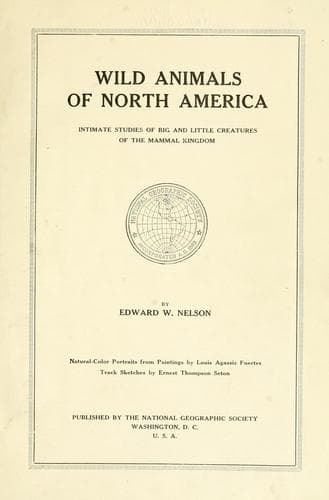
Wild Animals of North America: Intimate Studies of Big and Little Creatures of the Mammal KingdomNelson, Edward William
Science
Wild Animals of North America: Intimate Studies of Big and Little Creatures of the Mammal Kingdom
Nelson, Edward William
Mammals -- North America
As may be surmised from their habits, woodrats are skillful climbers,
both in trees and on the rough rock walls of the cliffs they inhabit.
Their only notes appear to be shrill squeaks and squeals when
quarreling among themselves at night. They also express annoyance or
alarm by a rapid drumming on the ground with their hind feet, just as
is done by some of the hares and rabbits.
On Santa Margarita Island, in Lower California, I found the most
curiously located habitations of these animals I have seen, the bulky
stick nests being placed well back in the midst of a mangrove thicket
growing in a tidal lagoon. At high tide the mangroves were isolated
from shore by several rods of water, so that only at low tide were the
rats able to go ashore. In going back and forth they followed certain
lines of nearly horizontal mangrove stems, the discoloration on the
bark plainly indicating the routes which finally led to dry land by
little trampled roads across the muddy ground bordering the shore.
Back a little way from shore others of the same species were living
in burrows guarded by orthodox stick and trash-pile nests among the
cactuses.
Woodrats, especially in northern localities, gather stores of pinyon or
other nuts, potatoes, corn, and any other non-perishable food available
to meet the season of storms and scarcity, concealing these supplies in
cavities in the nests either above or below the ground. They eat many
kinds of fruits, seeds, leaves, and other parts of plants, sometimes
including bark of shrubs or small trees and even cactus pads.
As a rule each nest is occupied by a single rat, but sometimes several
may be found in one, and the well-worn trails that so often connect
the entrances of neighboring nests bear evidence that woodrats have
a social disposition. In most localities woodrats are distributed
sparingly, but occasionally become so abundant in favorable places on
brushy plains that colonies containing hundreds of nests may be found
in limited areas. They sometimes become so plentiful about ranches as
to make serious inroads on grain and other crops. They also give the
Forest Service much trouble by digging up the pine seeds planted in
their great reforesting nurseries.
Woodrats are mainly nocturnal in habits and appear to be extremely
active throughout the night. Each morning in the vicinity of their
nests the light soil shows a multitude of tracks, and in places I have
seen little roads in the sand several hundred yards long which they had
made by repeated trips to a feeding ground.
No sooner is a cabin built in the mountains than they move in and
establish themselves under the floor, or locate a nest near by and use
the house as their nocturnal resort. Throughout the night the patter of
their busy feet may be heard as they race about on the floor or rustle
about the roof, and often over the sleeping forms of their unwilling
hosts.
Public-domain text, read in full here on John Shaqi.
Reviews
Reviews
No reviews yet
Be the first to share your thoughts on this work.
Elsewhere in the archive
Join the Discussion
Join the discussion
Sign in to leave a comment or review.
Sign InorCreate an account