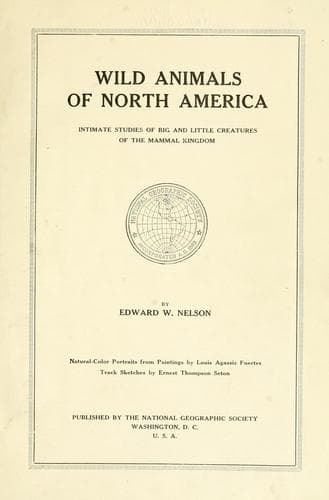
Wild Animals of North America: Intimate Studies of Big and Little Creatures of the Mammal KingdomNelson, Edward William
Science
Wild Animals of North America: Intimate Studies of Big and Little Creatures of the Mammal Kingdom
Nelson, Edward William
Mammals -- North America
[Illustration: KANGAROO RAT
_Dipodomys spectabilis_]
These delicately proportioned and graceful little beasts are habitants
of grassy, weed-grown, and brushy locations, mainly in the open
country. They are equally at home, however, in the beautiful grassy
open forests of oak, pine, and firs which clothe the slopes of the
great continental mountain system of Mexico and Central America.
[Illustration: BANDED LEMMING (_Dicrostonyx nelsoni_)
Summer Winter]
[Illustration: BROWN LEMMING
_Lemmus alascensis_]
In general they prefer comparatively dry situations, if there is
sufficient moisture to produce the needed vegetation, but some species
inhabit swamps and even salt and fresh water marshes. Although as
a rule not very numerous, at times they are very abundant and make
well-worn trails through the small vegetation in their haunts. They are
active throughout the year, and in the North, like some other mice,
burrow through the winter snows along the surface of the ground in
search of food.
So far as man is concerned, most of the harvest mice are among the
least offensive of mammals. There are exceptions, however, and,
although they rarely approach habitations and as a rule take but slight
toll from grain fields and meadows, yet in some areas they become so
numerous as to do considerable damage.
Their food includes a great variety of seeds, small fruits and
succulent matter mainly from wild plants of no economic value. They lay
up stores of seeds in their nests and in little special storage places
for severe or inclement weather.
Some of the species dig burrows in the ground where their nests are
hidden. Most of them, however, build globular nests of grass and other
vegetable matter several inches in diameter in dense grass close to the
ground, or up in the midst of rank growths of weeds, or even as high as
eight or ten feet from the ground in bushes and low trees.
Sometimes they take possession of convenient sites already provided,
such as old woodpecker holes, cavities in fence posts, knot holes,
and deserted birds’ nests, including the nests of the cactus wren and
orchard oriole, which they remodel to suit themselves. Their nests are
lined with fine downy material such as the pappus of the milkweed or
the cattail flag, and have from one to three small openings usually
located on the underside. In these neat homes they have several litters
of from one to seven young each year.
Public-domain text, read in full here on John Shaqi.
Reviews
Reviews
No reviews yet
Be the first to share your thoughts on this work.
Elsewhere in the archive
Join the Discussion
Join the discussion
Sign in to leave a comment or review.
Sign InorCreate an account