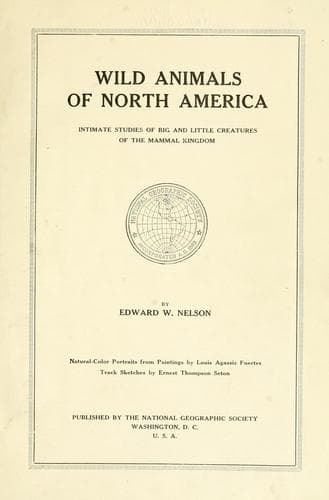
Wild Animals of North America: Intimate Studies of Big and Little Creatures of the Mammal KingdomNelson, Edward William
Science
Wild Animals of North America: Intimate Studies of Big and Little Creatures of the Mammal Kingdom
Nelson, Edward William
Mammals -- North America
One morning he ate 12 crickets and a spider in seven minutes and
during a single day devoured 53 insects--2 beetles, 8 grasshoppers, 28
crickets, and 15 flies--and appeared ready to take more.
Oddly enough, this grasshopper mouse, so fierce toward small game,
never offered to bite when captured or when handled freely, but
continued throughout his captivity to have the same friendly confidence
in his captor. Others caught in various parts of their range have shown
the same characteristics.
At night, especially early in the evening, grasshopper mice utter a
fine shrill whistling call note. This habit appears peculiar to them
among all the mice and may be likened to that of many of the large
beasts of prey in uttering their hunting call as they sally forth for
the night’s foray.
=THE WHITE-FOOTED MOUSE= (=Peromyscus leucopus= and its
relatives)
(_For illustration, see page 530_)
Few of our smaller wild mammals are so generally known as the
white-footed mice. Usually a little larger and proportionately shorter
bodied than the house mice, they may at once be distinguished from them
by the contrast between the delicate shades of fawn color, brown, or
gray of the upper parts of the body, and the snowy white feet and under
parts. Like other members of the genus, they have cheek pouches inside
the mouth for gathering and carrying food to their stores.
Their exceedingly quick and graceful movements and their beauty of form
and color would make them generally attractive were it not for the
prejudice against all their kind resulting from the offensive ways of
the house mouse.
Mice of the genus Peromyscus, to which the white-footed mice belong,
are peculiar to North and South America and include more species
and geographic races than any other American genus of mammals. The
white-footed mice are limited to North America. Readily responsive to
the influences of environment, they have developed numerous species and
a large number of geographic races.
These are spread over most of the continent from the northern limit of
trees to the tropical shores of Yucatan. One form has the distinction
of living up to an altitude of from 15,000 to 16,000 feet on Mount
Orizaba, Mexico, where I found its tracks in the volcanic ashes at the
extreme limit of vegetation. This is the highest record for any North
American mammal.
White-footed mice are active throughout the year and thrive in every
variety of situation. In winter from the Northern States to the Arctic
circle the snowshoer traversing the forest will note their lace-work
patterns of tiny tracks leading across the snow from log to log or
tree to tree. At sunrise on the southwestern deserts their tracks made
during the night often form a fine network in the dust, but disappear
with the first breath of the morning breeze.
Public-domain text, read in full here on John Shaqi.
Reviews
Reviews
No reviews yet
Be the first to share your thoughts on this work.
Elsewhere in the archive
Join the Discussion
Join the discussion
Sign in to leave a comment or review.
Sign InorCreate an account