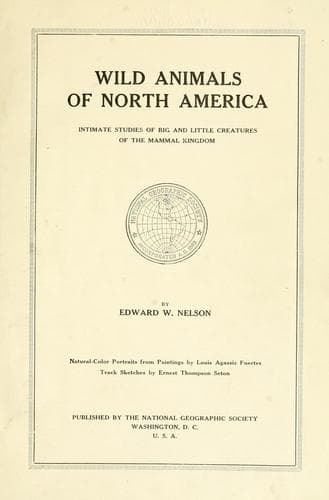
Wild Animals of North America: Intimate Studies of Big and Little Creatures of the Mammal KingdomNelson, Edward William
Science
Wild Animals of North America: Intimate Studies of Big and Little Creatures of the Mammal Kingdom
Nelson, Edward William
Mammals -- North America
That they make their homes in places other than cliffs in New Mexico
was evidenced by a thick, soft nest made almost entirely of wool, found
in a hollow juniper. They have several litters of from two to six young
each year, the breeding period extending from spring to fall.
In Arizona and New Mexico I found the rock mouse most numerous in the
belt of junipers and pinyons and in the adjacent yellow-pine forest.
The crevices of cliffs about the Moki and Zuni Indian pueblos and in
all the rocky wilderness of that region, including the Grand Canyon,
are abundantly populated with them.
They search every nook about their haunts and often visit cabins or
temporary camps for food, but do not usually take up their abode in
them as do the white-footed mice. When foraging their movements are
quick, and when startled they make surprisingly long leaps. Like others
of their kind, they eat a great variety of seeds and small nuts,
quantities of which they lay up in winter stores. Pinyon nuts, and
especially juniper seeds, are their favorite food.
While of nocturnal habits, rock mice at times wander forth in sheltered
spots by day, and on the few occasions I have seen them I have been
delighted with their grace and beauty, their great ears and prominent
shining black eyes lending them an attractive air of alert intelligence.
Throughout their lives they are in deadly peril from predatory foes.
Hawks and owls glide shadowlike along the faces of their rocky homes
ready to pick them up whenever they venture into open view, while
bobcats, skunks, and weasels prowl about by night hunting their furry
victims.
=THE BROWN RAT= (=Rattus norvegicus= and its relatives)
(_For illustration, see page 531_)
It is safe to assume that few readers need an introduction to that
world-wide pest variously known as the brown rat, house rat, wharf rat,
or Norway rat. Two European relatives, the black rat and the roof rat,
preceded the brown rat to the New World and became widely distributed.
They resemble the brown rat, but are much smaller and are soon killed,
driven away, or reduced to a secondary status by their larger and
fiercer cousin, which averages about sixteen inches in length, although
large individuals attain a length of more than twenty inches and a
weight of more than two pounds. The black rat has nearly disappeared
from most of its former haunts in the United States and the roof rat is
mainly restricted to southern localities with a mild climate.
Neither the brown, black, nor roof rat has any near relatives among
native rats of America, and all may be distinguished from our native
animals by their coarser hair and long, naked tails.
Public-domain text, read in full here on John Shaqi.
Reviews
Reviews
No reviews yet
Be the first to share your thoughts on this work.
Elsewhere in the archive
Join the Discussion
Join the discussion
Sign in to leave a comment or review.
Sign InorCreate an account