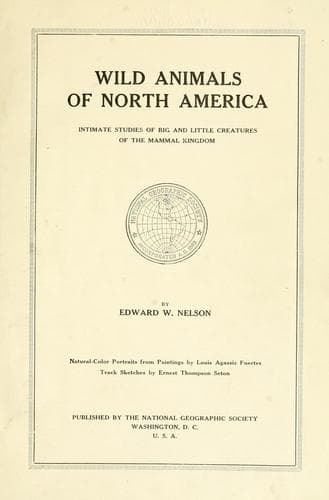
Wild Animals of North America: Intimate Studies of Big and Little Creatures of the Mammal KingdomNelson, Edward William
Science
Wild Animals of North America: Intimate Studies of Big and Little Creatures of the Mammal Kingdom
Nelson, Edward William
Mammals -- North America
The favorite food of prairie-dogs consists of the stems and roots of
gramma grass and other richly nutritious forage plants. In addition
they eat any native fruits, such as that of the pear-leaved cactus
(_Opuntia_) and are extremely destructive to grain, alfalfa, and
other cultivated crops. In addition to ordinary vegetation, they eat
grasshoppers and are fond of flesh, sometimes being caught far from
their homes in traps set for carnivores. They keep the grass and other
vegetation cut down or entirely dug out over much of the “town” and
especially in a circle about each entrance mound, apparently for the
purpose of obtaining a clear view as a safeguard against the approach
of any of their many four-footed enemies. This habit is exceedingly
injurious to the cattle ranges and often results in much erosion of the
fertile surface soil.
[Illustration: PRAIRIE-DOG
_Cynomys ludovicianius_]
[Illustration: STRIPED GROUND SQUIRREL
_Citellus tridecemlineatus_]
The vast numbers of prairie-dogs over so large a part of the grazing
areas of the West take a heavy toll from the forage and other crops.
As a consequence a campaign of destruction is being waged against them
as the country becomes more and more settled, and they will eventually
disappear from much of their present range. However detrimental
they may be from an economic point of view, they are among our most
interesting species, and when taken young their playful disposition and
intelligence render them most entertaining captives.
[Illustration: CALIFORNIA GROUND SQUIRREL
_Citellus beecheyi_]
[Illustration: ANTELOPE CHIPMUNK
_Ammospermophilus leucurus_]
Owing to the constant danger to which they are subject from coyotes,
foxes, bobcats, badgers, and black-footed ferrets, in addition to
eagles and other birds of prey, prairie-dogs are constantly on the
alert. At any suspicious occurrence the first to observe it runs to
his entrance mound, if the danger is not pressing, but otherwise to
the nearest mound, where he sits up at his full height, “barking” and
vibrating his tail, ready, if necessary, to disappear instantly. At the
same time the “town” is alive with scurrying figures of the habitants
rushing panic-stricken for their homes, and the air is filled with a
chorus of their little barking cries. When all have been frightened to
cover barking continues in the burrows, but an hour or more may pass
before a “dog” will reappear.
Public-domain text, read in full here on John Shaqi.
Reviews
Reviews
No reviews yet
Be the first to share your thoughts on this work.
Elsewhere in the archive
Join the Discussion
Join the discussion
Sign in to leave a comment or review.
Sign InorCreate an account