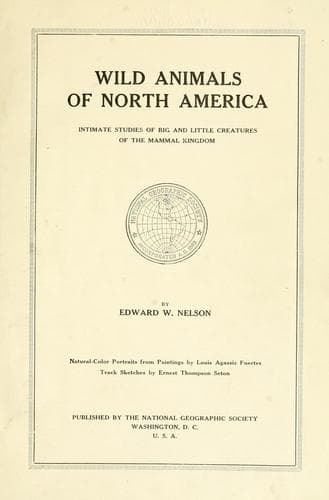
Wild Animals of North America: Intimate Studies of Big and Little Creatures of the Mammal KingdomNelson, Edward William
Science
Wild Animals of North America: Intimate Studies of Big and Little Creatures of the Mammal Kingdom
Nelson, Edward William
Mammals -- North America
Like others of its kind, this mole is amazingly powerful in proportion
to its size. It persistently adds to its surface ridges, and in
constantly extending its deeper tunnels must dig loose earth and
dispose of it by forcing it up through an outlet to form the mounds
which mark the course of its travels. Where the soil is loose it
readily forces it aside with its compact body and paddle-shaped hands.
In pushing up the little piles of earth and in the ridges raised when
burrowing close to the surface it sometimes injures meadows and other
cultivated land. Occasionally it wanders away from the fields and
invades lawns and gardens, where the only injury it does is in the
disturbance of the soil.
Its nests are compact little balls of fine grass, weeds, or leaves in
dry underground chambers excavated in its burrows. The nests are a foot
or two underground, but above the level of the water, sometimes under
a stump and again in a knoll or bank. One nest containing five young
was found in Maryland in an old woodshed under several inches of chips.
This location and its choice of a site for its nest under a stump in a
field or in a dry knoll are clear indications of a kind of intelligence
which even the lowliest animals appear to have in caring for their
young.
The star-nosed mole is full of the restless energy so necessary in
a mammal which must come across its food by more or less haphazard
tunneling through the soil. It is active both summer and winter. In dry
weather as the moisture near the surface decreases the soil hardens
and earthworms and other subterranean life seek deeper levels. The
mole follows them, only to return with them nearer the surface with a
renewal of the moisture. In winter it sometimes comes out and travels
slowly about on top of the snow, ready to burrow out of sight at once,
however, at the sound of approaching footsteps.
The food of the star-nose, like that of most other moles, is made up
mainly of earthworms, white grubs, cutworms, wireworms, and other
underground insects. In captivity, before eating a worm or other flesh
food offered, it first feels of it with the little raylike organs of
touch on its nose. It is difficult to surmise the real value of these
“feelers,” for it would seem that the acute sense of smell so common to
mammals should do better service.
Aside from its disturbance of the surface soil by its ridges and
mounds, the star-nosed mole does no direct injury, and its life is
largely passed in the useful task of searching out and destroying
insects. Indirectly it causes some injury to root crops, plants of
various kinds, and fruit trees, by providing tunnels along which meadow
and pine mice travel to commit the ravages which on circumstantial
evidence are charged to the mole.
=THE COMMON SHREW= (=Sorex personatus= and its relatives)
(_For illustration, see page 566_)
Public-domain text, read in full here on John Shaqi.
Reviews
Reviews
No reviews yet
Be the first to share your thoughts on this work.
Elsewhere in the archive
Join the Discussion
Join the discussion
Sign in to leave a comment or review.
Sign InorCreate an account