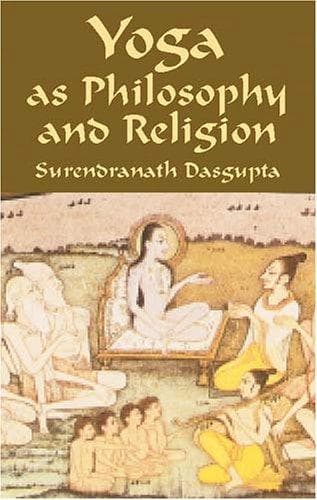
Yoga as philosophy and religionDasgupta, Surendranath
Religion
Yoga as philosophy and religion
Dasgupta, Surendranath
Hindu philosophy; Patañjali; Yoga
This means that we are to cultivate the habit of friendliness towards
those who are happy, which will remove all jealous feelings and purify
the mind. We must cultivate the habit of compassion towards those who
are suffering pain; when the mind shows compassion (which means that it
wishes to remove the miseries of others as if they were his own) it
becomes cleansed of the stain of desire to do injury to others, for
compassion is only another name for sympathy which naturally identifies
the compassionate one with the objects of his sympathy. Next comes the
habit of complacency, which one should diligently cultivate, for it
leads to pleasure in virtuous deeds. This removes the stain of envy from
the mind. Next comes the habit of indifference, which we should acquire
towards vice in vicious persons. We should acquire the habit of
remaining indifferent where we cannot sympathise; we should not on any
account get angry with the wicked or with those with whom sympathy is
not possible. This will remove the stain of anger. It will be clearly
seen here that maītrī, karuṇā, muditā and upekshā are only different
aspects of universal sympathy, which should remove all perversities in
our nature and unite us with our fellow-beings. This is the positive
aspect of the mind with reference to abstinence from injuring ahiṃsā
(mentioned under yamas), which will cleanse the mind and make it fit for
the application of means of śraddhā, etc. For unless the mind is pure,
there is no scope for the application of the means of making it steady.
These are the mental endeavours to cleanse the mind and to make it fit
for the proper manifestation of śraddhā, etc., and for steadying it with
a view to attaining true discriminative knowledge.
Again of the parikarmas by dhāraṇā, dhyāna, and saṃprajñāta samādhi and
the habit of sympathy as manifested in maitrī, karuṇā, etc., the former
is a more advanced state of the extinction of impurities than the
latter.
Public-domain text, read in full here on John Shaqi.
Reviews
Reviews
No reviews yet
Be the first to share your thoughts on this work.
Elsewhere in the archive
Join the Discussion
Join the discussion
Sign in to leave a comment or review.
Sign InorCreate an account