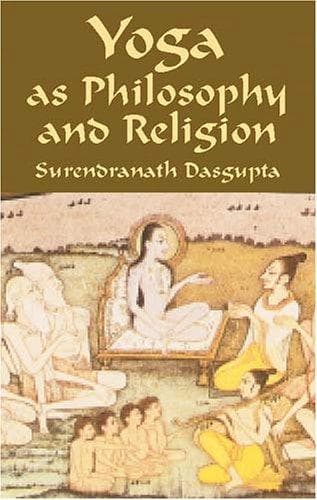
Yoga as philosophy and religionDasgupta, Surendranath
Religion
Yoga as philosophy and religion
Dasgupta, Surendranath
Hindu philosophy; Patañjali; Yoga
I. Yama (restraint). These yama restraints are: abstinence from injury
(ahiṃsā); veracity; abstinence from theft; continence; abstinence from
avarice.
II. Niyama (observances). These observances are cleanliness,
contentment, purificatory action, study and the making of God the motive
of all action.
III. Āsanas (posture). Steady posture and easy position are regarded as
an aid to breath control.
IV. Regulation of breath (prāṇāyāma) is the stoppage of the inspiratory
and expiratory movements (of breath) which may be practised when
steadiness of posture has been secured.
V. Pratyāhāra (abstraction). With the control of the mind all the senses
become controlled and the senses imitate as it were the vacant state of
the mind. Abstraction is that by which the senses do not come in contact
with their objects and follow as it were the nature of the mind.
VI. Dhāraṇā (concentration). Concentration is the steadfastness of the
mind applied to a particular object.
VII. Dhyāna (mediation). The continuation there of the mental effort by
continually repeating the object is meditation (dhyāna).
VIII. Samādhi (trance contemplation). The same as above when shining
with the light of the object alone, and devoid as it were of itself, is
trance. In this state the mind becomes one with its object and there is
no difference between the knower and the known.
These are the eight yogāṅgas which a Yogin must adopt for his higher
realisation. Of these again we see that some have the mental side more
predominant, while others are mostly to be actualised in exterior
action. Dhāraṇā, dhyāna and samādhi, which are purely of the samprajñāta
type, and also the prāṇāyāma and pratyāhāra, which are accessories to
them, serve to cleanse the mind of impurities and make it steady, and
can therefore be assimilated with the parikarmas mentioned in Book I.
Sūtras 34–39. These samādhis of the samprajñāta type, of course, only
serve to steady the mind and to assist attaining discriminative
knowledge.
In this connection, it will be well to mention the remaining aids for
cleansing the mind as mentioned in _Yoga-sūtra_ I., viz. the cultivation
of the habits of friendliness, compassion, complacency and indifference
towards happiness, misery, virtue and vice.
Public-domain text, read in full here on John Shaqi.
Reviews
Reviews
No reviews yet
Be the first to share your thoughts on this work.
Elsewhere in the archive
Join the Discussion
Join the discussion
Sign in to leave a comment or review.
Sign InorCreate an account