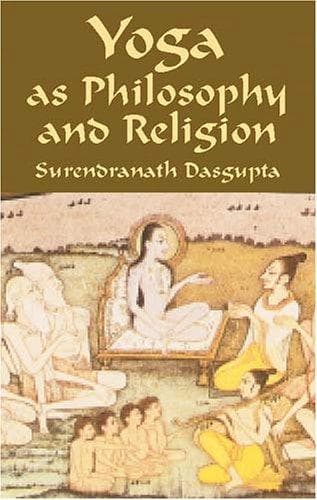
Yoga as philosophy and religionDasgupta, Surendranath
Religion
Yoga as philosophy and religion
Dasgupta, Surendranath
Hindu philosophy; Patañjali; Yoga
We shall conclude this section by giving a short analysis of the prajñā
state from its first appearance to the final release of purusha from the
bondage of prakṛti. Patañjali says that this prajñā state being final in
each stage is sevenfold. Of these the first four stages are due to our
conscious endeavour, and when these conscious states of prajñā
(supernatural wisdom) flow in a stream and are not hindered or
interfered with in any way by other phenomenal conscious states of
pratyayas the purusha becomes finally liberated through the natural
backward movement of the citta to its own primal cause, and this
backward movement is represented by the other three stages.
The seven prajñā stages may be thus enumerated:—
I. The pain to be removed is known. Nothing further remains to be known
of it.
This is the first aspect of the prajñā, in which the person willing to
be released knows that he has exhausted all that is knowable of the
pains.
II. The cause of the pains has been removed and nothing further remains
to be removed of it. This is the second stage or aspect of the rise of
prajñā.
III. The nature of the extinction of pain has already been perceived by
me in the state of samādhi, so that I have come to learn that the final
extinction of my pain will be something like it.
IV. The final discrimination of prakṛti and purusha, the true and
immediate means of the extinction of pain, has been realised.
After this stage, nothing remains to be done by the purusha himself. For
this is the attainment of final true knowledge. It is also called the
para vairāgya. It is the highest consummation, in which the purusha has
no further duties to perform. This is therefore called the kārya vimukti
(or salvation depending on the endeavour of the purusha) or jīvanmukti.
After this follows the citta vimukti or the process of release of the
purusha from the citta, in three stages.
V. The aspect of the buddhi, which has finally finished its services to
purusha by providing scope for purusha’s experiences and release; so
that it has nothing else to perform for purusha. This is the first stage
of the retirement of the citta.
VI. As soon as this state is attained, like the falling of stones thrown
from the summit of a hill, the guṇas cannot remain even for a moment to
bind the purusha, but at once return back to their primal cause, the
prakṛti; for the avidyā being rooted out, there is no tie or bond which
can keep it connected with purusha and make it suffer changes for the
service of purusha. All the purushārthatā being ended, the guṇas
disappear of themselves.
Public-domain text, read in full here on John Shaqi.
Reviews
Reviews
No reviews yet
Be the first to share your thoughts on this work.
Elsewhere in the archive
Join the Discussion
Join the discussion
Sign in to leave a comment or review.
Sign InorCreate an account