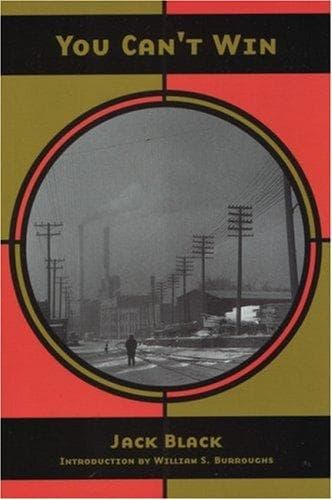
Black, Jack, 1871-1932; Criminals -- Canada -- Biography; Criminals -- United States -- Biography
YOU CAN’T WIN
You Can’t Win
BY
JACK BLACK
With a foreword by
ROBERT HERRICK
New York
THE MACMILLAN COMPANY
1926
*All rights reserved*
Copyright 1925,
By Jack Black.
Copyright 1926,
By The Macmillan Company.
---
Set up and electrotyped.
Published September, 1926.
Reprinted October, 1926.
Reprinted December, 1926.
Printed in the United States of America
By The Cornwall Press
ACKNOWLEDGMENT
This book is dedicated to Fremont Older, to Judge Frank H. Dunne, to the
unnamed friend who sawed me out of the San Francisco jail and to that
dirty, drunken, disreputable, crippled beggar, “Sticks” Sullivan, who
picked the buckshot out of my back—under the bridge—at Baraboo,
Wisconsin.
The Author.
FOREWORD
The revelations of a thief or of a prostitute are rightfully suspected
by the normal citizen of having been dressed for publicity, either
sensational or sentimental or both. An unstable emotionalism in the
subject, perhaps psychopathic, induces a melodramatic and unreal
treatment of past experience. The tale is told not as it happened but
rather as the subject likes, in reverie, to think it happened or as he
believes the reader would like to have had it happen. There is nothing
of that sort in Jack Black’s story of his life as a professional thief.
The honesty of the “confession” is self-evident. With a few lapses into
the conventional, the expected, he displays the rare literary power of
letting the facts speak for themselves, without any window-dressing,
either lachrymose or hilarious. He has an instinct for realities.
Indeed it is that mental grip, enabling him to perceive and apply
realities, that obviously brought him out in the end so that he could
break the shackles of his criminal habits and reinstate himself
completely in accord with society. It was almost purely a mental feat.
At the end, to be sure, he dwells upon the helpfulness of kind friends,
especially of Mr. Older, of the “square deal” he got from Judge Dunne,
and recognizes fully the impulse of gratitude to a friend who helped him
escape from prison by “cutting out the hop”—the hardest single bond he
had to break. Those were emotional responses. But if it had not been
for his own good mind which he had slowly disciplined by reason, that
resolve “to go straight” would have been but another feeble human
aspiration for amendment with which the human hell is paved. The chief
interest I find in Black’s rapid survey of his life as a thief is this
progress of mental awakening and a corresponding growth of character
as a man, without which all the help of kind and enlightened friends
would have availed naught. It is what Black did for himself, what he
was, that counted most.
Public-domain text, read in full here on John Shaqi.
Reviews
Reviews
No reviews yet
Be the first to share your thoughts on this work.
Join the Discussion
Join the discussion
Sign in to leave a comment or review.
Sign InorCreate an account