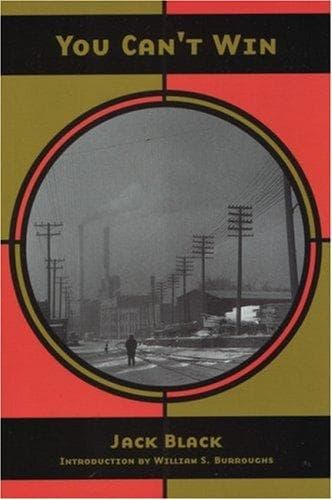
Black, Jack, 1871-1932; Criminals -- Canada -- Biography; Criminals -- United States -- Biography
Jack Black was an experimental psychologist: he discovered slowly and
painfully, as most do, the psychological character of himself and of the
world in which he was placed. Thus he explored the law of habit and the
purely mental quality of self-control long before he attempted to apply
his knowledge to his own case. Any habit, he maintains, apropos of the
opium habit, can be broken provided the victim *wants* sufficiently to
change, and he notes the power of substitution, welcoming even his
worries as distractions, mentally, from the obsession of opium. His
emphasis on the necessity of a subjective desire for change is an
unerring diagnosis of self. He wanted another kind of life enough to
make it come true. That is the great distinction of Jack Black as
professional lawbreaker and person.
His case is so common in our restless, mobile civilization that it may
be called typical or standard. An active, intelligent, likable boy with
no stable ties, he adventured on the open road, almost by accident, the
wide world tempting him on, took what he wanted, learned the habits and
the resources of vagrancy, of criminality, of vice. But he did not sink
to the dregs per formula. He went to the top of his society. Stirred by
emulation with the only companions he had—hoboes, thieves, gamblers,
yeggs—he distinguished himself not only by success in individual
exploits but by a superiority of character that would not break,
“snitch,” or play the other fellow’s game—and by loyalty to his mates.
Then came as he was emerging from youth the chance that landed him in a
well-run Canadian prison and fertilized the seed of intellectual
interest by giving him access to a good library. For the first time he
discovered consciously his own mind—the interest of it—and from this
period it is evident that the habit of reading, of thinking, gained on
him until with relentless logic his mind, thus freed and fed, convinced
him that his boy’s life of defiance and lawlessness was wrong. After he
was convinced, it took years to free himself from all the implications
of twenty years of crime. But once convinced, with a mind of that
quality, the result was inevitable. Strange irony that the mental life
so essential to Black’s salvation should have been further fostered by
the gift of a library which Abe Ruef gave to the prison where he and
Black happened to be fellow prisoners. Ruef had taken the money which he
bestowed in this form on his fellow criminals from the public of San
Francisco. Mr. Fremont Older, as a powerful newspaper editor, was
largely responsible for putting Ruef into the prison (and later in
freeing him!) where Ruef was indirectly an instrument in freeing Jack
Black from his bonds.
Public-domain text, read in full here on John Shaqi.
Reviews
Reviews
No reviews yet
Be the first to share your thoughts on this work.
Join the Discussion
Join the discussion
Sign in to leave a comment or review.
Sign InorCreate an account