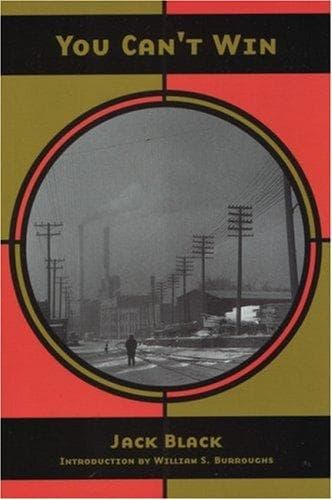
Black, Jack, 1871-1932; Criminals -- Canada -- Biography; Criminals -- United States -- Biography
“I don’t want to hurt your feelings, kid, but if you are lousy don’t
come in here, that’s all.”
The trusty assured George that I was not lousy, that there was no charge
against me and I would be out in an hour or two.
I was locked in.
I had no jail manners then, so I just stood at the door with my hat on,
intending to wait there till some one came to let me go. All prisoners
do that the first time. Presently my companion told me to take my hat
off and sit down, and try to be comfortable.
“You may get out in an hour and you may not. You never can tell. You are
beginning young. How old are you?”
“Sixteen.”
“What are you pinched for?”
I told him all about it.
“That’s everyday business here,” he said. “Usually the sucker is a
married man and can’t squawk. But when he does squawk, like this one,
the only thing to do is to blow back his money. Either the lawyer or one
of the girls eased it into his coat pocket. That’s better than returning
it to him and admitting that they tried to rob him.
“The whole thing was a stand-in from the captain down. Everybody’s
satisfied. The sucker has his money, the girls are all out, Kate will
charge Julia fifty dollars for the lawyer’s fee, and that ends it.
“You appear to be the only real sucker in the bunch. By God! Those
coppers are fierce. They’ll leave you here till you rot. I’ve always
said a copper is a copper till you cut his head off.”
He got a tin cup and scraped it across the bars of the door. The trusty
bounced in. “Go down and get the desk sergeant.”
I never saw a prisoner get quicker action. The sergeant came at once.
“It’s a rotten shame to keep this kid locked up, Sam. Did you hear his
story? Go down and get Hayes and tell him to let him go home. Send a
messenger to his boss. I’ve got plenty of money down there; charge it to
me.”
The sergeant went out, promising to “look into it right away.” Our
cell—it was more like a room—was in a small corridor set apart for the
women prisoners’ quarters. Down the hall I could hear them calling to
each other and chatting back and forth from their cells. Somewhere a
colored woman was singing a mournful dirge about “That Bad Stackalee.”
The verses were endless. The point of the song seemed to be that the
negro bully, Stackalee, had been killed with “a big forty-four gun over
a damned old Stetson hat.” In the most harrowing tones at the end of
every verse the singer moaned the sad refrain, “That ba-a-d Stackalee.”
Later I came to know that this song is a favorite among negroes when in
great trouble, such as being locked in jail, being double-crossed by a
friend, or parting with their money in a dice game. At such times thirty
or forty verses of “Stackalee” invariably restores the laughing good
humor and child-like confidence of the wronged one.
We heard a rattling of keys and a door opening. George put the side of
his face against the cell door, so he could see down the hall.
“Get your hat, kid; here they are.”
Public-domain text, read in full here on John Shaqi.
Reviews
Reviews
No reviews yet
Be the first to share your thoughts on this work.
Join the Discussion
Join the discussion
Sign in to leave a comment or review.
Sign InorCreate an account