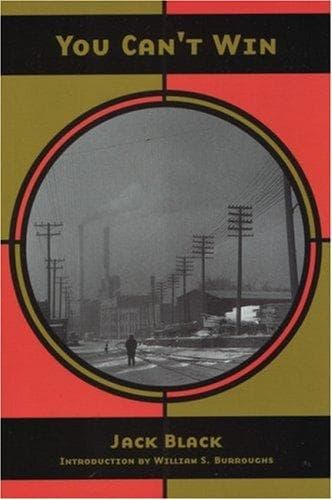
Black, Jack, 1871-1932; Criminals -- Canada -- Biography; Criminals -- United States -- Biography
In some cases like Black’s the victim is not broken, but tempered and
hardened in will, in evil. And that brings me to the most depressing
fact in criminology that the present book illustrates: the criminal is
almost always of an inferior mentality. It is only a superior mentality
such as Black’s that can survive and ultimately win freedom. Probably
Jack Black would admit that among his wide acquaintance in the criminal
class only a few, a very few, had the mental quality, the character, to
break their chains. The mass were condemned to remain criminals because
of defective mentality. That suggests inevitably the confused subject of
eugenics and birth control, in society’s relation to the criminal class,
which it so much fears and detests, but before which it so often seems,
as at the present moment, hopeless, like an ignorant, half well-meaning
parent angry over a troublesome child whose troublesomeness is in large
part the fruit of the parent’s own defective character. Many of these
aberrant specimens might be deflected from crime by feeding their minds.
Few ever can do it for themselves as Black almost wholly did it for
himself. Does modern life offer youth sufficient mental stimulus? The
motor car, the movie, bootleg liquor, and sex—these are the raw stimuli
with which youth tries to infuse some color and movement into the
tyrannous drabness of a standardized industrial life. In drawing his
moral at the end Black forgets, as the middle-aged are wont to forget,
the glamour and the lure of the “hangout” and the open road, which in
his boyhood seemed to be the only way out of a cheerless drudgery.
There are, of course, many other ways, which Black discovered later for
himself. And that is why I think his story is so well worth while
reading and pondering upon. Besides it is entertaining, because
unvarnished and unpretentious.
Robert Herrick.
YOU CAN’T WIN
CHAPTER I
I am now librarian of the *San Francisco Call*.
Do I look like one? I turn my chair so I can look in the mirror. I don’t
see the face of a librarian. There is no smooth, high, white forehead.
I do not see the calm, placid, composed countenance of the student. The
forehead I see is high enough, but it is lined with furrows that look
like knife scars. There are two vertical furrows between my eyes that
make me appear to be wearing a continual scowl. My eyes are wide enough
apart and not small, but they are hard, cold, calculating. They are
blue, but of that shade of blue farthest removed from the violet.
Public-domain text, read in full here on John Shaqi.
Reviews
Reviews
No reviews yet
Be the first to share your thoughts on this work.
Join the Discussion
Join the discussion
Sign in to leave a comment or review.
Sign InorCreate an account