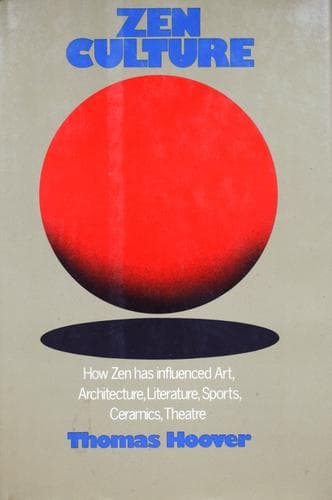
1. Zen Culture and the Counter Mind
2.
3. The Prelude to Zen Culture
4.
5. The Rise of Japanese Buddhism
6.
7. The Chronicles of Zen
8.
9. Zen Archery and Swordsmanship
10.
PART II: The Age of High Culture: Ashikaga (1333-1573)
11. The Great Age of Zen
12.
13. Zen and the Landscape Garden
14.
8. The Stone Gardens of Zen
9. Zen and the Ink Landscape
10. The Zen Aesthetics of Japanese Architecture
11.
12. The No Theater
13.
PART III: The Rise of Popular Zen Culture: 1573 to the Present
14. Bourgeois Society and Later Zen
15.
16. The Tea Ceremony
17.
18. Zen Ceramic Art
19.
20. Zen and Haiku
21.
22. Private Zen: Flowers and Food
23.
24. The Lessons of Zen Culture
25.
REFERENCES
BIBLIOGRAPHY
GLOSSARY
Part I
THE BEGINNINGS: PREHISTORY TO 1333
CHAPTER ONE
Zen Culture and the Counter Mind
_ Consider the lilies of the field, how they grow.
_Matthew 6:28
_Pre-Buddhist clay figure _(haniwa)
THE ZEN TRADITION extends back some fifteen hundred years to a wandering
Indian teacher of meditation named Bodhidharma. As Indian gurus are
fond of doing, Bodhidharma left his homeland and journeyed abroad,
following what was in those days a well-beaten trail to China. Upon
reaching Nanking, he paused to visit the Chinese Emperor Wu, a man
known to be a particularly devout Buddhist. The emperor was delighted
to receive his famous Indian guest and proceeded immediately to boast
of his own accomplishments. "I have built many temples. I have copied
the sacred _sutras_. I have led many to the Buddha. Therefore, I ask
you: What is my merit: What reward have I earned?" Bodhidharma
reportedly growled, "None whatsoever, your Majesty." The emperor was
startled but persisted, "Tell me then, what is the most important
principle or teaching of Buddhism?" "Vast emptiness," Bodhidharma
replied, meaning, of course, the void of nonattachment. Not knowing
what to make of his guest, the emperor backed away and inquired, "Who
exactly are you who stands before me now?" To which Bodhidharma
admitted he had no idea.
Public-domain text, read in full here on John Shaqi.
Reviews
Reviews
No reviews yet
Be the first to share your thoughts on this work.
Join the Discussion
Join the discussion
Sign in to leave a comment or review.
Sign InorCreate an account