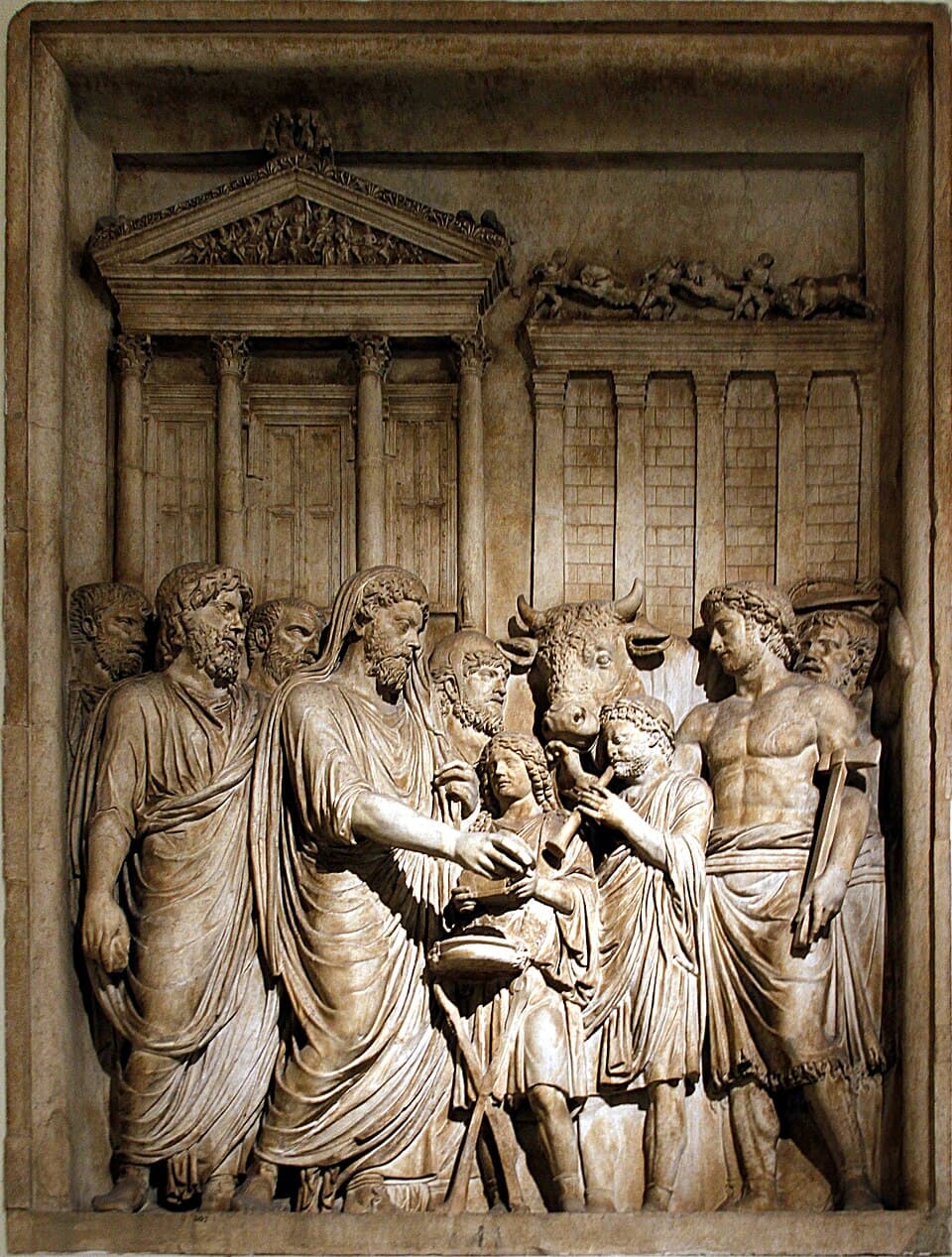
Sacrifice
Sacrifice is an act or offering made to a deity. A sacrifice can serve as propitiation, or a sacrifice can be an offering of praise and thanksgiving.
Pantheon
Page 3 of 3.
283 entries
These three are recorded for the Egyptian pantheon as a whole. The archive holds no separate culture, civilization or period for the individual entries below.
Page 3 of 3
Showing 217–283 of 283, alphabetically.
Sacrifice is an act or offering made to a deity. A sacrifice can serve as propitiation, or a sacrifice can be an offering of praise and thanksgiving.

Sah was a god in Ancient Egyptian religion, representing a constellation that encompassed the stars in Orion and Lepus, as well as stars found in some neighbouring modern constellations.
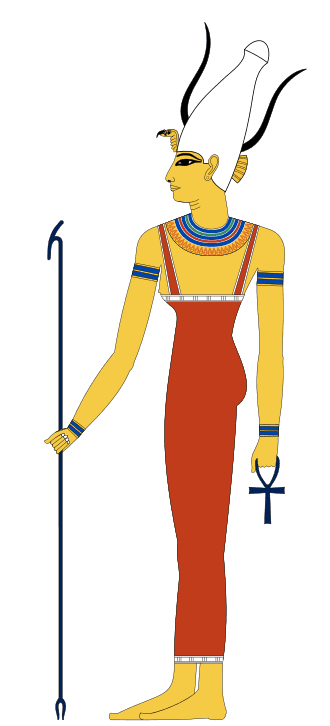
Satet, Satit or Satjet, Satjit in Ancient Egyptian, Greek: Satis, also known by numerous related names, was an Upper Egyptian goddess who, along with Khnum and Anuket, formed part of the Elephantine Triad. A protective deity of Egypt's southern border with Nubia, she came to personify the former annual flooding of the Nile and to serve as a war, hunting, and fertility goddess.
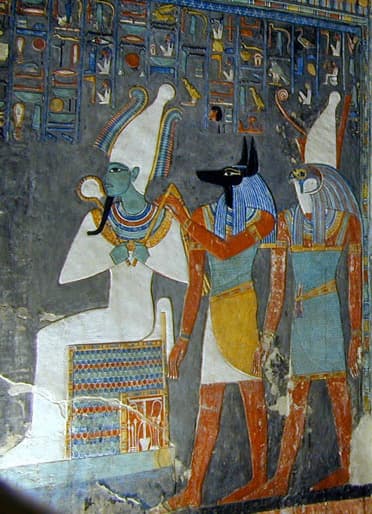
Ancient Egyptian deities were an integral part of ancient Egyptian religion and were worshiped for millennia. Many of them ruled over natural and social phenomena, as well as abstract concepts These gods and goddesses appear in virtually every aspect of ancient Egyptian civilization, and more than 1,500 of them are known by name. Many Egyptian texts mention deities' names without indicating their character or role, while other texts refer to specific deities without even stating their name, so a complete list of them is difficult to assemble.
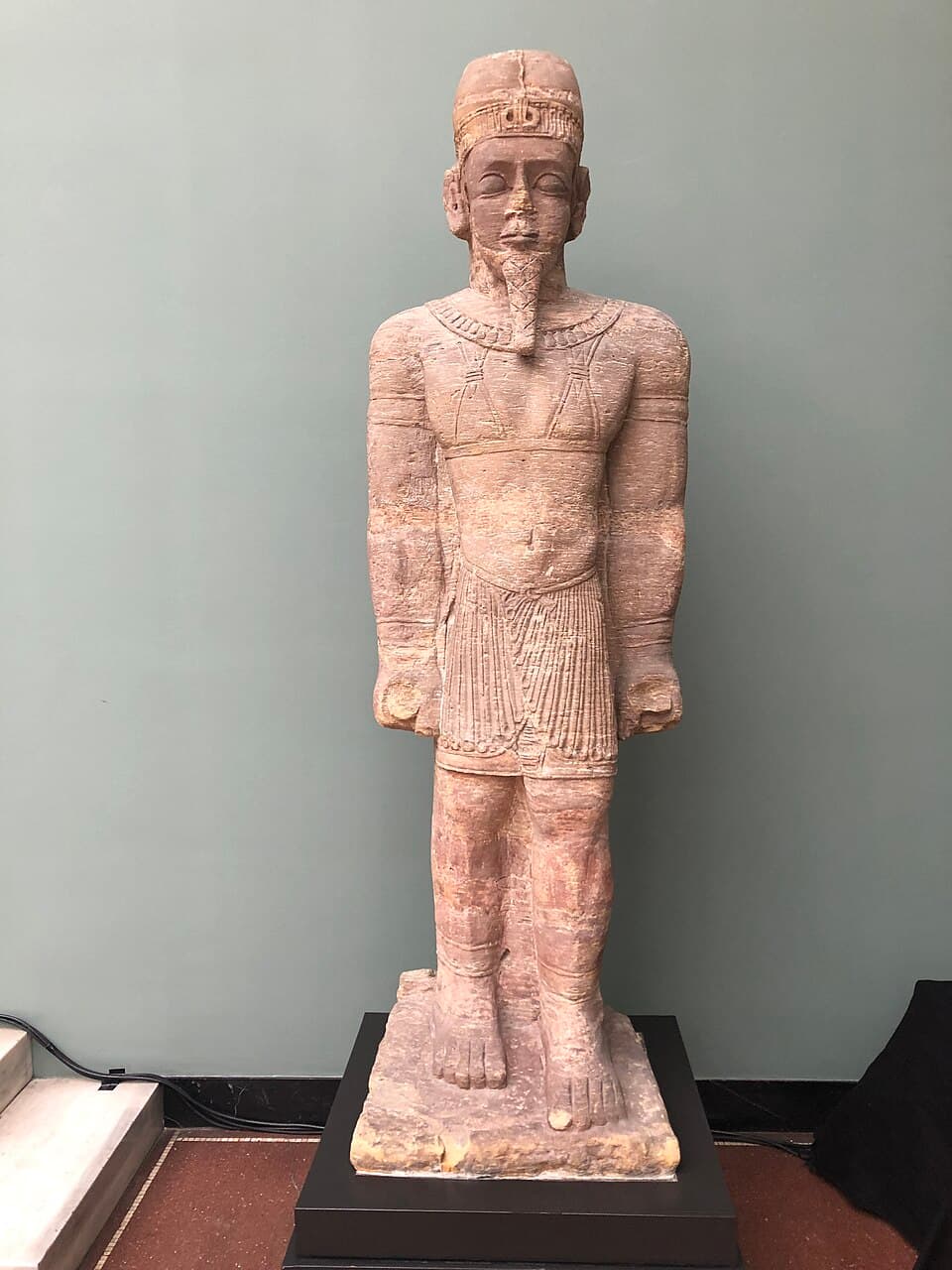
Sebiumeker was a major supreme god of procreation and fertility in Nubian mythology who was primarily worshipped in Meroe, Kush, in present-day Sudan. He is sometimes thought of as a guardian of gateways as his statues are sometimes found near doorways. He has many similarities with Atum, but has Nubian characteristics, and is also considered the god of agriculture.
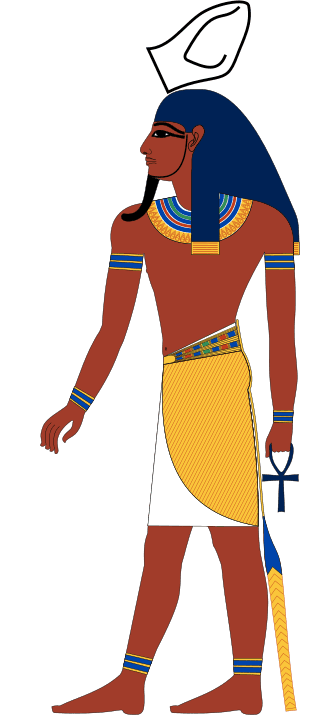
Sedjem (sḏm) was an ancient Egyptian god who, along with Irer, join Hu and Sia as creative powers of the gods. Sedjem, which literally translates to "hearing," first appeared as a scribe for Thoth and Seshat in the temples of Seti I and Ramesses II at Abydos.
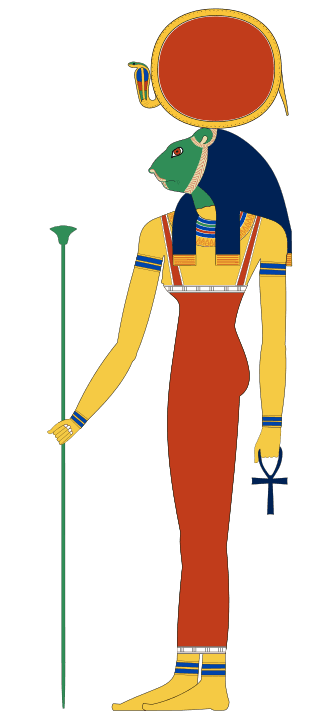
In Egyptian mythology, Sekhmet is a warrior goddess as well as goddess of medicine.
Sepa was an ancient Egyptian centipede deity. He was believed to have control over venomous animals and was worshiped to prevent attacks from venomous animals. He also held a role as a fertility god because centipedes will hunt earthworms which helps make soil more fertile.

Solar barques were the vessels used by the sun god Ra in ancient Egyptian mythology. During the day, Ra was said to use a vessel called the Mandjet or the Boat of Millions of Years, and the vessel he used during the night was known as the Mesektet.
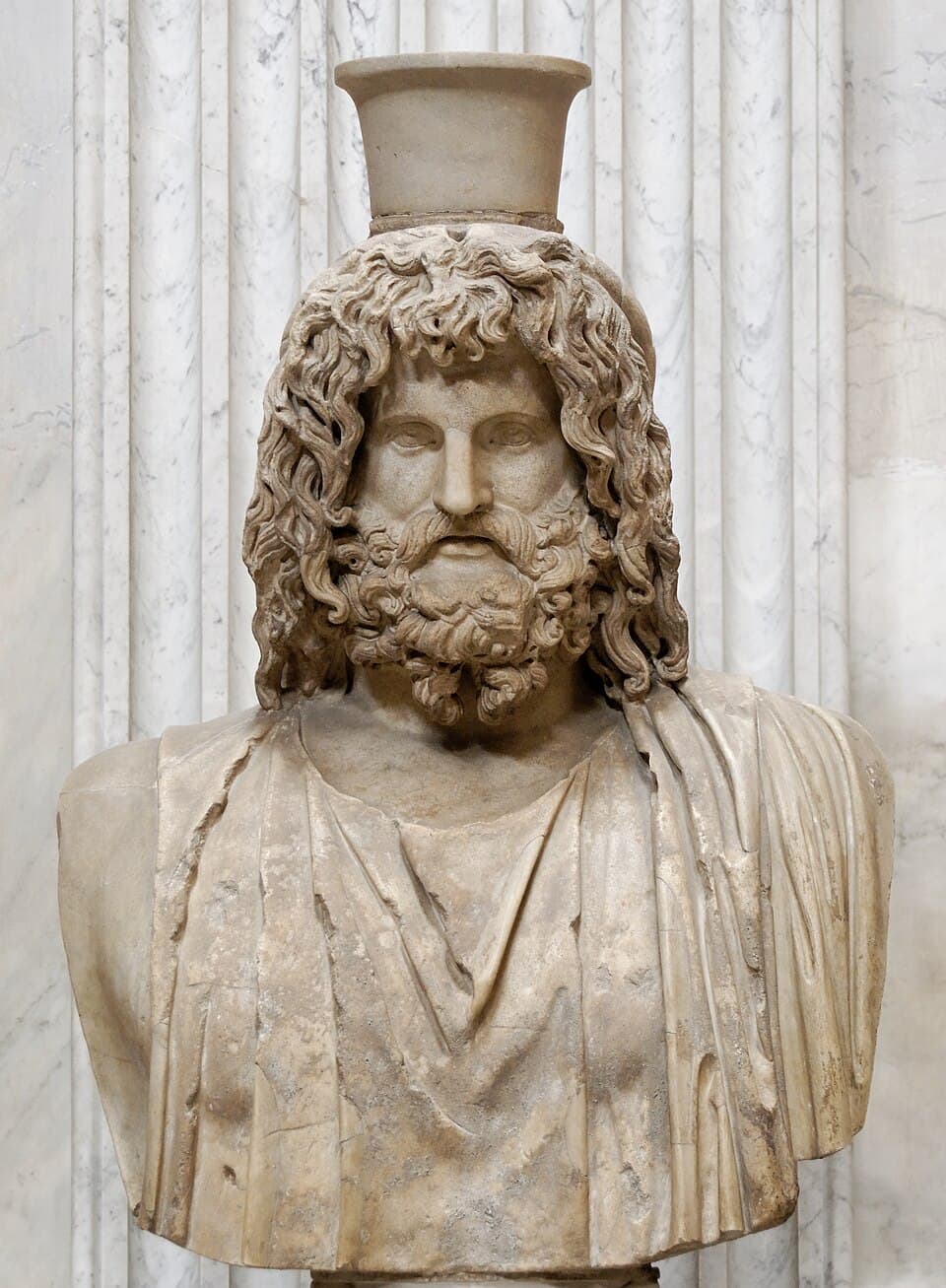
Serapis or Sarapis is a Graeco-Egyptian god. A syncretic deity derived from the worship of the Egyptian gods Osiris and Apis, Serapis was extensively popularized in the third century BC on the orders of Greek Pharaoh Ptolemy I Soter, as a means to unify the Greek and Egyptian subjects of the Ptolemaic Kingdom.
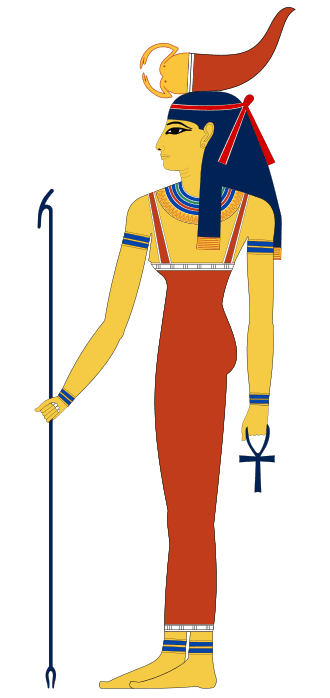
Serket /ˈsɜːrˌkɛt/ is the goddess of protection against the venomous stings and bites of scorpions in Egyptian mythology. She was primarily worshiped in Lower Egypt during the Predynastic Period. Serket is often depicted as a woman whose head is surmounted by a scorpion with its tail is ready to sting, an ankh in one hand, and a was-sceptre in her other.

Seshat was the ancient Egyptian goddess of writing, wisdom, and knowledge. She was seen as a scribe and record keeper. She was also credited with inventing writing.
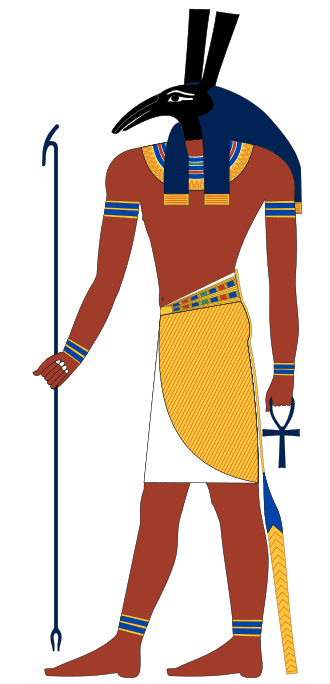
Set is a god of deserts, storms, disorder, violence, and foreigners in ancient Egyptian religion. In Ancient Greek, the god's name is given as Sēth. Set had a positive role where he accompanied Ra on his barque to repel Apep (Apophis), the serpent of Chaos.
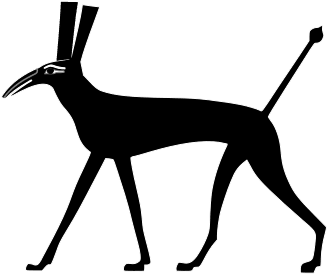
In ancient Egyptian art, the Set animal, or sha, is the affiliated animal of the god Set. Because Set was identified with the Greek monster Typhon, the animal is also commonly known as the Typhonian animal or Typhonic beast.

Shai was the deification of the concept of fate in Egyptian mythology. As a concept, with no particular reason for associating one gender over another, Shai was sometimes considered female, rather than the more usual understanding of being male, in which circumstance Shai was referred to as Shait. His name reflects his function, as it means "(that which is) ordained.

Shed was a deity from ancient Egyptian religion. The meaning of the name Shed (šd) is "one who saves" or "the saviour". He is first recorded after the Amarna Period.
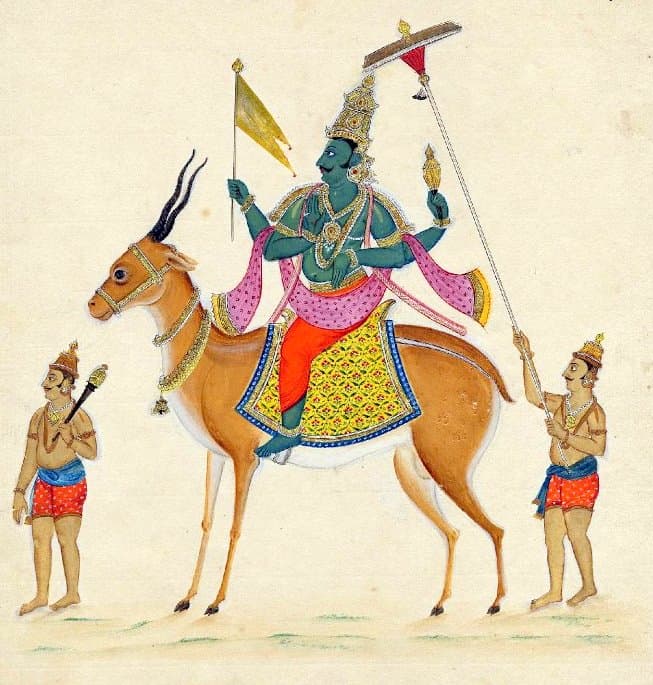
A wind god is a god who controls the wind(s). Air deities may also be considered here as wind is nothing more than moving air. Many polytheistic religions have one or more wind gods.
Shemanefer was a crocodile god worshipped in Esna in the Greco-Roman period of Ancient Egypt. He had an ambiguous identity, being identified with, or sometimes considered the brother of, Sobek or Tutu. Furthermore, Thomas Gamelin observes that the exact nature of his identification was often based on the crown he was wearing: he functioned similarly to Sobek-Heru with the hemhem crown, Sobek-Geb with the tjeni crown, and Sobek-Ra with the solar disc.
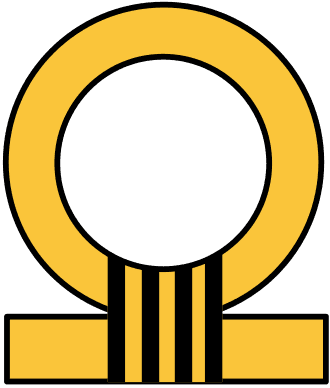
In ancient Egypt, a shen ring was a circle with a line tangent to it, represented in hieroglyphs as a stylised loop of a rope, bound to a stick. The tool was used by builders and architects. Shen rings can most often be seen in the clutches of Horus.
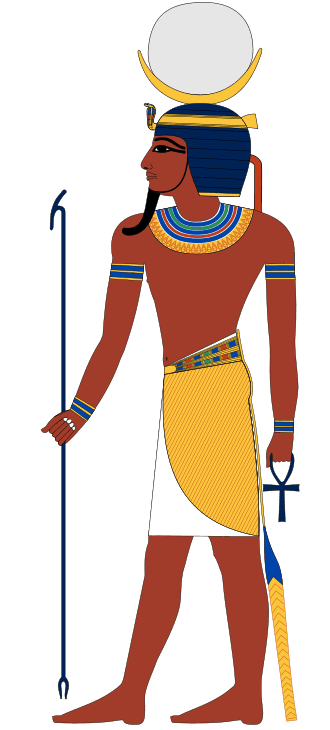
Shepsy was an Ancient Egyptian sun god worshiped in Hermopolis. He is believed to be either the son of or husband of Nehmetawy and was often depicted near Thoth. He was worshiped as far back as the Old Kingdom but became significantly more important during the 18th and 19th dynasty.
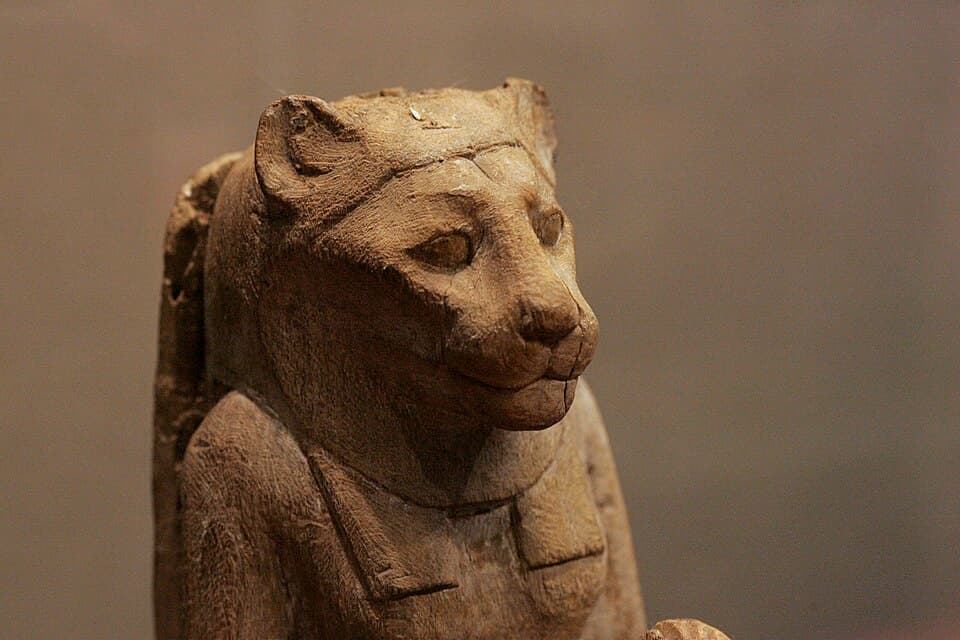
Shesmetet (šsm. t. t) is an ancient Egyptian goddess.

Shezmu is an ancient Egyptian deity with a contradictory character. He is an Underworld judge of the damned. He was worshiped from the early Old Kingdom period.

Shu was one of the primordial Egyptian gods, spouse and brother to the goddess Tefnut, and one of the nine deities of the Ennead of the Heliopolis cosmogony. He was the god of light, peace, lions, air, and wind.
Shu was one of the primordial Egyptian gods, spouse and brother to the goddess Tefnut, and one of the nine deities of the Ennead of the Heliopolis cosmogony. He was the god of light, peace, lions, air, and wind.
Shu was one of the primordial Egyptian gods, spouse and brother to the goddess Tefnut, and one of the nine deities of the Ennead of the Heliopolis cosmogony. He was the god of light, peace, lions, air, and wind.
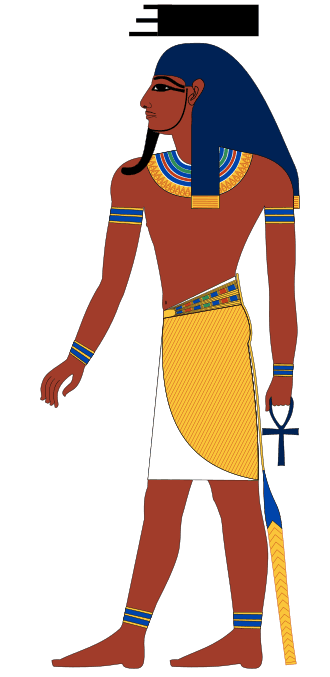
Sia or Saa, an ancient Egyptian god, was the deification of perception in the Heliopolitan Ennead cosmogony and is probably equivalent to the "intellectual energies of the heart of Ptah in the Memphite theology. " He also had a connection with writing and was often shown in anthropomorphic form holding a papyrus scroll. This papyrus was thought to embody intellectual achievements.
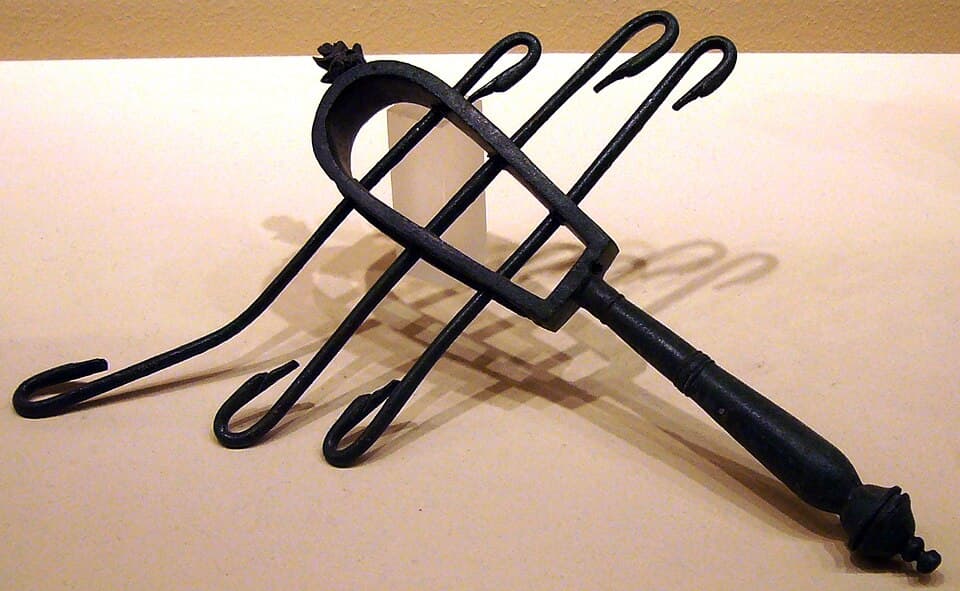
A sistrum is a musical instrument of the percussion family, a form of rattle, used most notably by the ancient Egyptians. It consists of a handle and a U-shaped metal frame, made of brass or bronze and ranging from 30 to 76 cm (12–30 in) in width. The frame supports sliding metal cross-bars, which may hold metal rings.

The Siwa Oasis is an urban oasis in Egypt. It is situated between the Qattara Depression and the Great Sand Sea in the Western Desert, 50 kilometres (31 mi) east of the Egypt–Libya border and 560 kilometres (350 mi) from the Egyptian capital city of Cairo. It is famed for its role in ancient Egypt as the home to an oracle of Amun, the ruins of which are a popular tourist attraction, giving it the ancient name Oasis of Amun-Ra, after the major Egyptian deity.
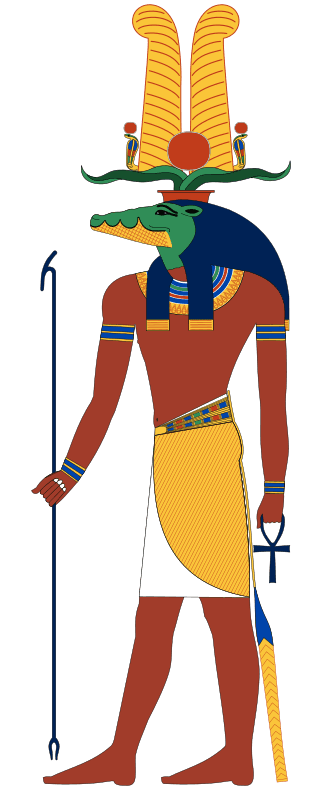
Sobek, also known as Suchus, was an ancient Egyptian deity with a complex history and nature. He is associated with the Nile crocodile and is usually represented as a crocodile or crocodile-headed humanoid. Sobek was also associated with pharaonic power, fertility, and military prowess, but served additionally as a protective deity with apotropaic qualities, invoked especially for protecting others from the dangers presented by the Nile.
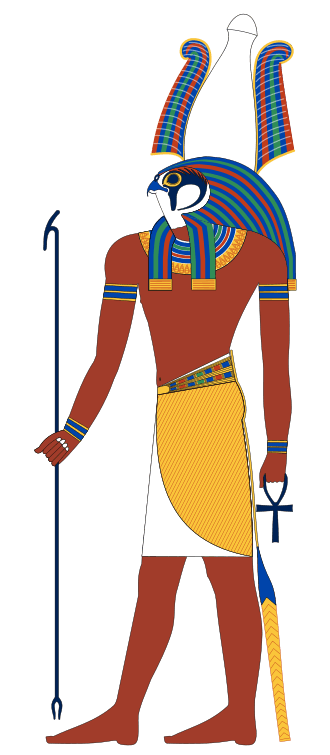
Sokar is a hawk or falcon god of the Memphite necropolis in the Ancient Egyptian religion, who was known as a patron of the living, as well as a god of the resurrected dead. He is also in some accounts a solar deity as for The Temple of Sokar in Memphis.
Solar barques were the vessels used by the sun god Ra in ancient Egyptian mythology. During the day, Ra was said to use a vessel called the Mandjet or the Boat of Millions of Years, and the vessel he used during the night was known as the Mesektet.
Solar barques were the vessels used by the sun god Ra in ancient Egyptian mythology. During the day, Ra was said to use a vessel called the Mandjet or the Boat of Millions of Years, and the vessel he used during the night was known as the Mesektet.
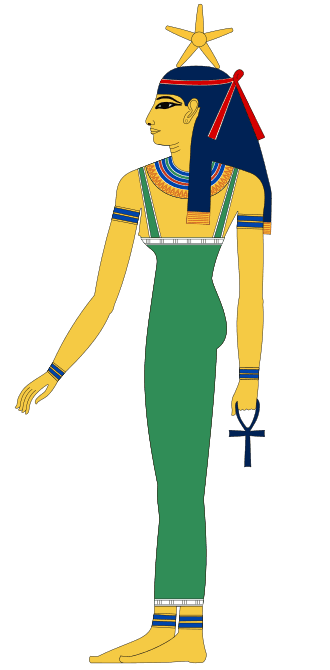
Sopdet is the Ancient Egyptian name of the star Sirius and its personification as an Egyptian goddess. Known to the Greeks as Sothis, she was conflated with Isis as a goddess and Anubis as a god.
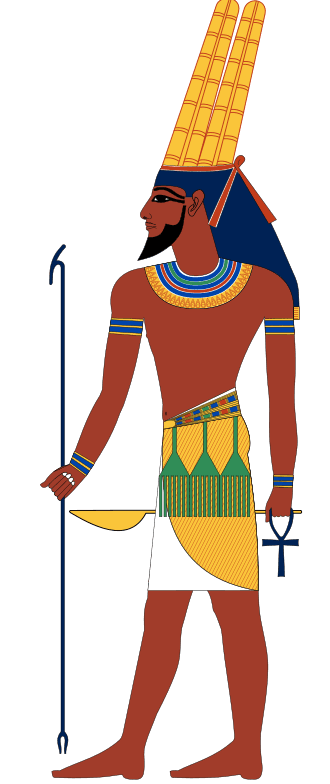
Sopdu was a god of the sky and of eastern border regions in the religion of Ancient Egypt. He was Khensit's husband.

The Souls of Pe and Nekhen, mentioned first in the Pyramid Texts, refer to the ancestors of the ancient Egyptian kings. Nekhen was the Upper Egyptian centre of the worship of the god Horus, whose successors the Egyptian pharaohs were thought to be. Pe was a Lower Egyptian town, not known for its Horus worship, but Ra had awarded the town to Horus after his eye was injured in the struggle for the throne of Egypt.
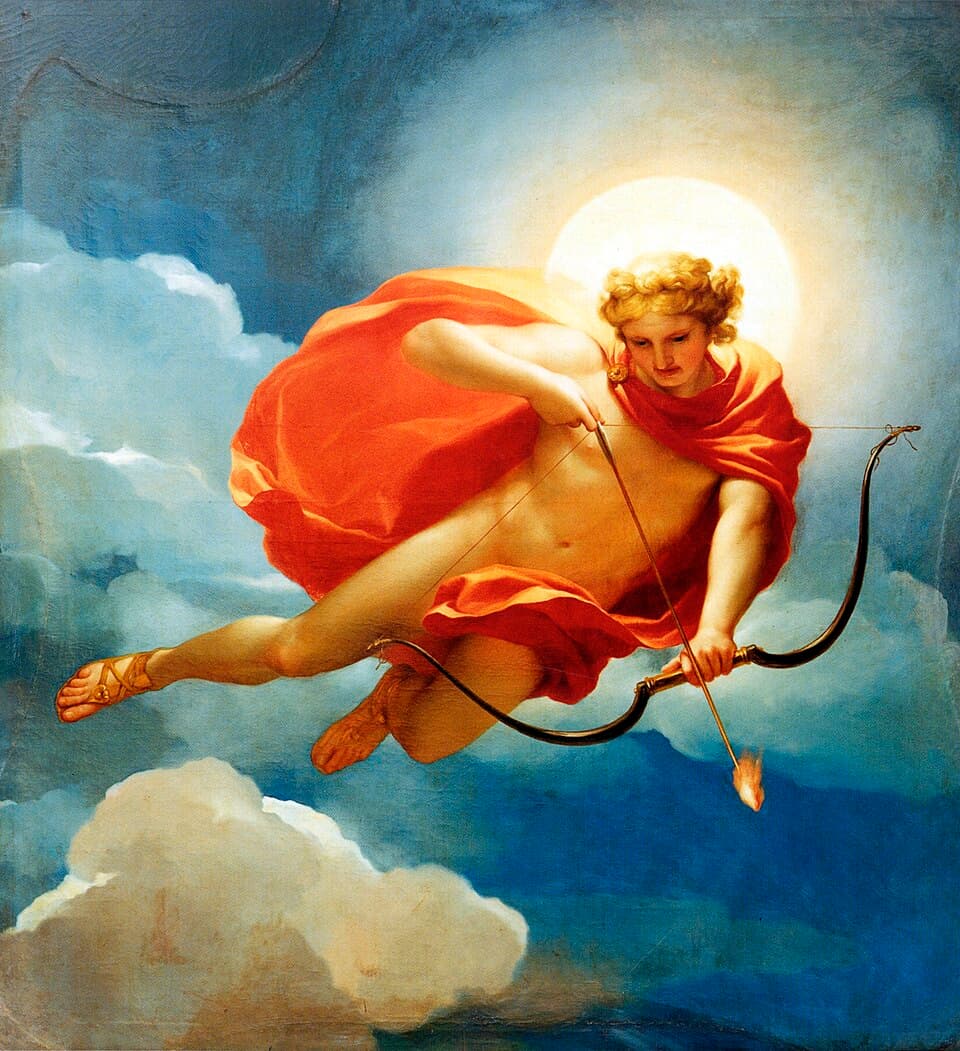
A solar deity or sun deity is a deity who represents the Sun or an aspect thereof. Such deities are usually associated with power and strength. Solar deities and Sun worship can be found throughout most of recorded history in various forms.
Ta-Bitjet is an ancient goddess of Egyptian mythology. She is identified as the consort of Horus. Ta-Bitjet is a scorpion goddess and the blood that flowed from when Horus ruptured her hymen can serve as a panacea for poisons.
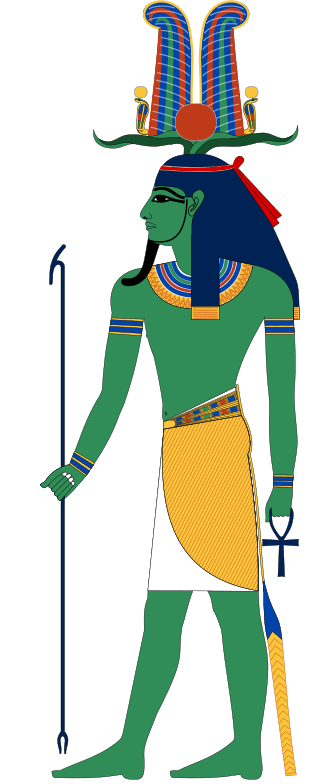
Tatenen was the deity of the primordial mound in ancient Egyptian religion. His name means "risen land" or "exalted earth", as well as referring to the silt of the Nile. As a primeval chthonic deity, Tatenen was identified with creation.
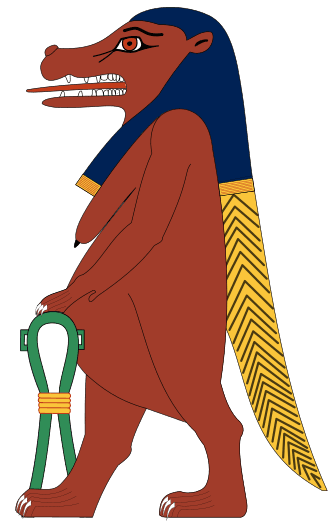
In Ancient Egyptian religion, Taweret is the protective goddess of childbirth and fertility. The name "Taweret" means "she who is great" or simply "great one", a common pacificatory address to dangerous deities. The deity is typically depicted as a bipedal female hippopotamus with feline attributes, pendulous female human breasts, the limbs and paws of a lion, and the back and tail of a Nile crocodile.

Tayt was an Egyptian goddess. Some attest her husband was Neper while others state she was possibly the consort of Hedjhotep.
Tefnut is a deity in Ancient Egyptian religion, the feminine counterpart of the air god Shu. Her mythological function is less clear than that of Shu, but Egyptologists have suggested she is connected with moisture, based on a passage in the Pyramid Texts in which she produces water, and on parallelism with Shu's connection with dry air. She was also one of the goddesses who could function as the fiery Eye of Ra.
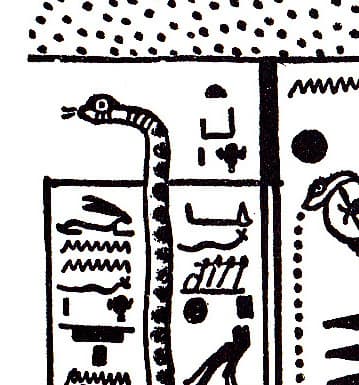
Teka-her, literally "He with the enlightened face", is a monstrous serpent from Egyptian mythology. His existence is mentioned in the Book of Gates, a composition reserved for New Kingdom pharaohs and inscribed in their tombs. Guardian god and protector, Teka-her is one of the many beings whose task it is to ensure the safety of the Duat, the underworld of the dead.
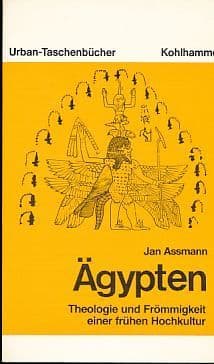
The Search for God in Ancient Egypt is a 1984 book by the German egyptologist Jan Assmann. It is a study of ancient Egyptian theology, relying on a wide range of sources.

The Theban Triad is a triad of Egyptian gods most popular in the area of Thebes, Egypt.
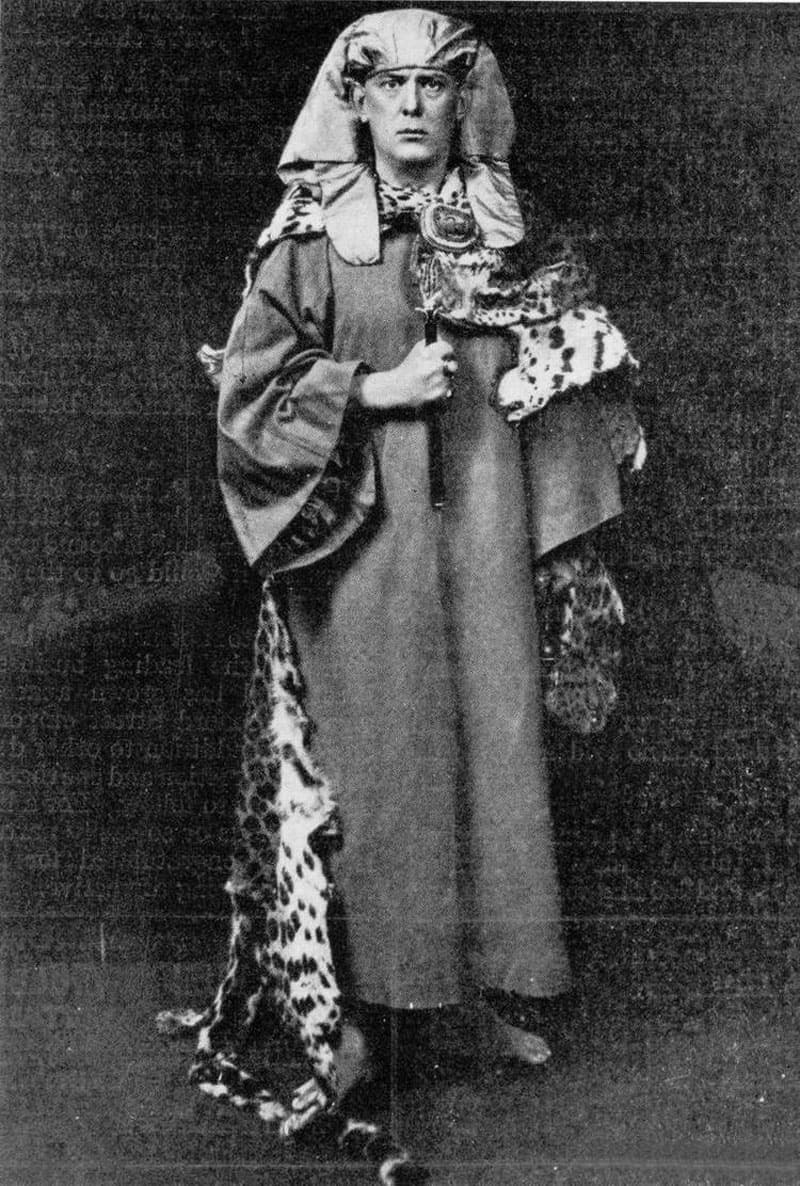
Thelema is a Western esoteric and occult social and spiritual philosophy, and a new religious movement. It was founded in the early 1900s by Aleister Crowley (1875–1947), an English writer, mystic, occultist, and ceremonial magician. Central to Thelema is the concept of discovering and following one's True Will, a divine and individual purpose that transcends ordinary desires.

A theodicy, meaning 'vindication of God', is an argument in the philosophy of religion that attempts to resolve the problem of evil, which arises when all power (omnipotence) and all goodness (omnibenevolence) are attributed to God simultaneously.
A theophoric name embeds the word equivalent of 'god' or a god's name in a person's name, reflecting something about the character of the person so named in relation to that deity. For example, names embedding Apollo, such as Apollonios or Apollodorus, existed in Greek antiquity.
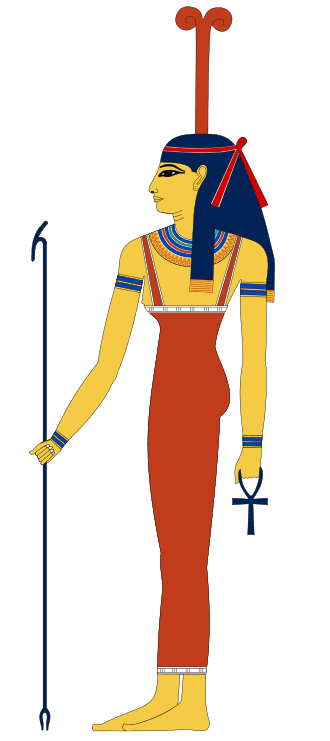
Tjenenyet, alternatively Tenenet, Tjenenet, Zenenet, Tanenet, Tenenit, Manuel de Codage transliteration Tnn. t, was an ancient Egyptian goddess of childbirth and protection. She is mentioned in texts dating from the Ptolemaic period as well as in the Book of the Dead.
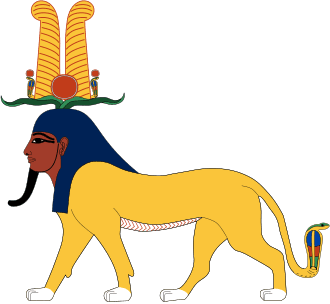
Tutu was an Egyptian god worshipped by ordinary people all over Egypt during the Late Period. The only known temple dedicated to Tutu is located in ancient Kellis. However, reliefs depicting Tutu are seen in other temples, such as the Temple of Kalabsha.
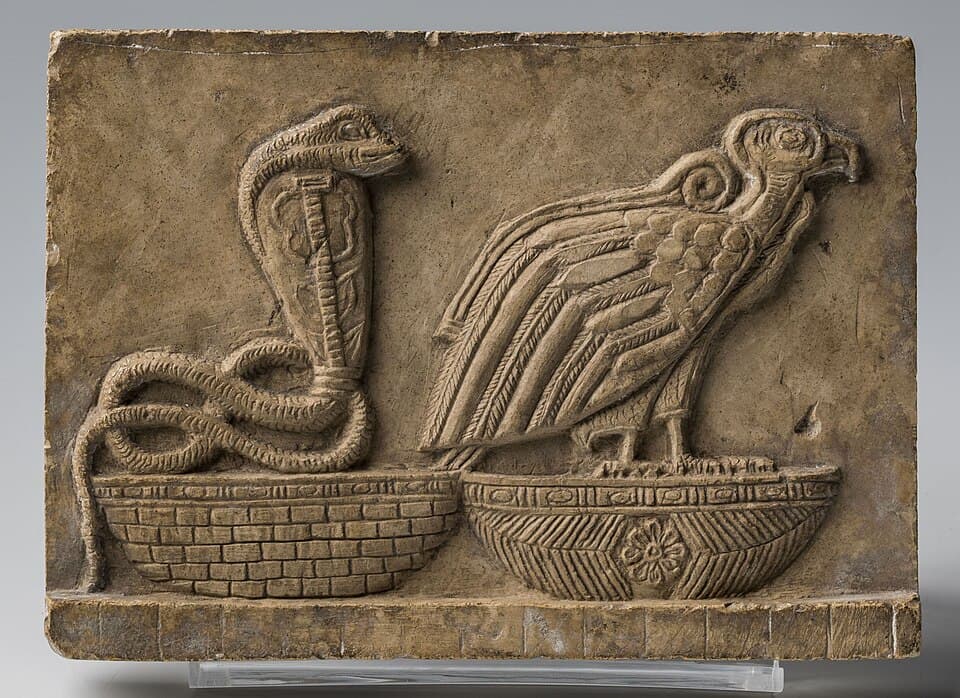
In Ancient Egyptian texts, the "Two Ladies" was a religious epithet for the goddesses Wadjet and Nekhbet, two deities who were patrons of the ancient Egyptians and worshiped by all after the unification of its two parts, Lower Egypt, and Upper Egypt. When the two parts of Egypt were joined together, there was no merger of these deities as often occurred with similar deities from various regions and cities. Both goddesses were retained because of the importance of their roles and they became known as the Two Ladies, who were the protectors of unified Egypt.

The tyet, sometimes called the knot of Isis or girdle of Isis, is an ancient Egyptian symbol that came to be connected with the goddess Isis. Its hieroglyphic depiction is catalogued as V39 in Gardiner's sign list.
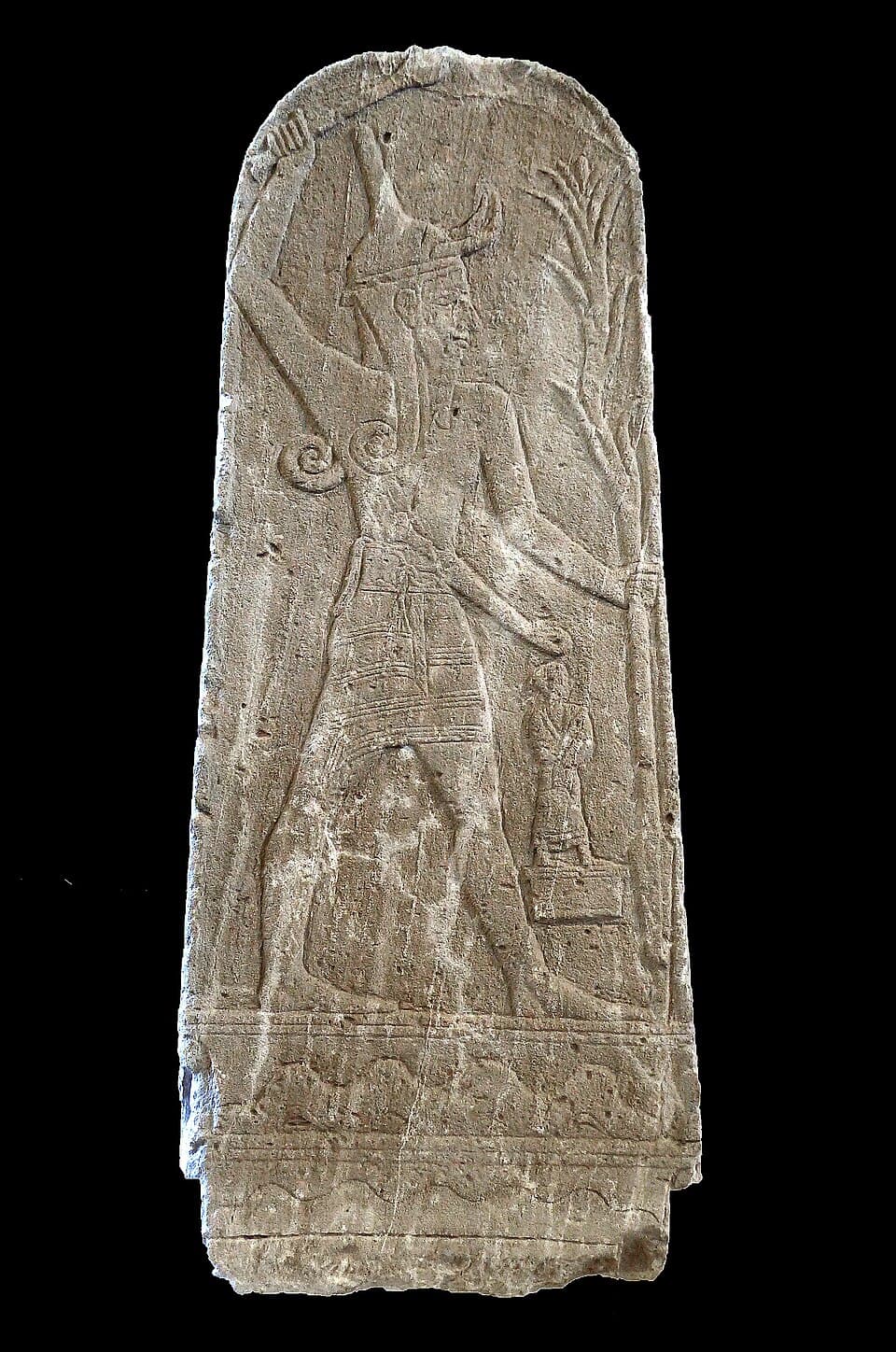
The Ugaritic pantheon included deities of local origin, many of whom are also known from Eblaite sources from the third millennium BCE or Amorite ones from the early second millennium BCE, as well as Hurrian and Mesopotamian ones. The Ugaritic pantheon is considered better documented than other aspects of Ugaritic religion, such as the life of the clergy or the social context of various offerings. Over two hundred names of deities are known from Ugaritic texts, though it has been argued the number of these who were an object of active worship was lower.

Unut, also known as Wenut or Wenet, was a prehistoric Ancient Egyptian hare and snake goddess of fertility and new birth.
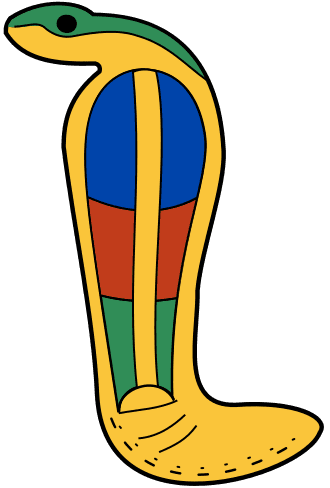
The uraeus or ouraeus is the stylized, upright form of an Egyptian cobra, used as a symbol of sovereignty, royalty, deity and divine authority in ancient Egypt.

The veneration of the dead, including one's ancestors, is based on love and respect for the deceased. In some cultures, it is related to beliefs that the dead have a continued existence, and may possess the ability to influence the fortune of the living. Some groups venerate their direct, familial ancestors.

The Vulture crown was an ancient Egyptian crown worn by Great Royal Wives and female pharaohs. It was depicted as a headdress in the shape of a vulture draped over the head, with its wings hanging down on the sides. It was a symbol of protection associated with the vulture goddess Nekhbet, who often wore this crown when depicted in a human form.
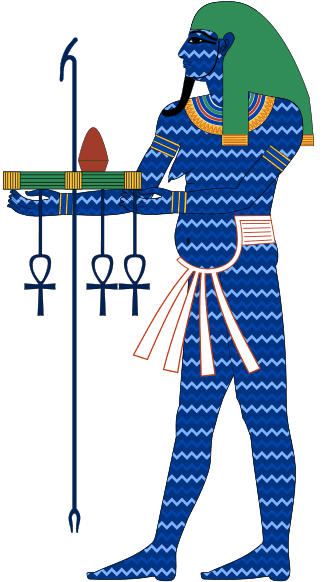
Wadj-wer, also spelled Uatch-ur is an Egyptian god of fertility and the personification of the Mediterranean Sea, whose name means the "great green". He also symbolizes the richness of the waters of the Nile Delta.

Wadjet, known to the Greek world as Uto or Buto among other renderings including Wedjat, Uadjet, and Udjo, was originally the ancient Egyptian local goddess of the city of Dep or Buto in Lower Egypt, which was an important site in prehistoric Egypt. Wadjet's worship originally started in the Predynastic period, but evolved over time from a local goddess to a patron goddess.
Weneg was a sky and death deity from ancient Egyptian religion, who was said to protect the earth and her inhabitants against the arrival of the "great chaos".
Wepset (wps. t) is an ancient Egyptian goddess. She is one of the personifications of the uraeus cobra that protected the kings; she is also an Eye of Ra and is mentioned as "the Eye" in the Coffin Texts.
In Egyptian mythology, Wepwawet was originally a jackal deity of funerary rites, war, and royalty, whose cult centre was Asyut in Upper Egypt. His name means opener of the ways and he is often depicted as a wolf standing at the prow of a solar-boat. Some interpret that Wepwawet was seen as a scout, going out to clear routes for the army to proceed forward.
Werethekau was an ancient Egyptian and ancient Nubian deity. She served as the personification of supernatural powers.
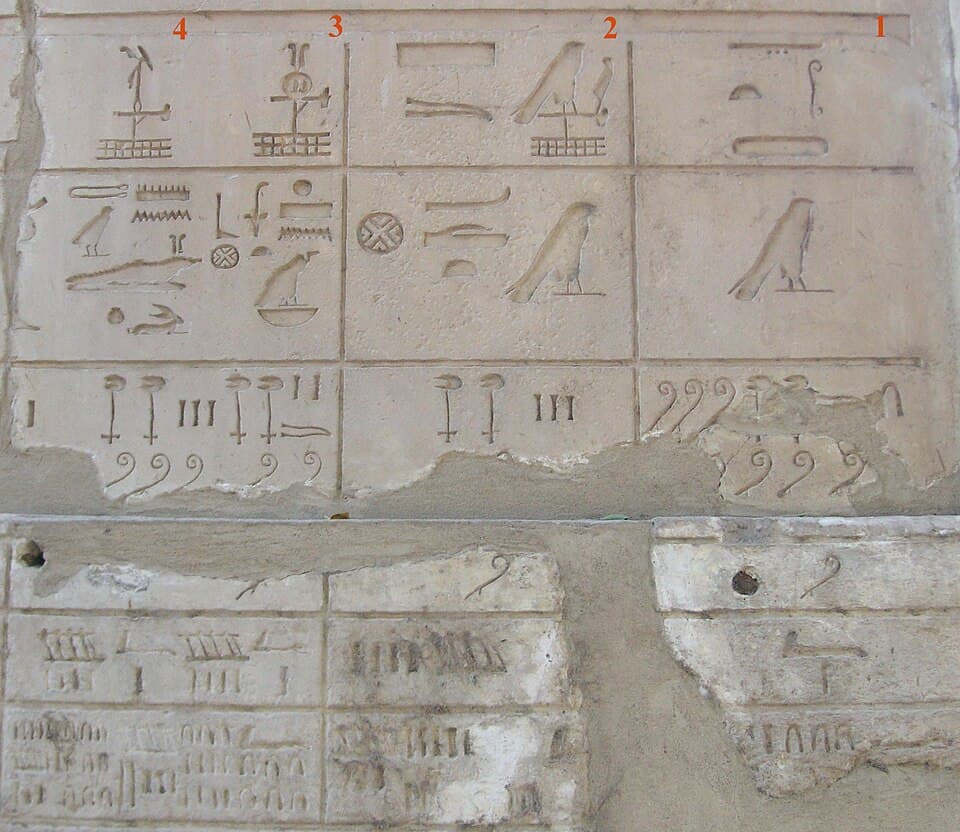
Wetjes-Hor was the second nome of Upper Egypt. Its major population center, modern Edfu, was called Behdet and Djeba in antiquity. Its Middle Kingdom cemetery is provides much information on the burial practices of commoners during this period.

Hedjet was the White Crown of pharaonic Upper Egypt. After the unification of Upper and Lower Egypt, it was combined with the Deshret, the Red Crown of Lower Egypt, to form the Pschent, the double crown of Egypt. The symbol sometimes used for the White Crown was the vulture goddess Nekhbet shown next to the head of the cobra goddess Wadjet, the uraeus on the Pschent.

The winged sun is a solar symbol associated with divinity, royalty, and power in the Ancient Near East. The Illyrian Sun-deity is also represented as a winged sun.
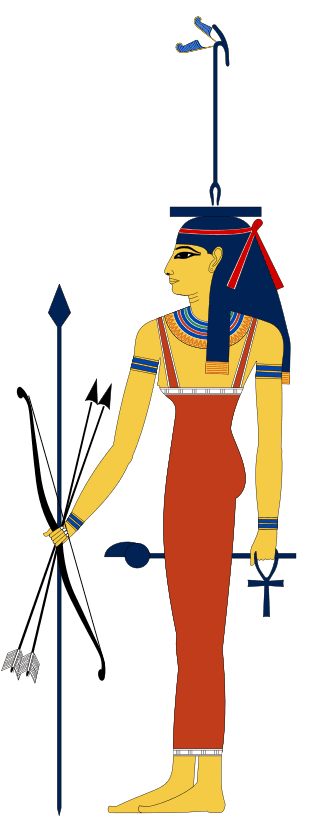
Wosret, Waset, or Wosyet meaning "the powerful female one" was an Egyptian goddess whose cult was centered on Thebes in Upper Egypt and her name was the same as the Egyptian name of the city, Waset. She was a minor goddess, but three pharaohs during the Twelfth Dynasty plus an additional one during the second intermediate peroiod incorporated her name into theirs: Senwosret, or Senusret, means "man of Wosret".
Yam was a god representing the sea and other sources of water worshiped in various locations on the eastern Mediterranean coast, as well as further inland in modern Syria. He is best known from the Ugaritic texts. While he was a minor deity in Ugaritic religion, he is nonetheless attested as a recipient of offerings, and a number of theophoric names invoking him have been identified.