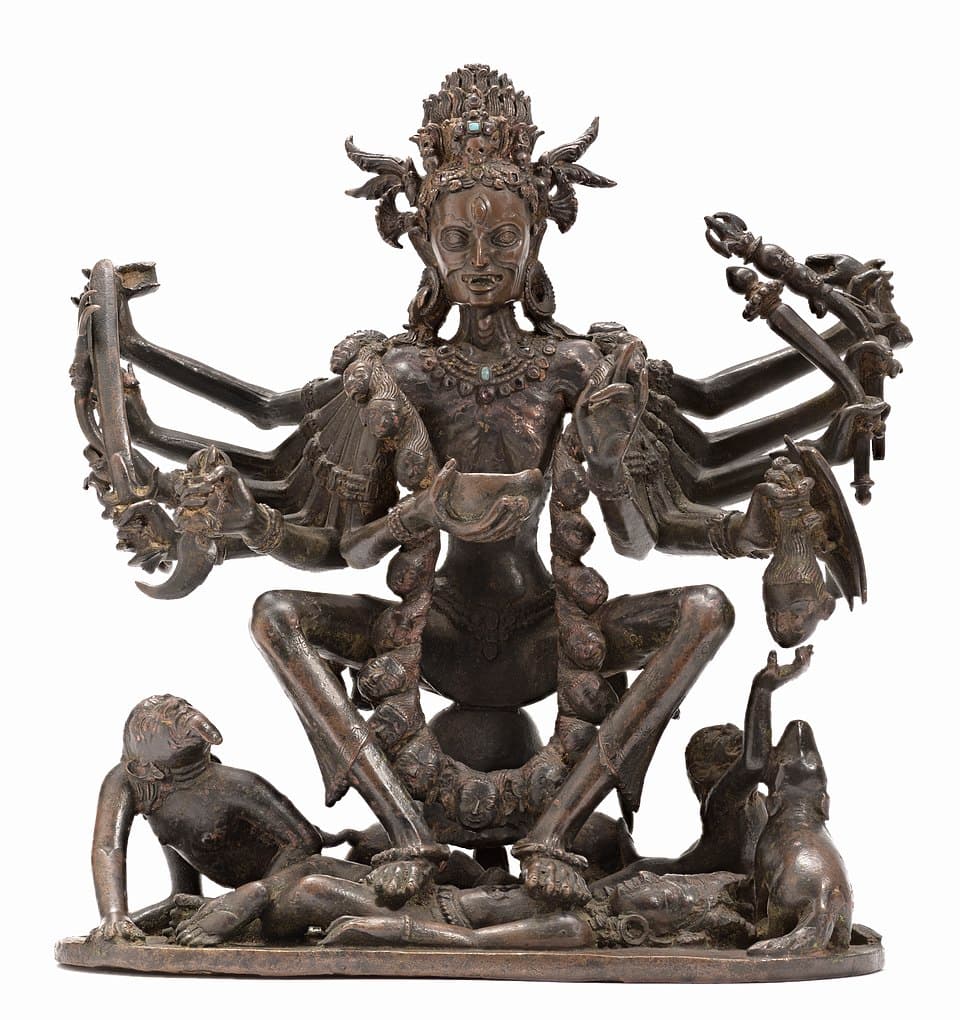
Chamunda
Chamunda, also known as Chamundeshwari, Chamundi or is a fearsome form of Chandi, the Hindu mother goddess, Mahadevi and is one of the seven Matrikas.
Pantheon
Page 2 of 6.
549 entries
These three are recorded for the Hindu pantheon as a whole. The archive holds no separate culture, civilization or period for the individual entries below.
Page 2 of 6
Showing 109–216 of 549, alphabetically.
Chamunda, also known as Chamundeshwari, Chamundi or is a fearsome form of Chandi, the Hindu mother goddess, Mahadevi and is one of the seven Matrikas.
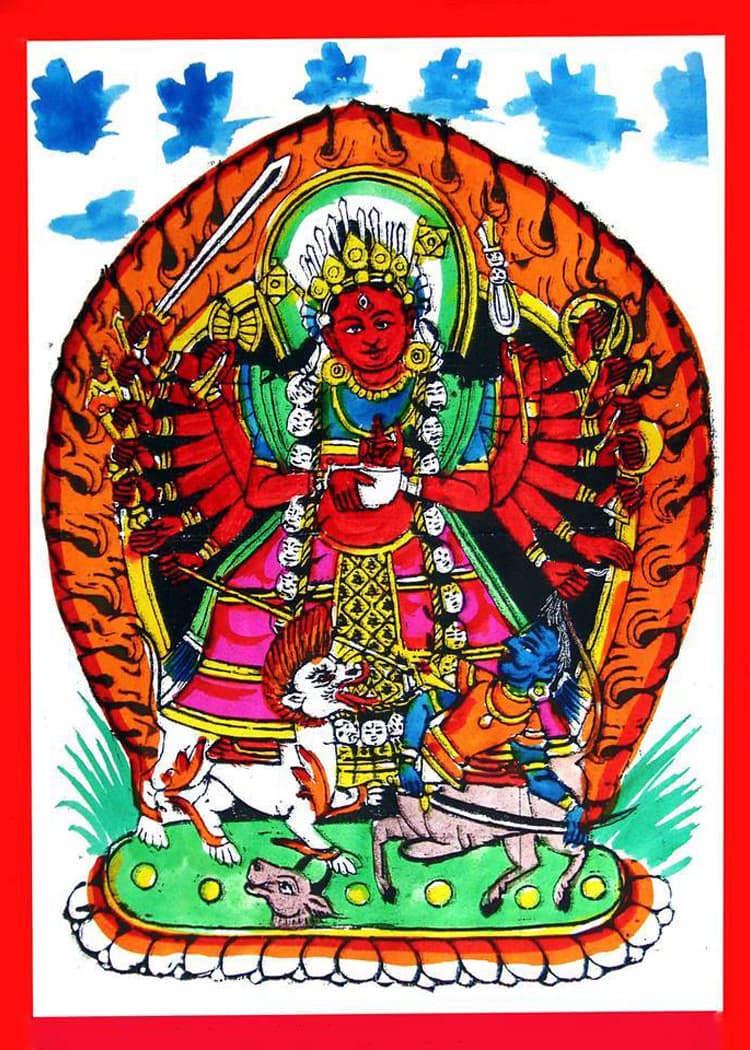
Chandi or Chandika is a Hindu deity. Chandika is a form of goddess Durga. She shares similarities with the Goddess Chamunda, not only in name but also in attributes and iconography.
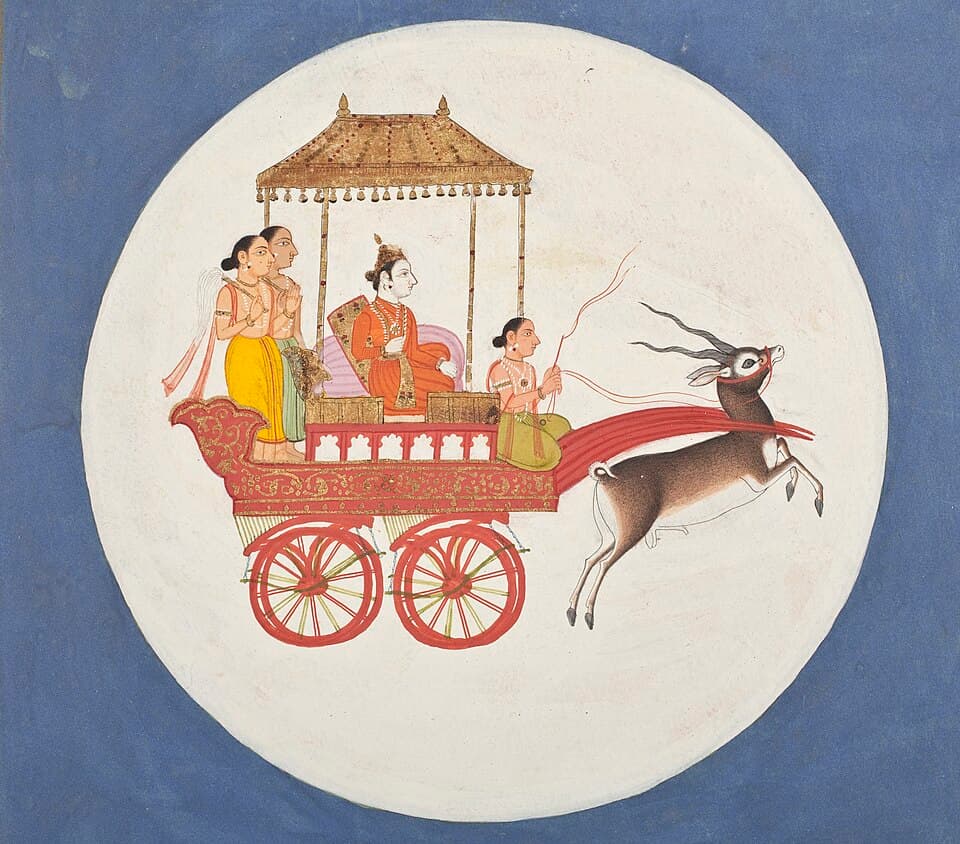
Chandra, also known as Soma, is the Hindu god of the Moon, and is associated with the night, plants and vegetation. He is one of the Navagraha and Dikpala.

Chandraghanta is a form of the Hindu goddess Mahadevi, venerated as the destroyer of demons and protector of her devotees. She is the third of the Navadurga, and is worshipped on the third day of Navaratri.
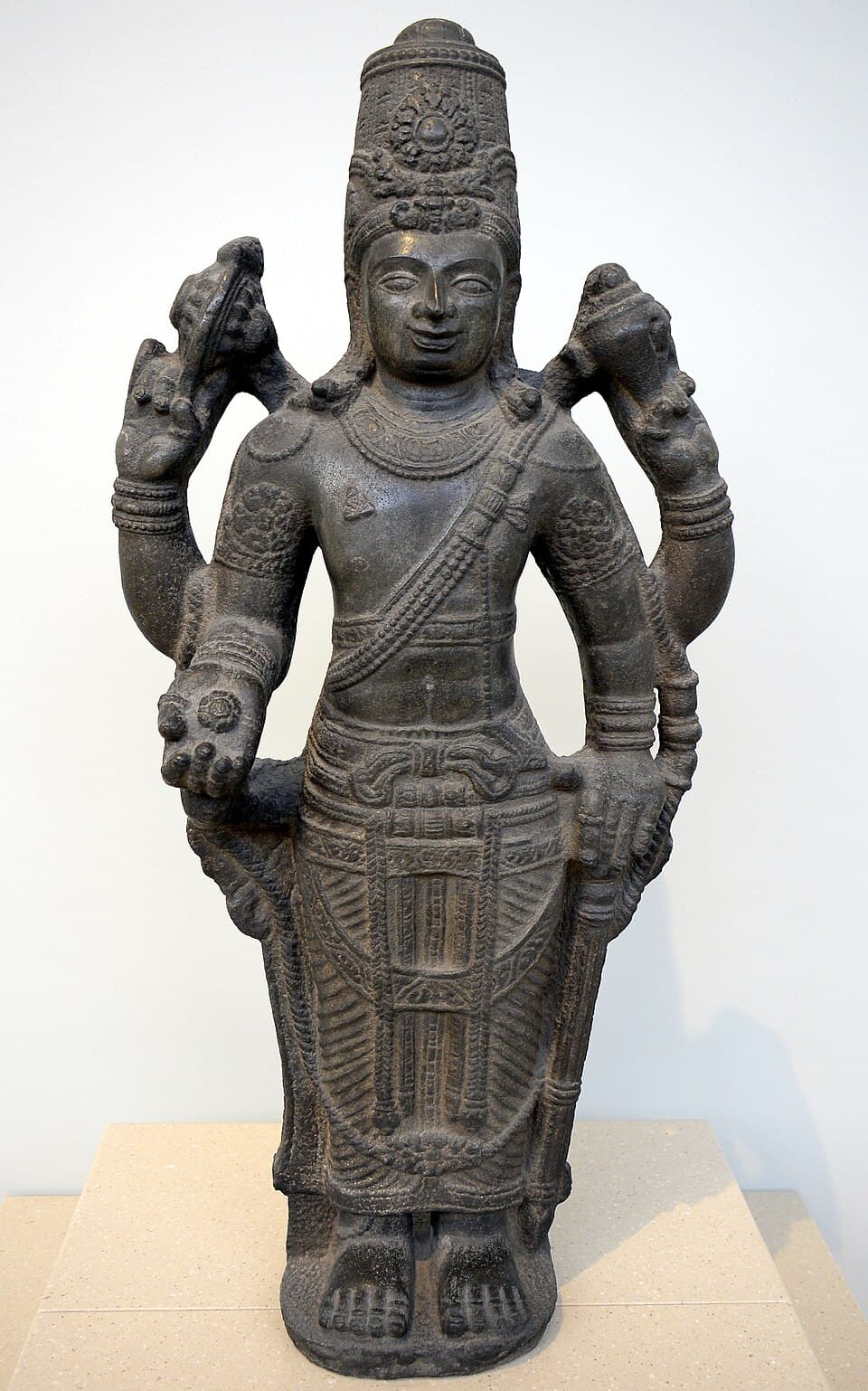
Chaturbhuja is a concept in Hindu iconography in which a deity is depicted with four arms. Several Hindu deities are often portrayed with four arms in their iconography, featured in Hindu literature. The iconography of four arms is regarded to symbolise divinity and power, as well as dominion over the four quarters of the universe.
Chelamma is a Hindu goddess of the Southern Karnataka region of India.
Chenjiamman or Senjiamman (kamalakaniamman) is the guardian deity of Gingee. Her shrine sits atop the Rajagiri hillock in the Gingee Fort.
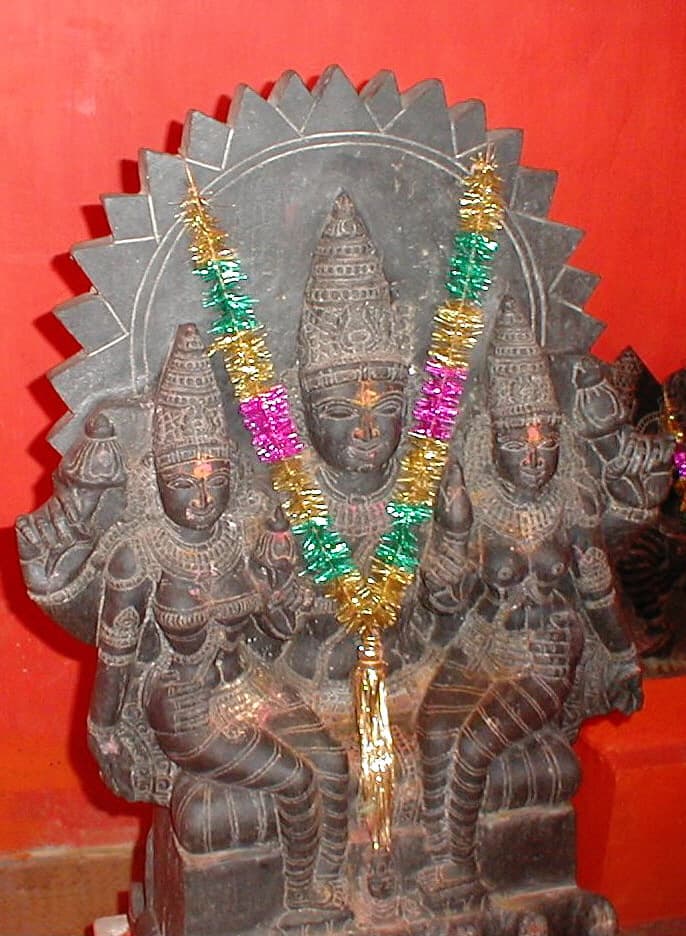
Chhaya or Chaya, also known as Savarna, is the Hindu personification and goddess of shadow, and a consort of Surya, the Hindu sun god. She is the shadow-image or reflection of Saranyu (Sanjna), the first wife of Surya. Chhaya was born from the shadow of Sanjna and replaced Sanjna in her house, after the latter temporarily left her husband.
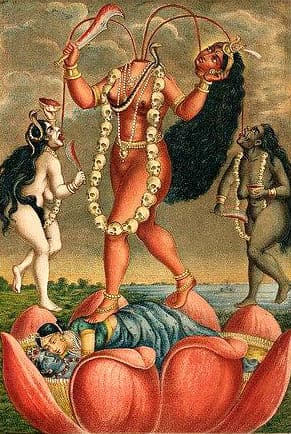
Chhinnamasta, often spelled Chinnamasta, and also called Chhinnamastika, Chhinnamasta Kali, Prachanda Chandika and Jogani Maa, is a Hindu goddess (Devi). She is one of the Mahavidyas, ten goddesses from the esoteric tradition of Tantra, and a ferocious aspect of Mahadevi, the Hindu mother goddess. The self-decapitated nude goddess, usually standing or seated on a divine copulating couple, holds her own severed head in one hand and a scimitar in another.
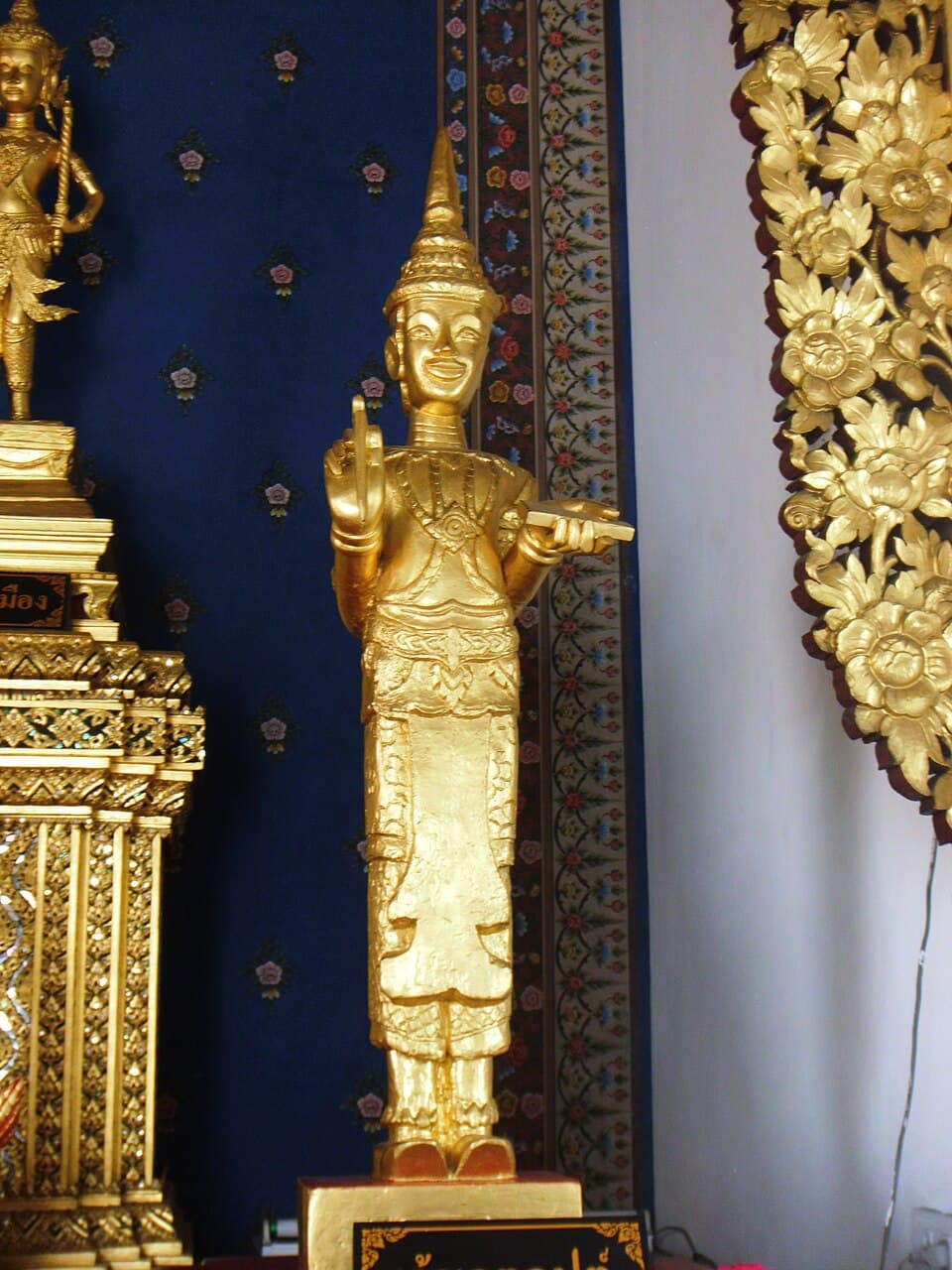
Chitragupta is a Hindu deity who serves as the registrar of the dead. He is responsible for maintaining a record of the actions of human beings in a register called the Agrasandhanī. Upon the death of a human and their arrival at Yamaloka, Chitragupta reads out their deeds, allowing the god of death, Yama, to decide whether they go to Svarga or Naraka, depending on their actions on earth.

The marital status of the Hindu deity Ganesha varies widely in mythological stories and the issue has been the subject of considerable scholarly review. Several patterns of associations with different consorts are identifiable. One pattern of myths identifies Ganesha as an unmarried brahmacārin with no consorts.
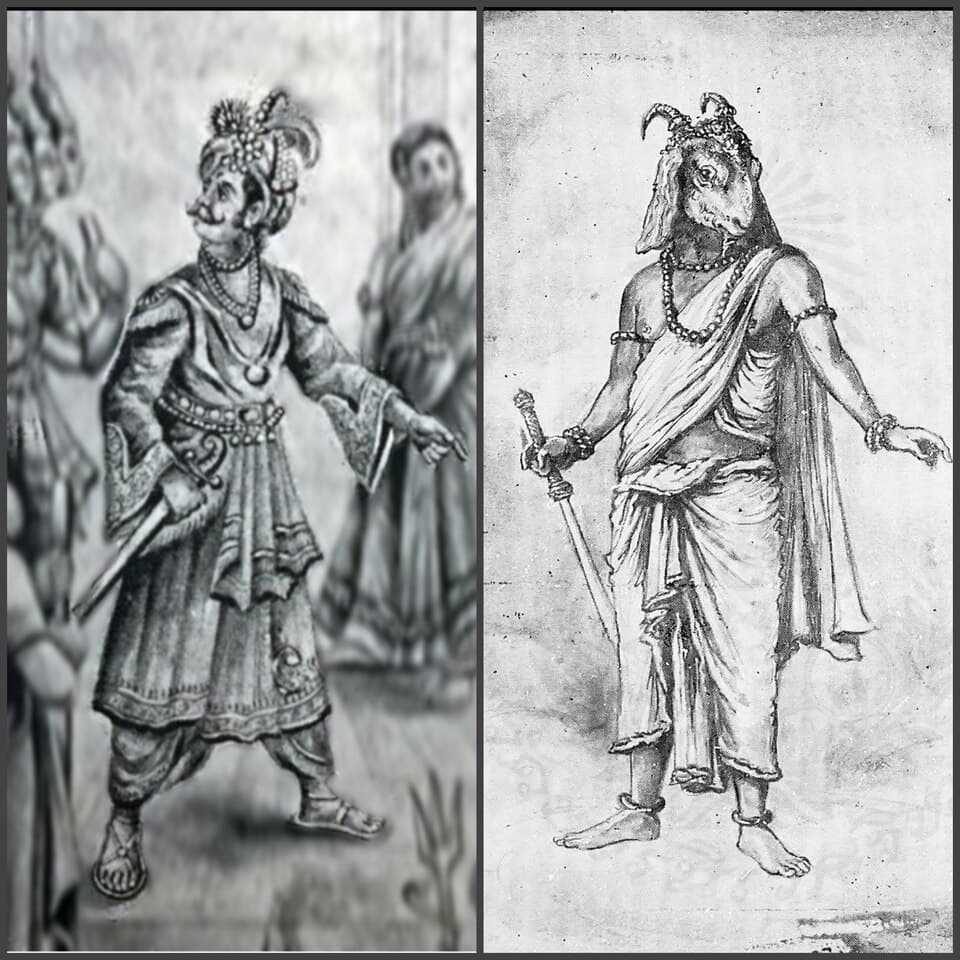
Daksha is a Hindu god whose role underwent a significant transformation from Vedic to Itihasa-Puranic mythology. In the Rigveda, Daksha is an aditya and is associated with priestly skills.
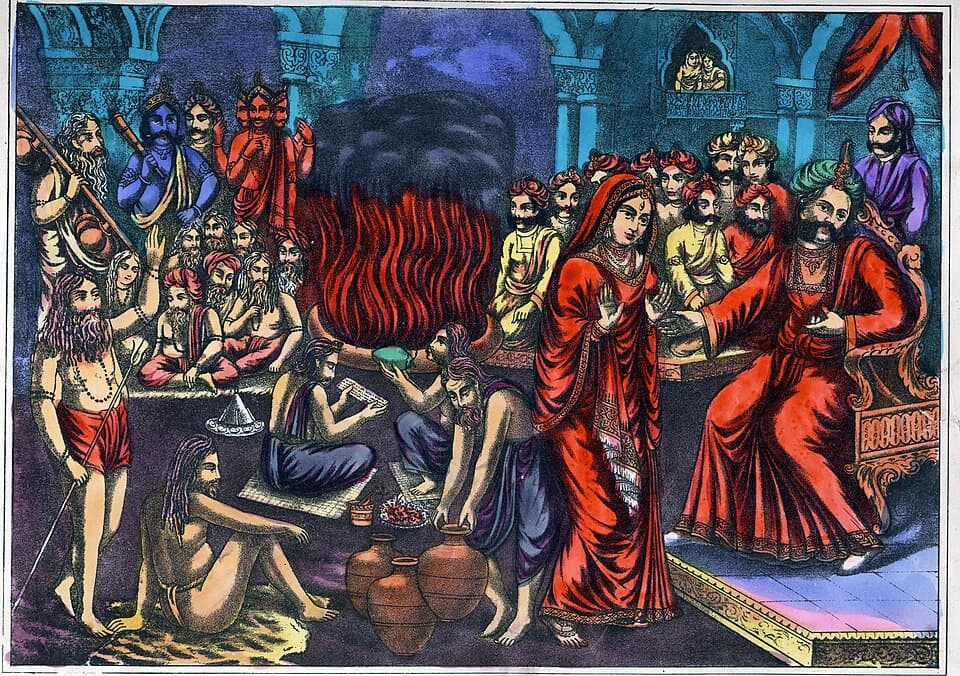
Dakṣayajña is an important event in Hindu mythology that is narrated in various Hindu scriptures. It refers to a yajna (ritual-sacrifice) organised by Daksha, where his daughter, Sati, immolates herself. The wrath of the god Shiva, Sati's husband, thereafter destroys the sacrificial ceremony.

Dakshinamurti is an aspect of the Hindu god Shiva as a guru (teacher). He is regarded to be the personification of the supreme or the ultimate awareness, understanding, and knowledge. Dakshinamurti represents Shiva as a teacher of yoga, music, and wisdom, offering an exposition of the Shastras.

In Hindu belief, the danavas are a race descending from Kashyapa and his wife Danu, a daughter of the progenitor god, Daksha. It is mentioned that there are one hundred danavas.

Danu is a Hindu primordial goddess. She is mentioned in the Rigveda to be the mother of the eponymous race known as the danavas. The word Danu described the primeval waters that this deity perhaps embodied.
Dasai is a Sanskrit word found in ancient Indian texts such as the Rigveda, Pali canon, and the Arthashastra. , The Sanskrit term Dasa generally translates to "servant," "devotee," or "votary," often indicating a person engaged in selfless service or a "slave of God" in spiritual contexts. It is primarily used in religious and cultural contexts to signify humility, servitude, and devotion.
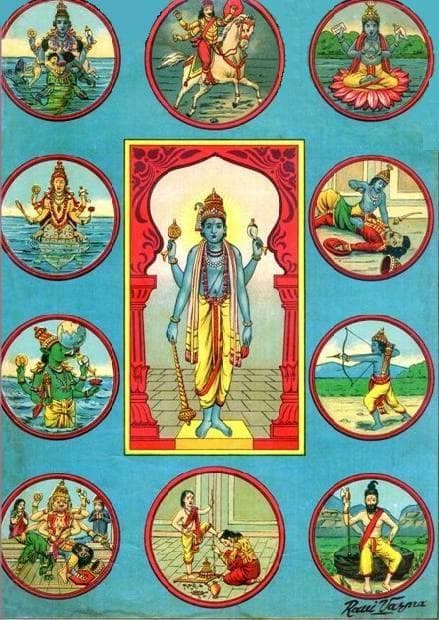
The Dashavatara are the ten primary avatars of Vishnu, a principal Hindu god. Vishnu is said to descend in the form of an avatar to restore cosmic order. The word Dashavatara derives from daśa, meaning "ten", and avatāra, roughly equivalent to "incarnation".
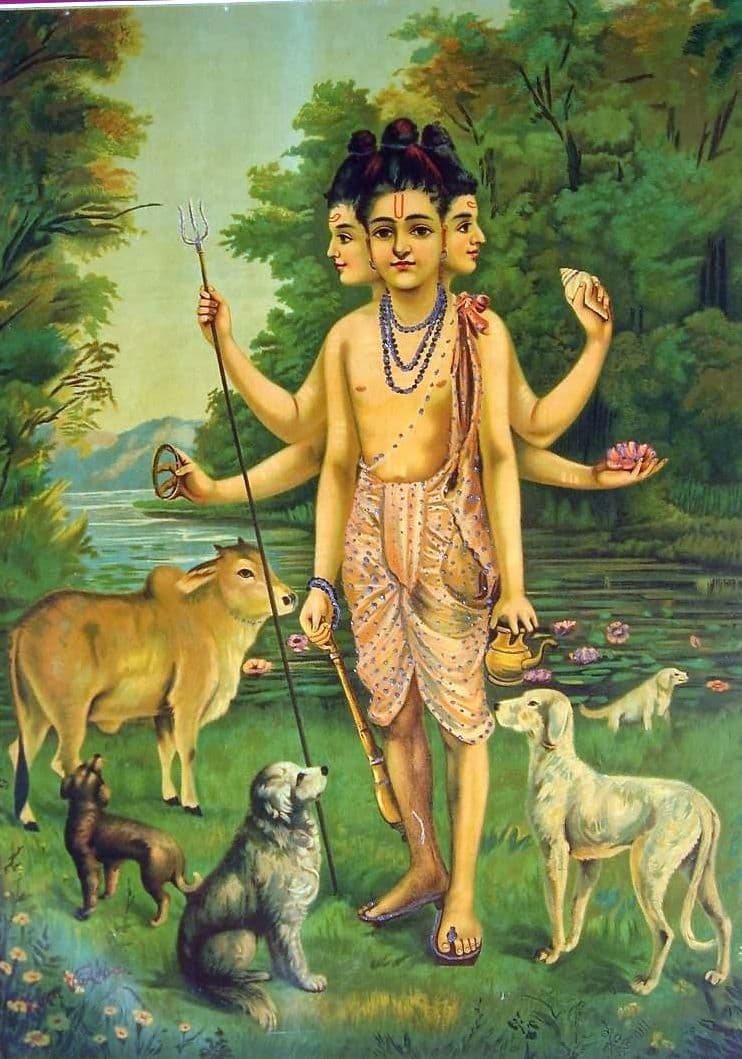
Dattatreya, Dattā or Dattaguru, is a paradigmatic Sannyasi (monk) and one of the lords of yoga, venerated as a Hindu god. He is considered to be an avatar and combined form of the three Hindu gods Brahma, Vishnu, and Shiva, who are also collectively known as the Trimurti, and as the manifestation of Parabrahma, the supreme being, in texts such as the Bhagavata Purana, the Markandeya Purana, and the Brahmanda Purana, though stories about his birth and origin vary from text to text. Several Upanishads are dedicated to him, as are texts of the Vedanta-Yoga tradition in Hinduism.
‘’‘Dev Mogra’’’ is a tribal deity revered primarily by the Bhil and related indigenous communities inhabiting the Satpura Range of western India. Dev Mogra is regarded as an ancestral and protective deity and forms part of the traditional religious and cultural practices of Bhil tribal communities in the regions of present-day Gujarat and Maharashtra.

Deva means 'shiny', 'exalted', 'heavenly being', 'divine being', 'anything of excellence', and is also one of the Sanskrit terms used to indicate a deity in Hinduism. Deva is a masculine term; the feminine equivalent is Devi. The word is a cognate with Latin deus ('god') and Greek Zeus.
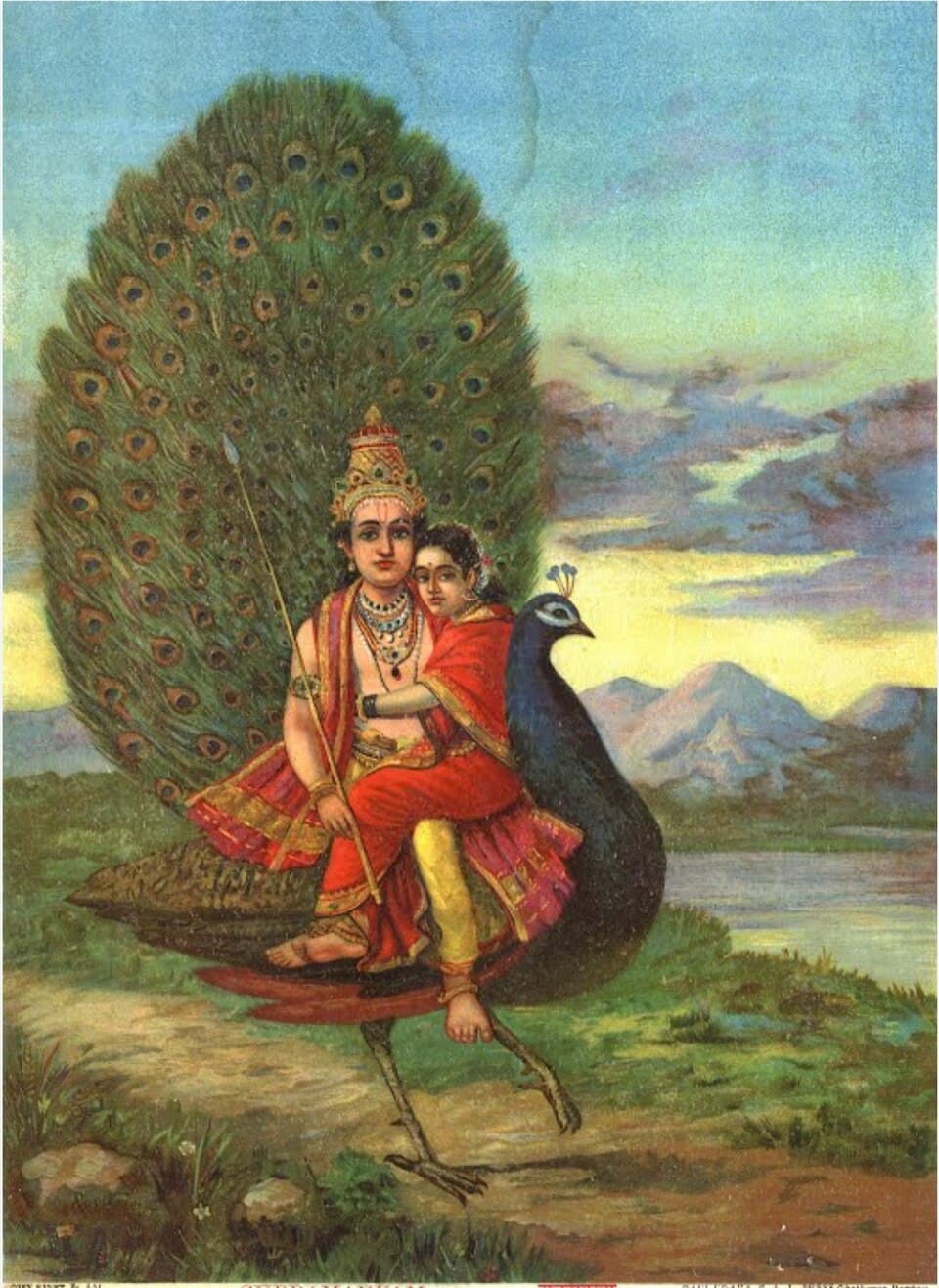
Devasena is the Hindu goddess of aspirations, and the consort of the war god Kartikeya (Murugan). She is also known as Devayanai, Deivanai, and Deivayanai in Tamil texts. Her name is also spelled as Teyvanai or Tevayanai.
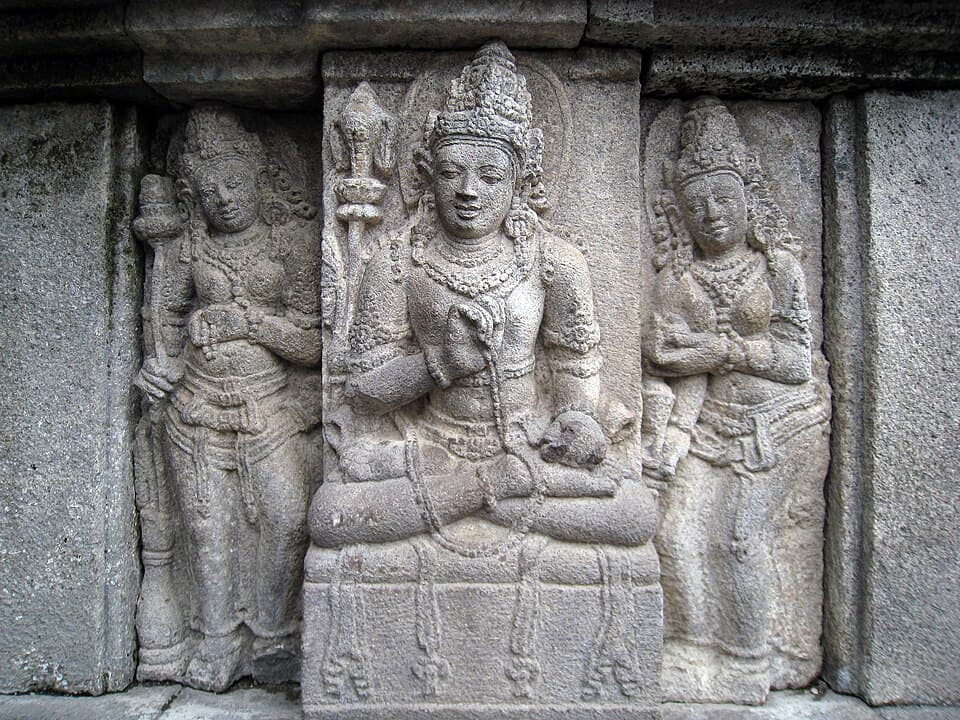
Devata are smaller and more focused Devas (Deities) in Indian religions, such as Hinduism and Buddhism. The term "devata" itself can also mean deva. They can be either male or female.
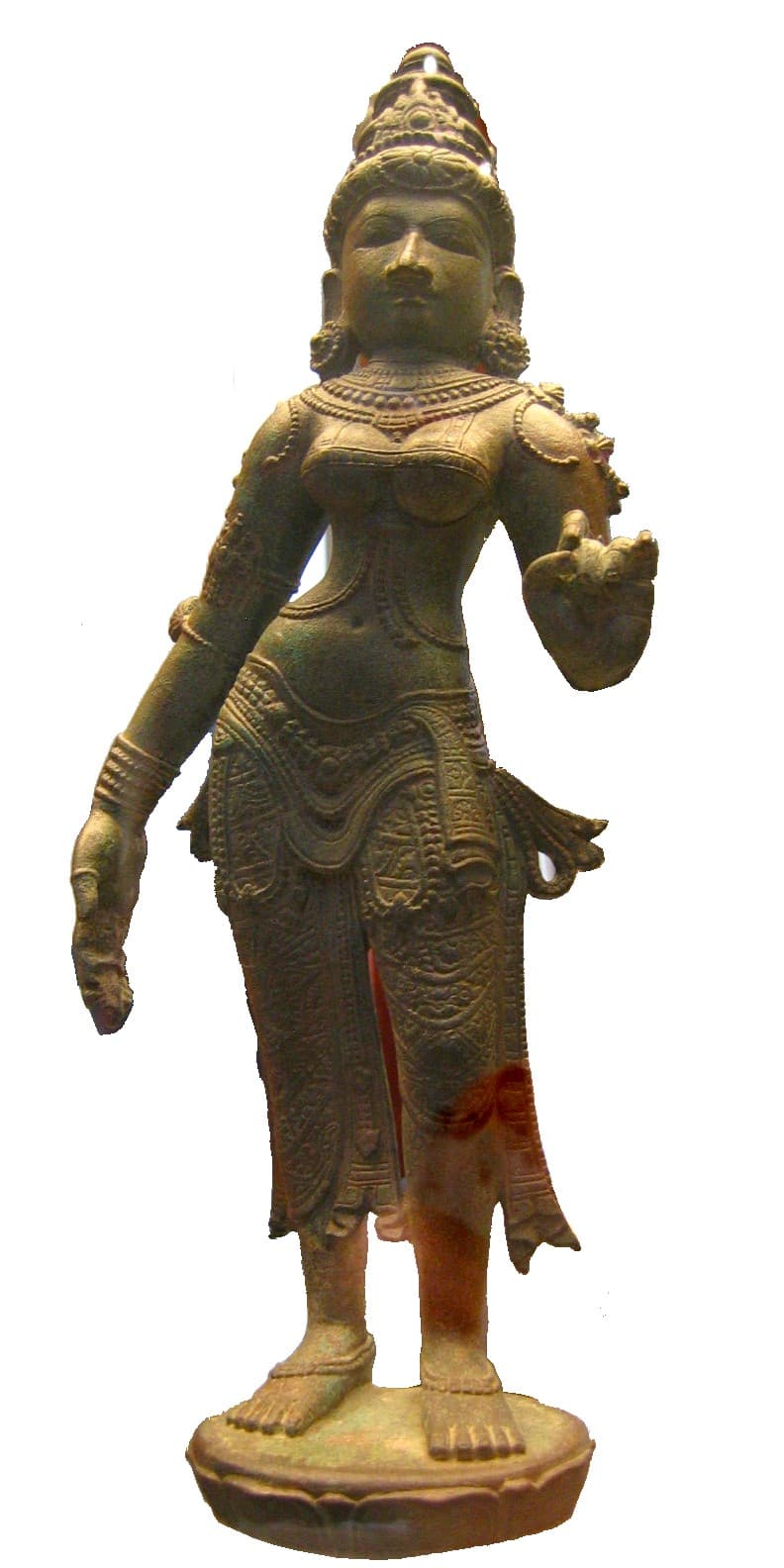
Devī is the Sanskrit word for 'goddess'; the masculine form is Deva. Devi and Deva mean 'heavenly, divine, anything of excellence', and are gender-specific terms for deity in Indian religions.
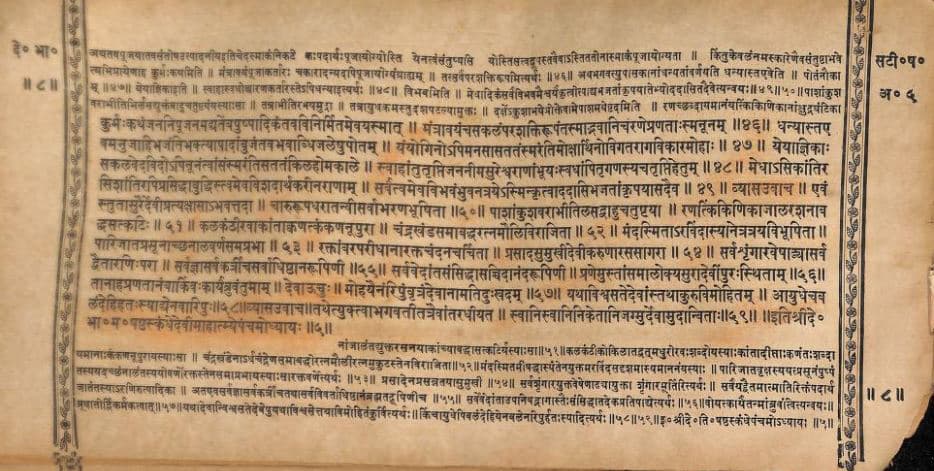
The Devi Bhagavata Purana, also known as the Devi Purana or simply Devi Bhagavatam, is one of the major Puranas of Hinduism. Composed in Sanskrit, the text is considered a Mahapurana for Devi worshippers (Shaktas), while others classify it as an Upapurana instead. It promotes bhakti (devotion) towards Mahadevi, integrating themes from the Shaktadvaitavada tradition.

Devi Kanya Kumari is a manifestation of the Hindu goddess Mahadevi in the form of an adolescent girl. She is variously described by various traditions of Hinduism to either be a form of Parvati or Lakshmi. She is also worshipped as an incarnation of the goddess Bhadrakali by Shaktas, and is known by several names such as Shrī Bāla Bhadra, Shrī Bāla, Kanya Devi, and Devi Kumari.
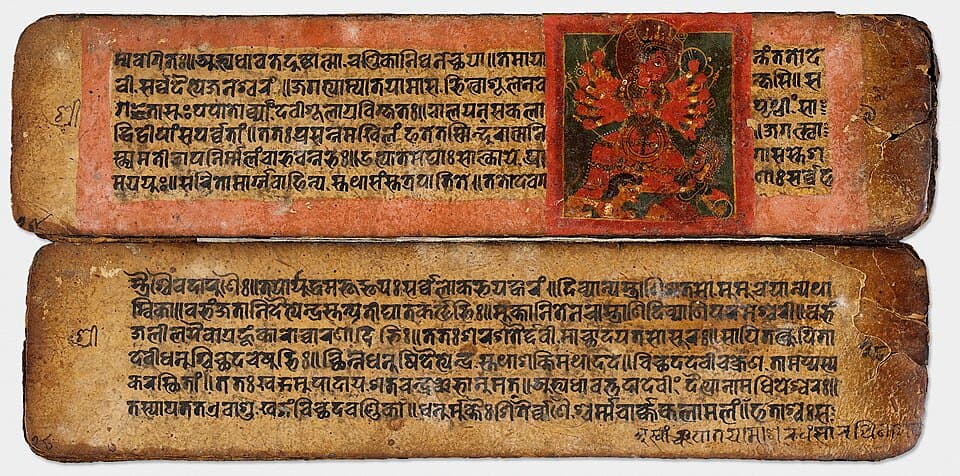
The Devi Mahatmya or Devi Mahatmyam is a Hindu philosophical text describing the Goddess, known as Adi Parashakti or Durga, as the supreme divine ultimate reality and creator of the universe. It is part of the Mārkanḍeya Purāna.
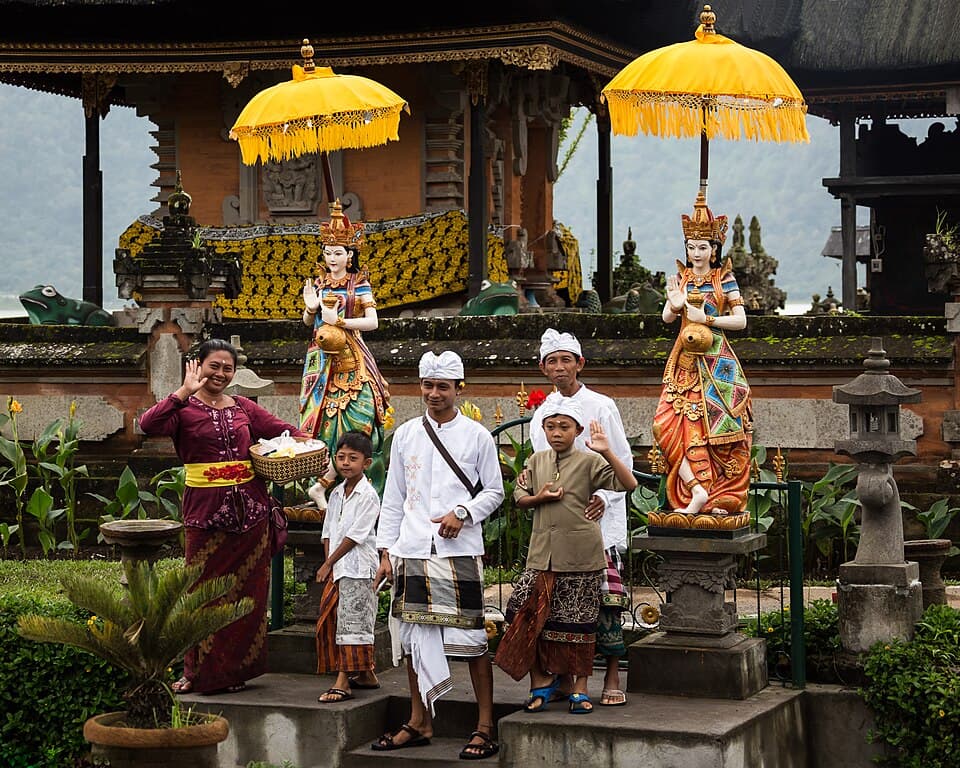
Dewi Danu is the water goddess of the Balinese Hindus, who call their belief-system Agama Tirta, or belief-system of the water. She is one of two supreme deities in the Balinese tradition.
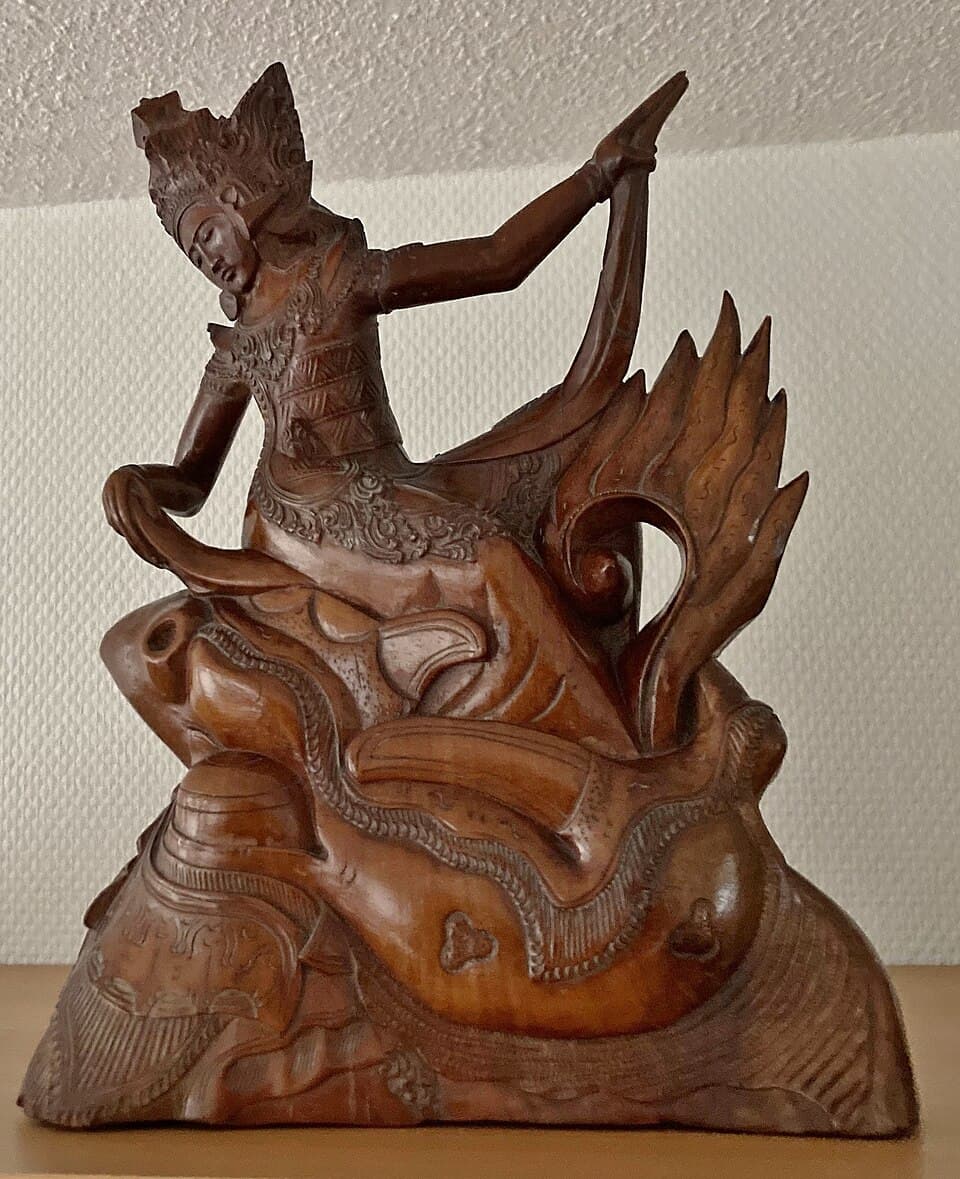
Dewi Ratih, also known as Sang Hyang Ratih or Sang Hyang Semara Ratih, is a Hindu lunar goddess worshipped in Java and Bali. She is well known for her beauty and grace, thus she was also known as the Goddess of Beauty. Her myth is linked to lunar eclipses.
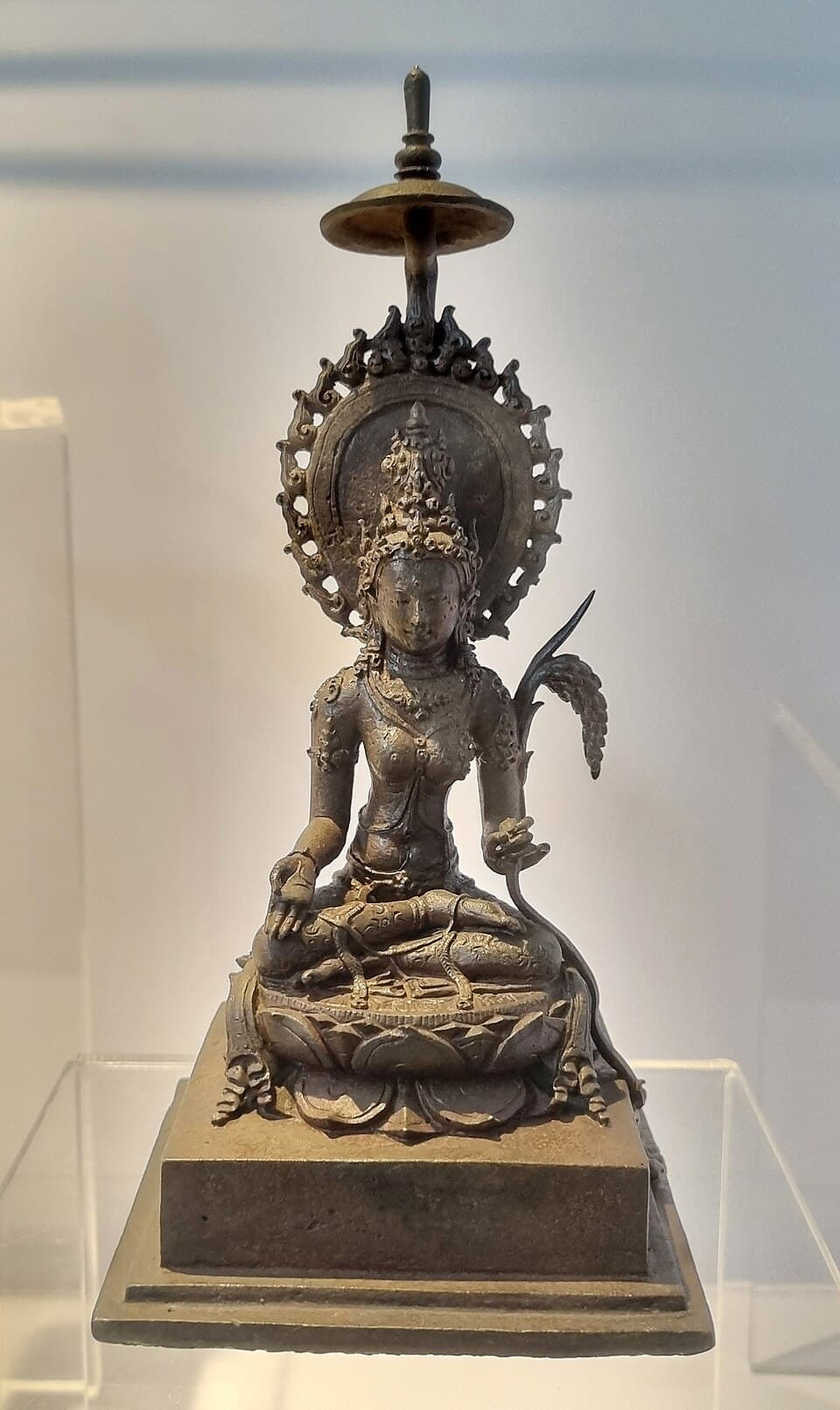
Dewi Sri or Shridevi is the Javanese, Sundanese, and Balinese Hindu Goddess of rice and fertility, still widely worshiped on the islands of Java, Bali and Lombok, Indonesia. She is often associated or equated with the Hindu goddess Lakshmi, the shakti (consort) of Vishnu.
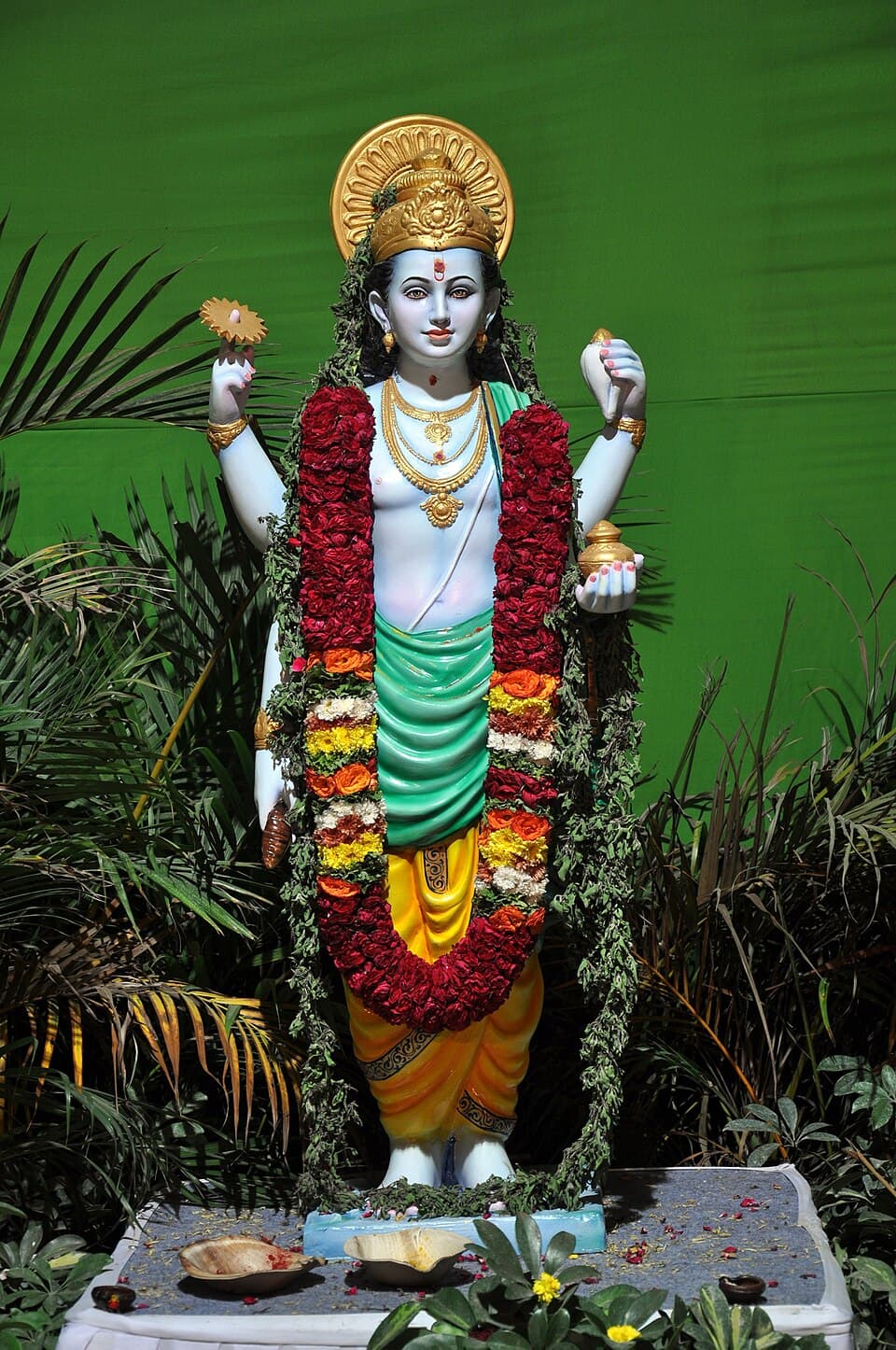
Dhanvantari is the physician of the devas in Hinduism. He is regarded as an avatar of Vishnu. He is mentioned in the Puranas as the god of Ayurveda.
In Hinduism, Dharā is one of the Vasus, gods of the physical cosmos. He represents the earth and the element earth, though Earth is usually the goddess Prithvi rather than a god. Dhārā is a Sanskrit term used to refer to the flow of a stream or waterfall.

Dharmathakur is a Hindu deity of death and justice, worshipped by villagers in the traditional Rarh region in the present day Indian state of West Bengal as one of their special village gods. He is represented by a shapeless stone daubed with vermillion and is normally placed under a tree or placed in the open, but sometimes enshrined in a temple. The worship takes place in the months of Baisakh, Jaistha and Asarh on the day of full moon and sometimes on the last day of Bhadro.
In Hinduism, Dhata or Dhatr is the name of the solar deity, one of the Adityas. He is also a god of health and magic. He is invoked in tantra by drawing tantras and chanting Vedic hymns.
Dhisana is one of the Hindu goddess of prosperity in Hinduism. She appears sometimes in the hymns in most of the mandala in Rig Veda one of the vedas. She had also been mentioned as the goddess of fire, sun, moon & stars.
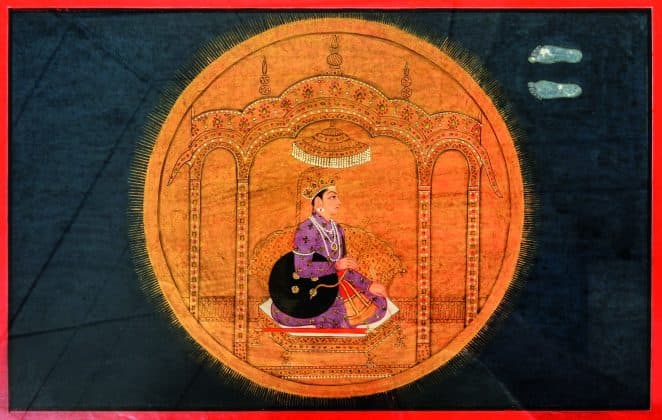
Dhruva was an ascetic devotee of Vishnu mentioned in the Vishnu Purana and the Bhagavata Purana.
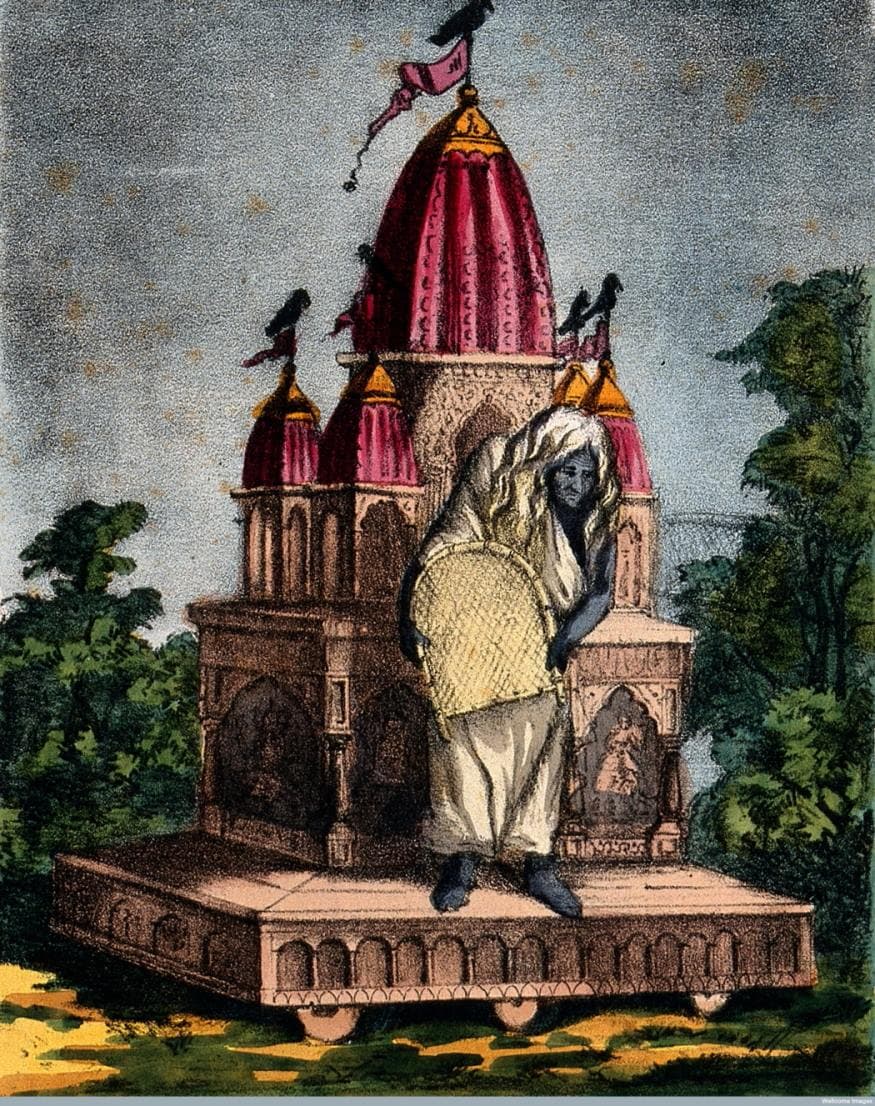
Dhumavati is one of the Mahavidyas, a group of ten Hindu Tantric goddesses. Dhumavati represents the fearsome aspect of Mahadevi, the supreme goddess in Hindu traditions such as Shaktism. She is often portrayed as an old woman and is associated with things considered inauspicious and unattractive in Hinduism, such as the crow and the chaturmasya period.
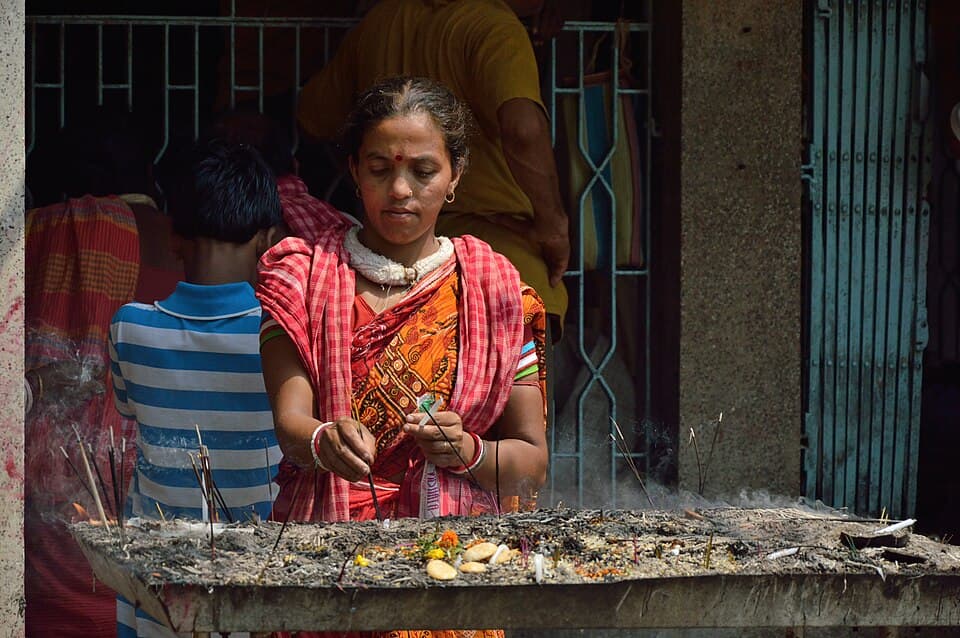
Dhupa (धुप) is, in Indian religions, the ritual offering of incense during puja to an image of a deity, or other object of veneration. It is also the Sanskrit word for incense or perfume itself.
Diana Louise Eck is a scholar of religious studies who is the Fredric Wertham professor of law and psychiatry in society and a professor of comparative religion and Indian studies at Harvard University, as well as a former faculty dean of Lowell House and the Director of The Pluralism Project at Harvard. Among other works, she is the author of Banaras, City of Light, Darshan: Seeing the Divine Image in India, Encountering God: A Spiritual Journey from Bozeman to Banaras, A New Religious America: How a Christian Country Became the World's Most Religiously Diverse Nation, and "India: A Sacred Geography. " At Harvard, she is in the Department of South Asian Studies, the Committee on the Study of Religion, and is also a member of the Faculty of Divinity.
Diti is a daughter of the Prajapati Daksha in Hinduism. She is a wife of the sage Kashyapa and the mother of the demonic race Daityas and the divine group of Marutas.
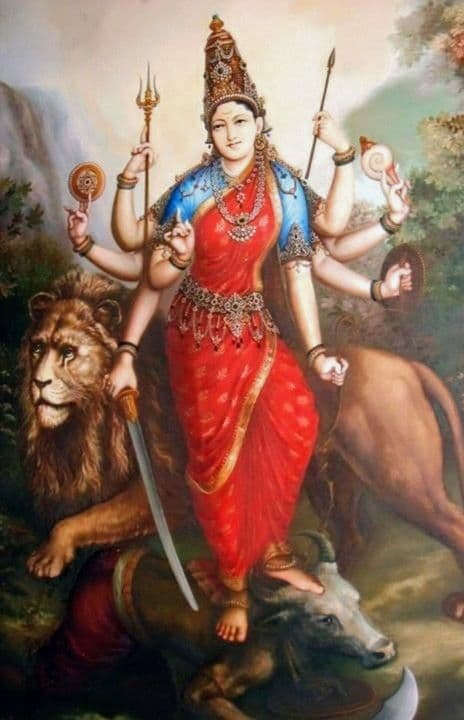
Durga is one of the most important deities in Hinduism. She is widely worshipped by the followers of the goddess-centric sect, Shaktism, regarded as the principal aspect of Mahadevi, the Ultimate Reality in this sect. Durga has importance in other denominations like Shaivism and Vaishnavism.
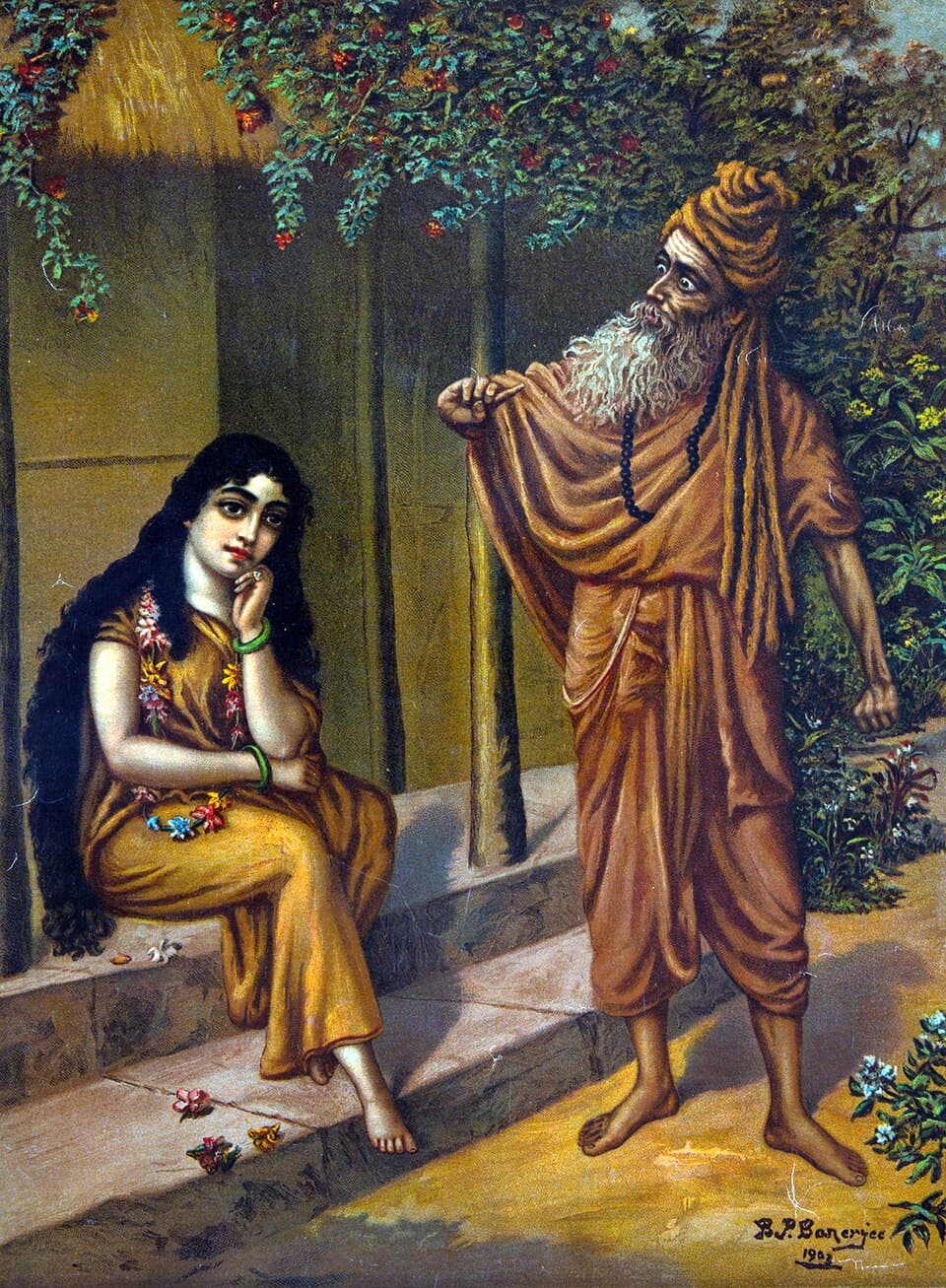
In Hindu scriptures, Durvasa, also known as Durvasas, is a legendary rishi (sage). He is the son of Anasuya and Atri. According to some Puranas, Durvasa is a partial avatar of Shiva, known for his irrascibility and short tempered behaviour.
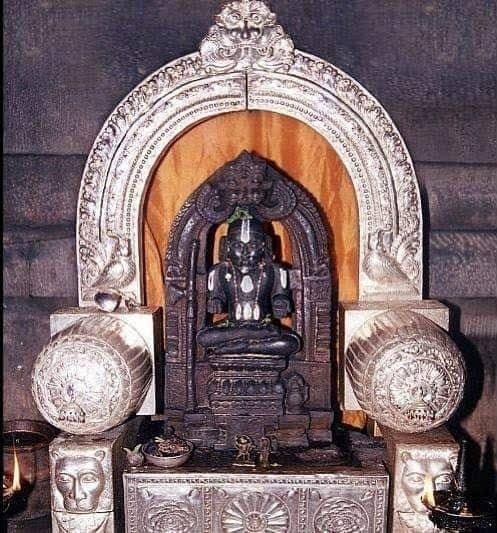
Dvaita Vedanta, is a sub-school in the Vedanta tradition of Hindu philosophy. The term Tattvavada literally means "arguments from a realist viewpoint". The Tattvavada (Dvaita) Vedanta sub-school was founded by the 13th-century Indian philosopher-saint Madhvacharya.

Dvaita Vedanta, is a sub-school in the Vedanta tradition of Hindu philosophy. The term Tattvavada literally means "arguments from a realist viewpoint". The Tattvavada (Dvaita) Vedanta sub-school was founded by the 13th-century Indian philosopher-saint Madhvacharya.
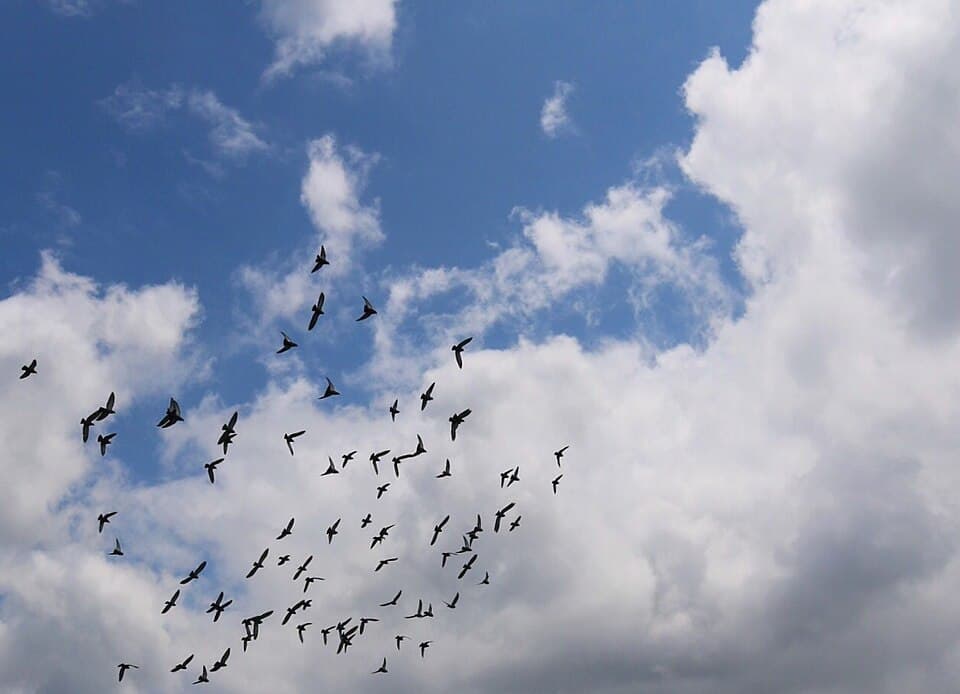
Dyaus or Dyauspitr is the Rigvedic sky deity. His consort is Prithvi, the earth goddess, and together they are the archetypal parents in the Rigveda.
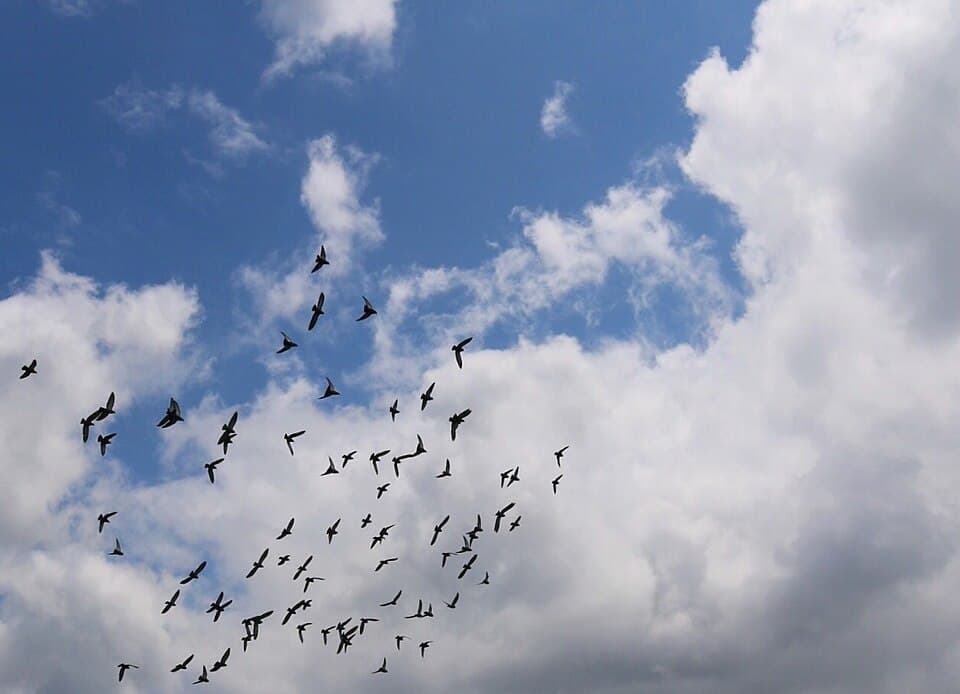
Dyaus or Dyauspitr is the Rigvedic sky deity. His consort is Prithvi, the earth goddess, and together they are the archetypal parents in the Rigveda.
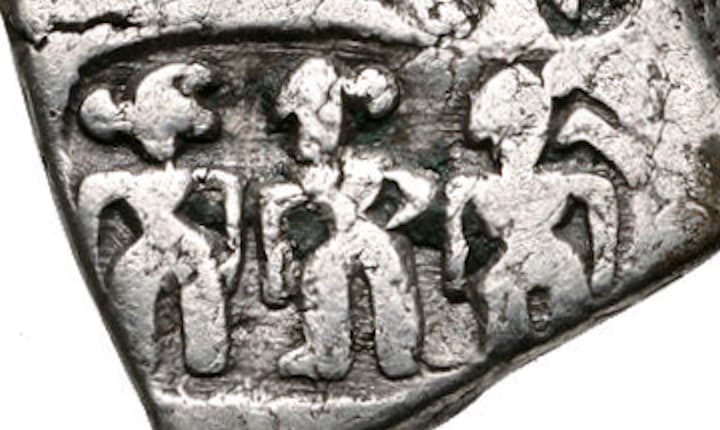
Ekanamsha is a Hindu goddess. She is primarily identified with the illusory power of Vishnu as Yogamaya.

Eknath, was an Indian Hindu Vaishnava saint, philosopher and poet. He was a devotee of Vitthal, a Hindu deity. He is a major figure of the Warkari tradition.
In many Hindu traditions, it is believed that people can be possessed by entities such as Bhoot, Pret, Pisach, Dain, Nishi, and Jatak. Exorcism is used to remove the possessing entity. The exorcism is often done by use of mantras – chanting of phrases from Hindu Vedic scriptures to a deity.
Śraddhā is a Sanskrit term often glossed in English as faith. The term figures importantly in the literature, teachings, and discourse of Hinduism, Jainism, and Buddhism. Sri Aurobindo describes śraddhā as "the soul's belief in the Divine's existence, wisdom, power, love, and grace".

Ficus religiosa or sacred fig is a species of fig native to the Indian subcontinent and Indochina that belongs to Moraceae, the fig or mulberry family. It is also known as the bodhi tree, bo tree, peepul tree, peepal tree, pipala tree or ashvattha tree. The sacred fig is considered to have a religious significance in four major religions that originated on the Indian subcontinent: Hinduism, Buddhism, Sikhism and Jainism.
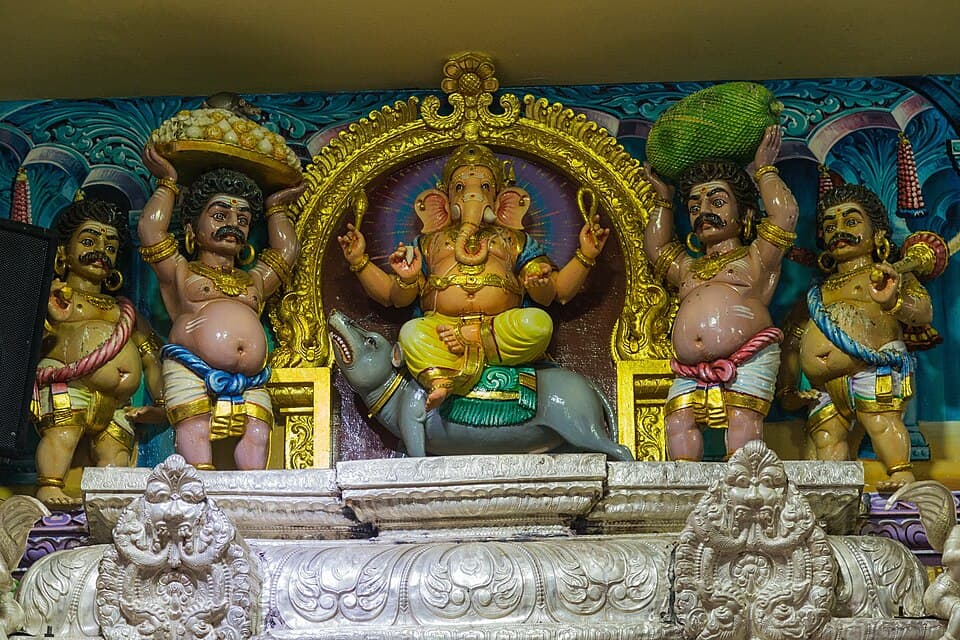
In Hinduism, the Gaṇas are attendants of Shiva and live on Mount Kailash. Ganesha was chosen as their leader by Shiva; the deity's title is gaṇeśa or gaṇapati, meaning, "lord or leader of the ganas". They are referred to as Shivaganas or Rudraganas and Rudraganikas are considered the female equivalents.
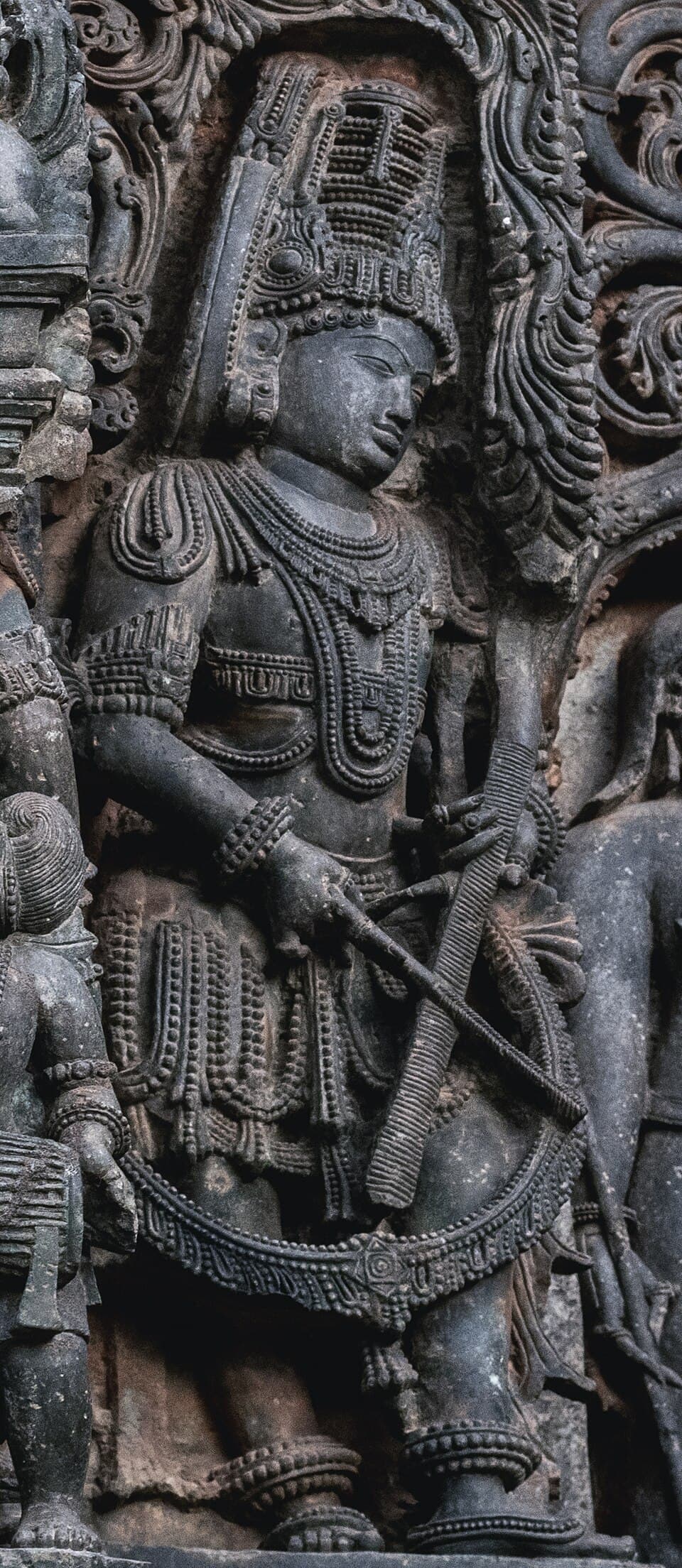
A gandharva is a member of a class of celestial beings in Indian religions, such as Hinduism, Buddhism, and Jainism, whose males are divine performers such as musicians and singers, and the females are divine dancers. In Hinduism, they are regarded to be the celestial demigods who serve as the musicians of the devas.
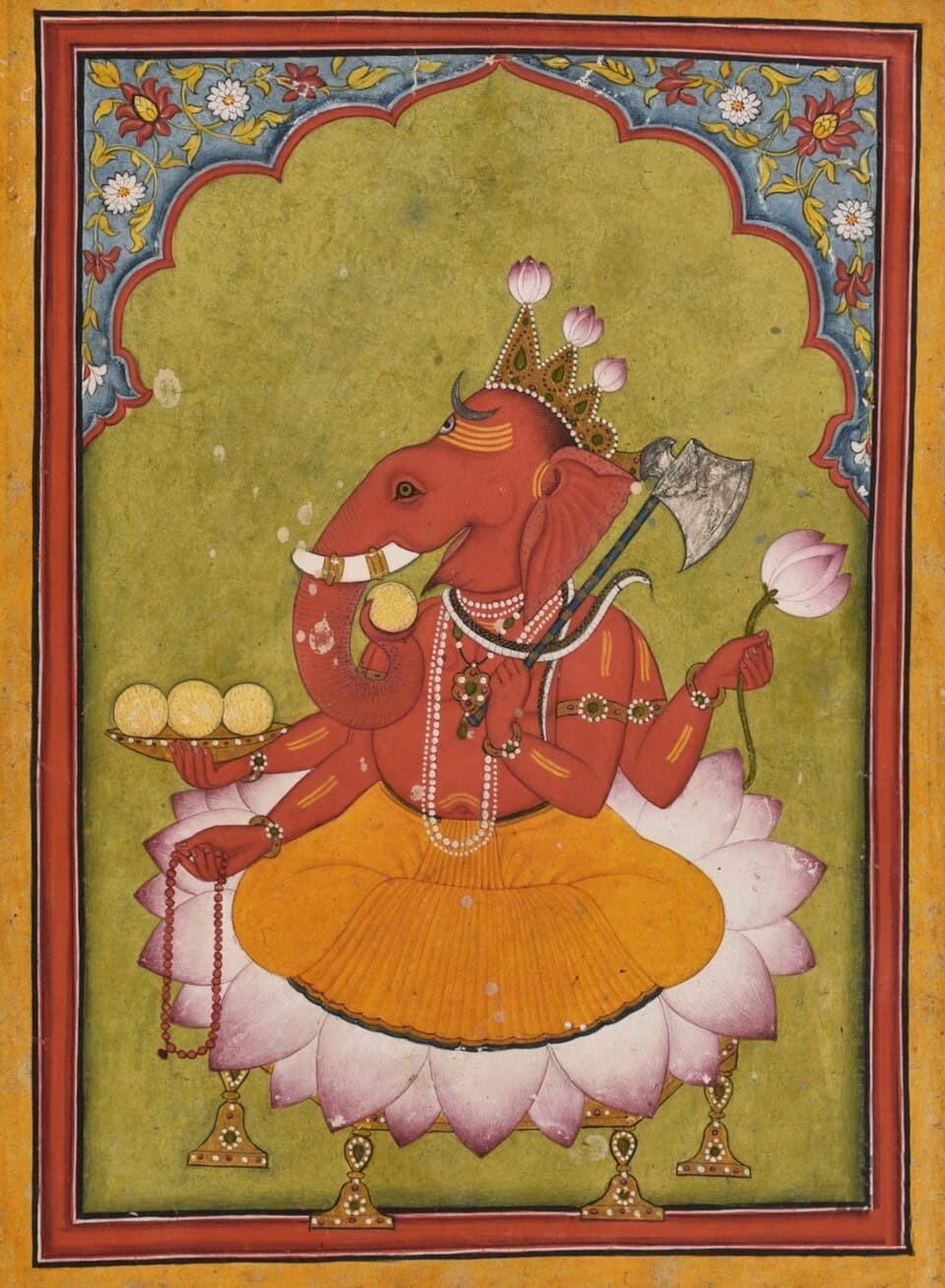
Ganesha or Ganesh, also known as Ganapati, Vinayaka and Pillaiyar, is one of the best-known and most revered and worshipped deities in the Hindu pantheon and is the Supreme god in the Ganapatya sect. His depictions are found throughout India. Hindu denominations worship him regardless of affiliations.

Ganga is the personification of the river Ganges, who is worshipped by Hindus as the goddess of purification and forgiveness. Known by many names, Ganga is often depicted as a fair, beautiful woman, riding a divine crocodile-like creature called the makara.
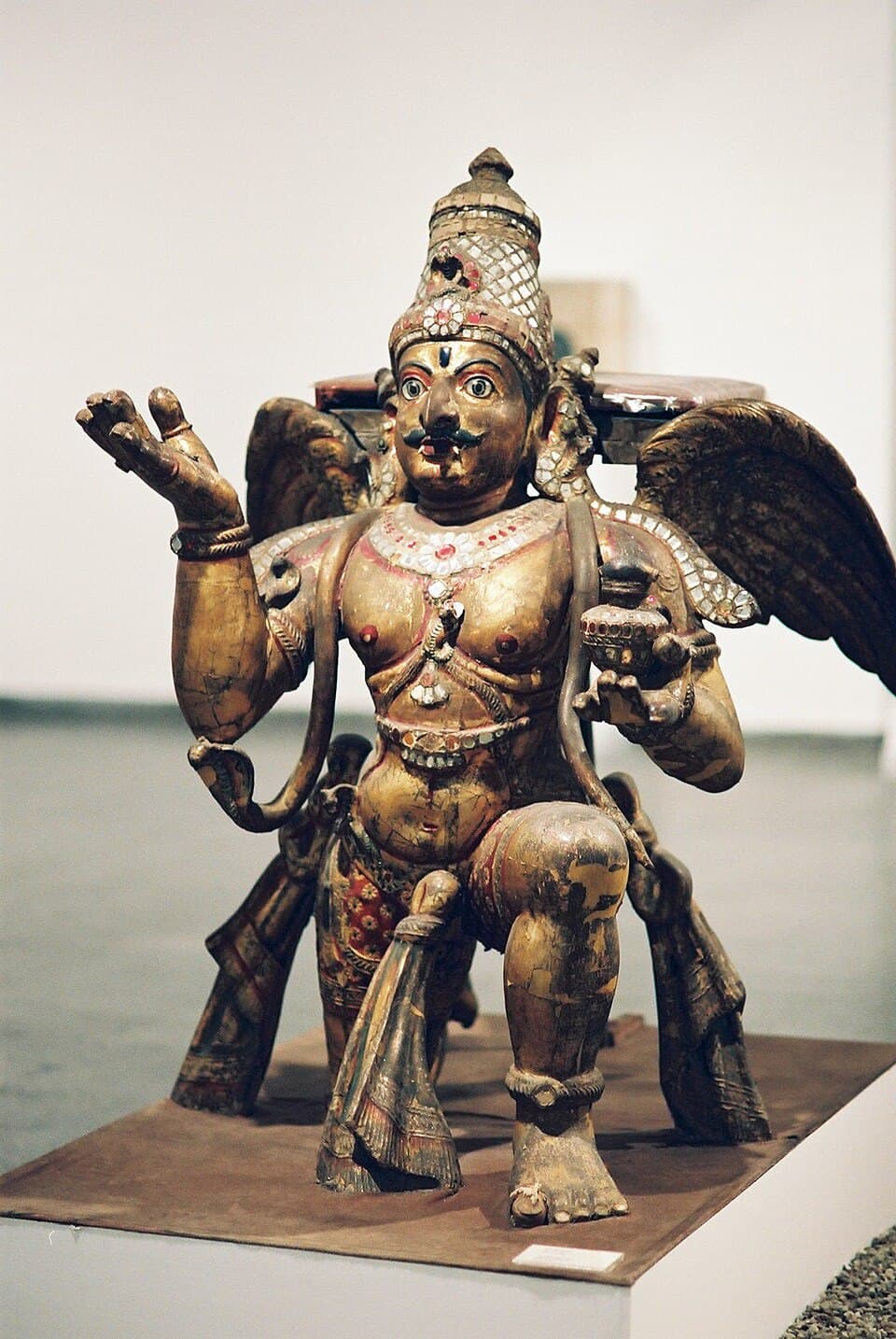
Garuda is a Hindu deity who is primarily depicted as the mount (vahana) of the Hindu god Vishnu. This divine creature is mentioned in the Hindu, Buddhist, and Jain faiths. Garuda is also the half-brother of the Devas, Gandharvas, Daityas, Danavas, Nāgas, Vanaras and Yakshas.

The Buddha is considered the ninth avatar among the ten major avatars of the god Vishnu, according to the Vaishnava tradition of Hinduism.
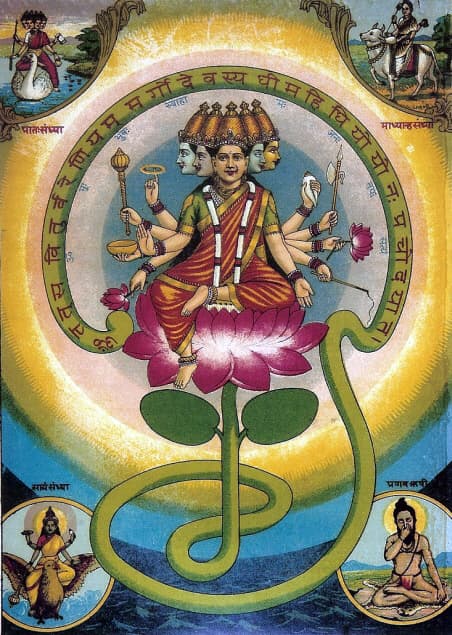
Gayatri is the personified form of the Gayatri Mantra, a popular hymn from Vedic texts. She is also known as Savitri, and holds the title of Vedamata. Gayatri is the manifestation of Saraswati and is often associated with Savitṛi, a solar deity in the Vedas, and her consort in the Puranas is the creator god Brahma.
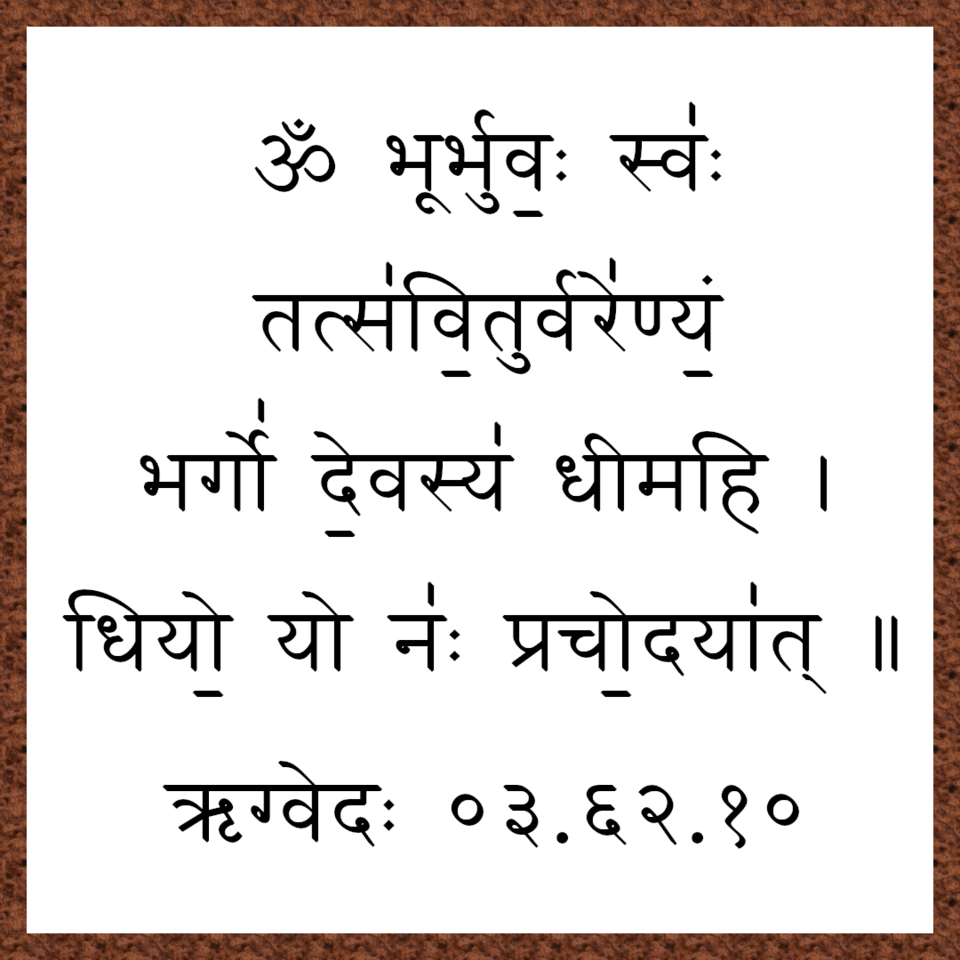
The Gāyatrī Mantra, also known as the Sāvitrī Mantra, is a sacred mantra from the Ṛig Veda, dedicated to the Vedic deity Savitr. The mantra is attributed to the brahmarshi Vishvamitra.
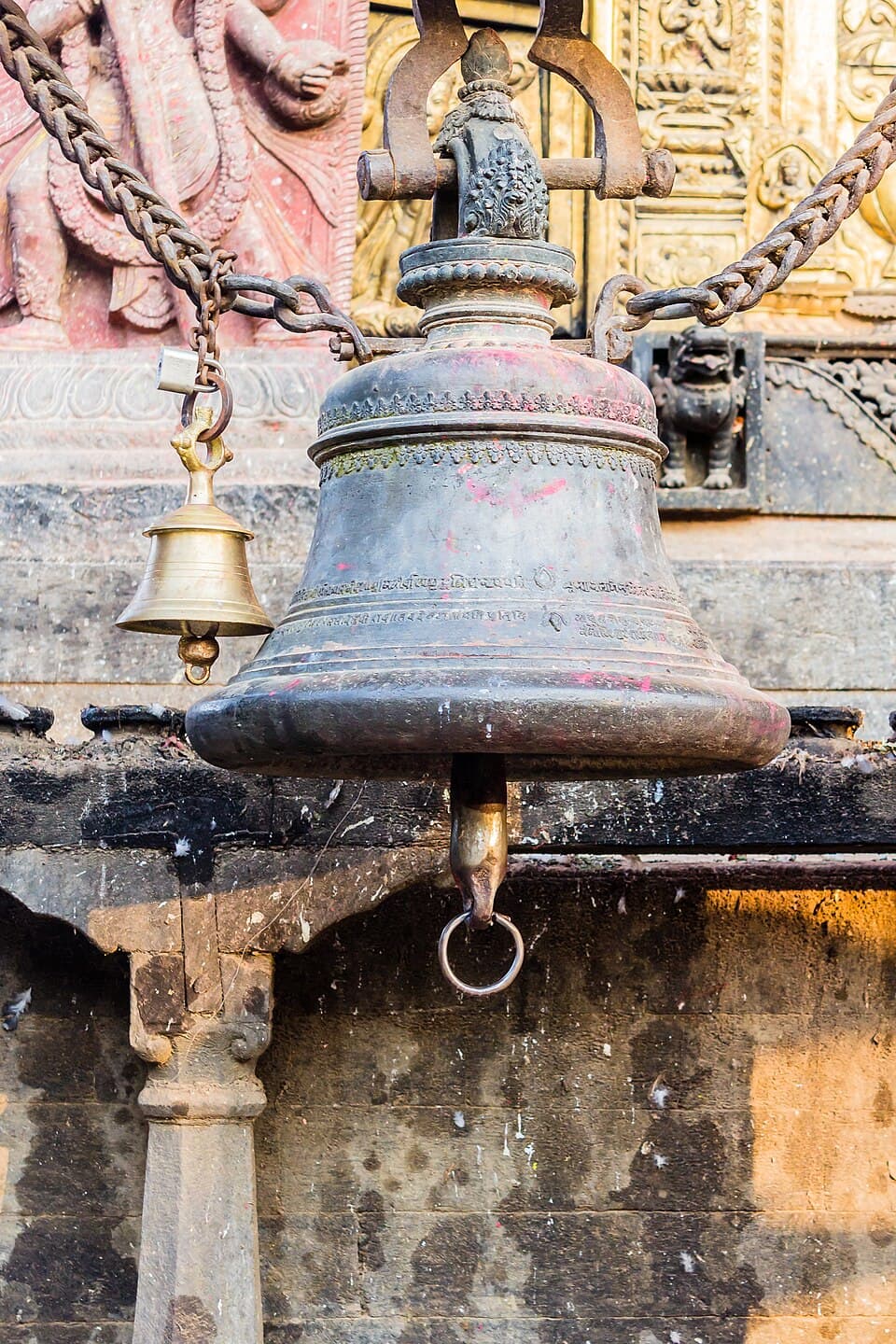
Ghanta is the Sanskrit term for a ritual bell used in Hindu religious practices. The ringing of the bell produces what is regarded as an auspicious sound. Hindu temples generally have one metal bell hanging at the entrance and devotees ring the bell while entering the temple which is an essential part in preparation of having a darshan.

In Hinduism, there are diverse approaches to conceptualizing God and gender. Many Hindus focus upon the impersonal Absolute (Brahman) which is genderless. Other Hindu traditions conceive God as bigender, alternatively as either male or female, while cherishing gender henotheism, that is without denying the existence of other gods in either gender.
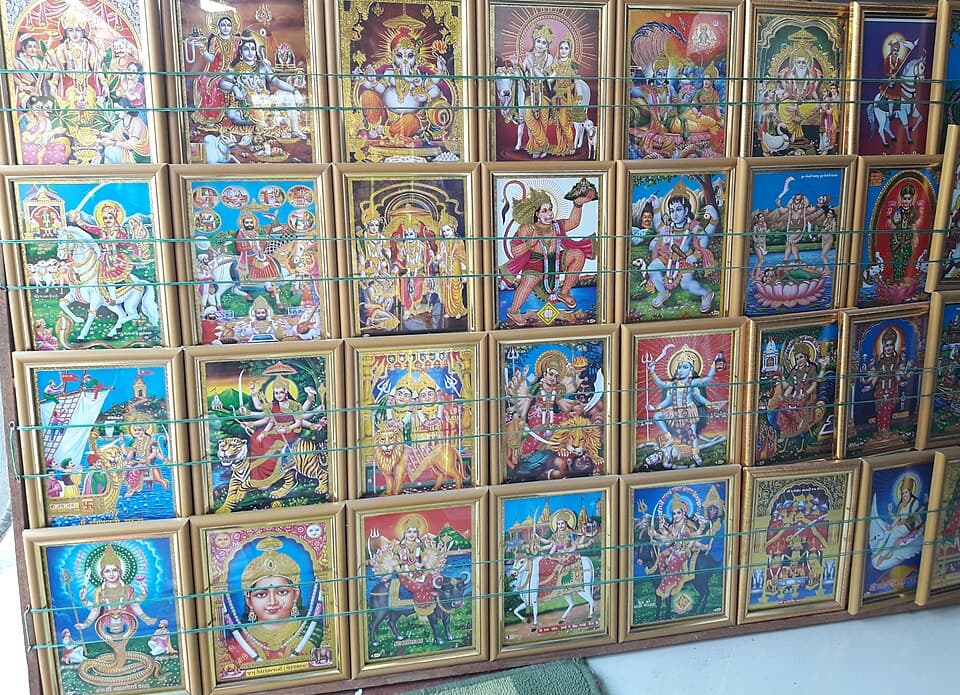
In Hinduism, the conception of God varies in its diverse religio-philosophical traditions. Hinduism comprises a wide range of beliefs about God and divinity, such as henotheism, monotheism, polytheism, panentheism, pantheism, pandeism, monism, agnosticism, atheism, and nontheism.
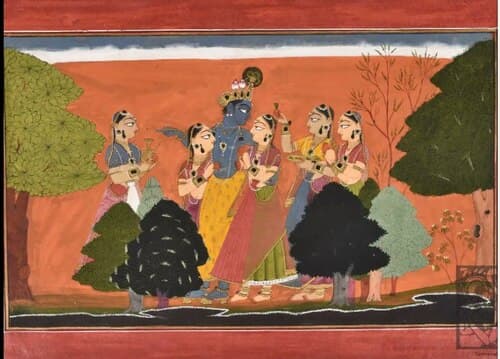
Gopi or Gopika in Hinduism are commonly referred to the group of milkmaids of the Braj region in India. They are regarded by Hindus as the consorts and devotees of Krishna and are venerated for their unconditional love and devotion (Bhakti) to him as described in Bhagavata Purana and other Puranic literature. Gopis are often considered as the expansion of Radha, the chief consort of Krishna.

The Guardians of the Directions are the deities who rule the specific directions of space according to Hinduism, Jainism and Vajrayāna Buddhism—especially Kālacakra. As a group of eight deities, they are called Aṣṭa-Dikpāla (अष्ट-दिक्पाल), literally meaning guardians of eight directions. They are often augmented with two extra deities for the ten directions, when they are known as the Daśa-Dikpāla.

Guruvayurappan also rendered as Guruvayoorappan, is a form of Vishnu worshipped mainly in Kerala, India. He is the presiding deity of the Guruvayur Temple, who is worshipped as Krishna in his child form, also known as Guruvayur Unnikkannan. The temple is in the town of Guruvayur, Thrissur, Kerala, which is named after the deity.
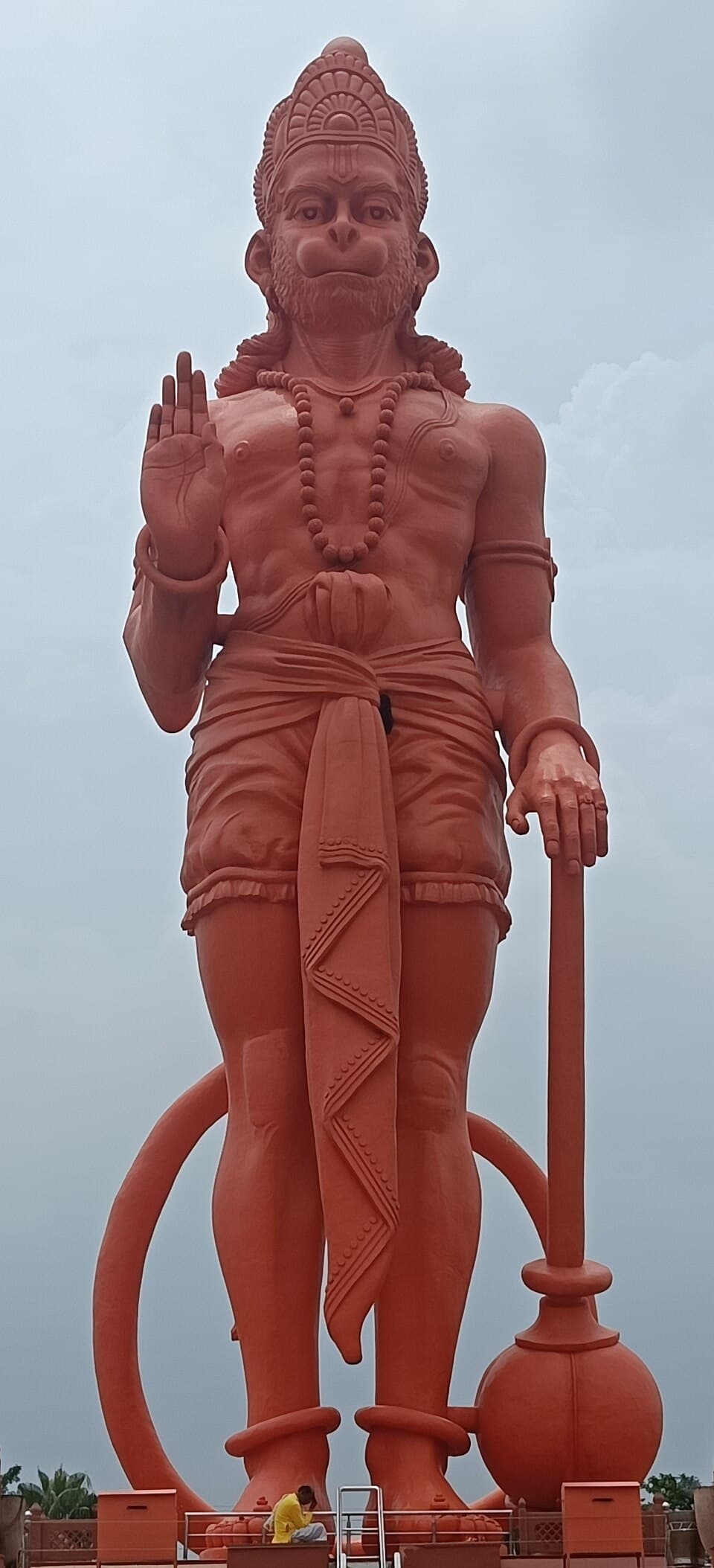
Hanuman, also known as Maruti, Bajrangabali, and Anjaneya, is a deity in Hinduism, revered as a divine vanara, and a devoted companion of Lord Rama. Central to the Ramayana, Hanuman is celebrated for his unwavering devotion to Rama and is considered a chiranjivi. He is traditionally believed to be the spiritual offspring of the celestial wind-god Vayu.
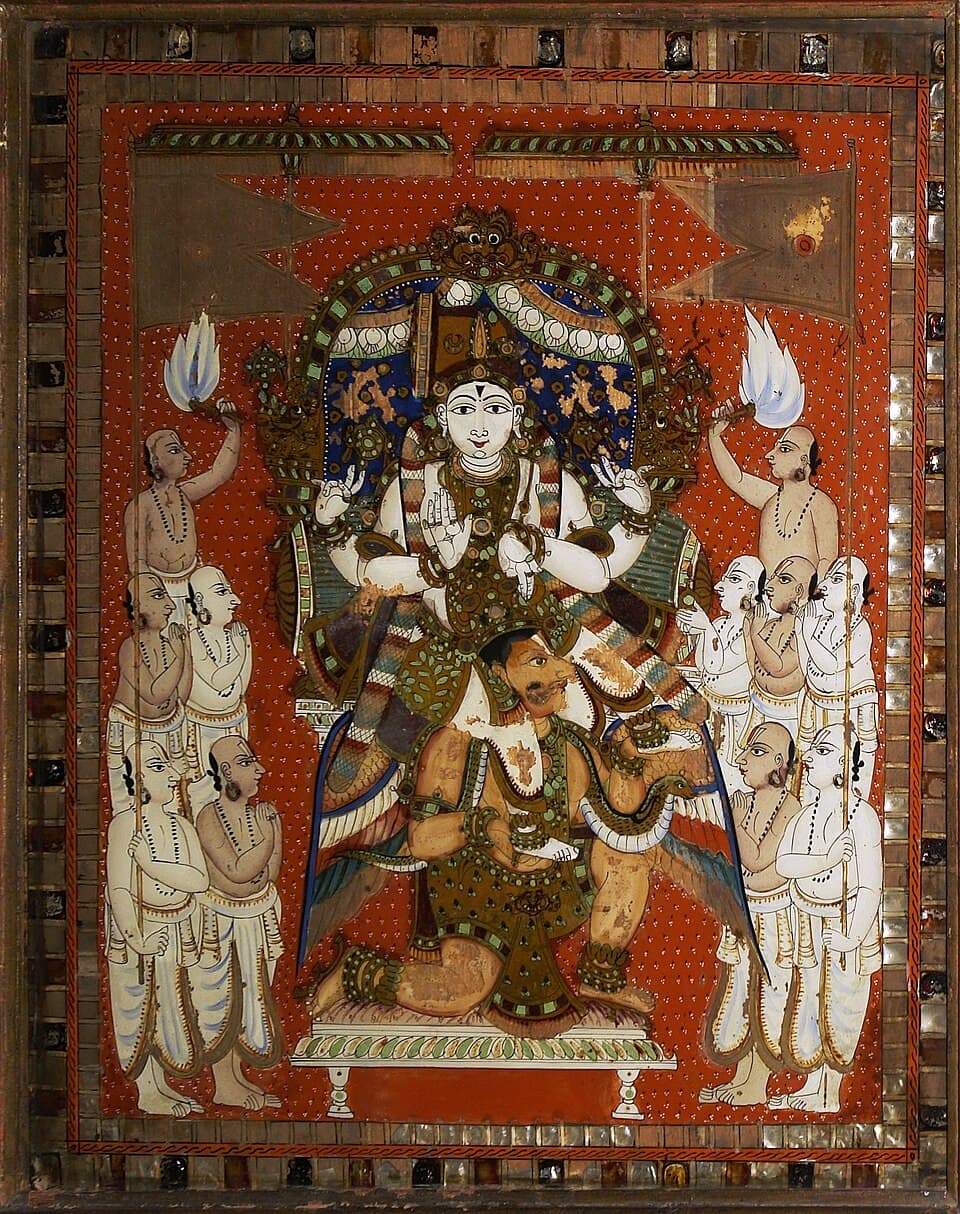
Hari is among the primary epithets of the Hindu preserver deity Vishnu, meaning 'the one who takes away' (sins). It refers to the one who removes darkness and illusion, the one who removes all obstacles to spiritual progress.
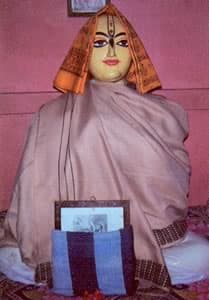
Haridasa Thakur was a Vaishnava saint known for playing a part in the initial propagation of Gaudiya Vaishnavism. He is considered to be a known convert of Chaitanya Mahaprabhu, along with Rupa Goswami and Sanatana Goswami. His story of integrity and faith in the face of adversity is told in the Chaitanya Charitamrita.
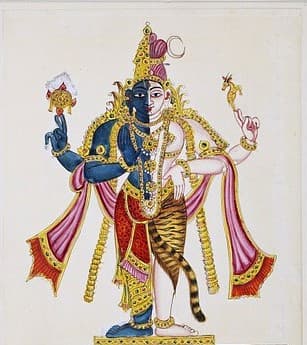
Harihara is the dual representation of the Hindu deities Vishnu (Hari) and Shiva (Hara). Harihara is also known as Shankaranarayana.
Harishankari is a composite manifestation of the goddesses Lakshmi and Parvati, primarily ventured in Nepal. This concept emphasizes the unity of divine feminine energies. The name combines Hari—a title of Vishnu representing Lakshmi—and Shankara—an epithet of Shiva representing Parvati—symbolizing the harmonious fusion of their consorts’ attributes.
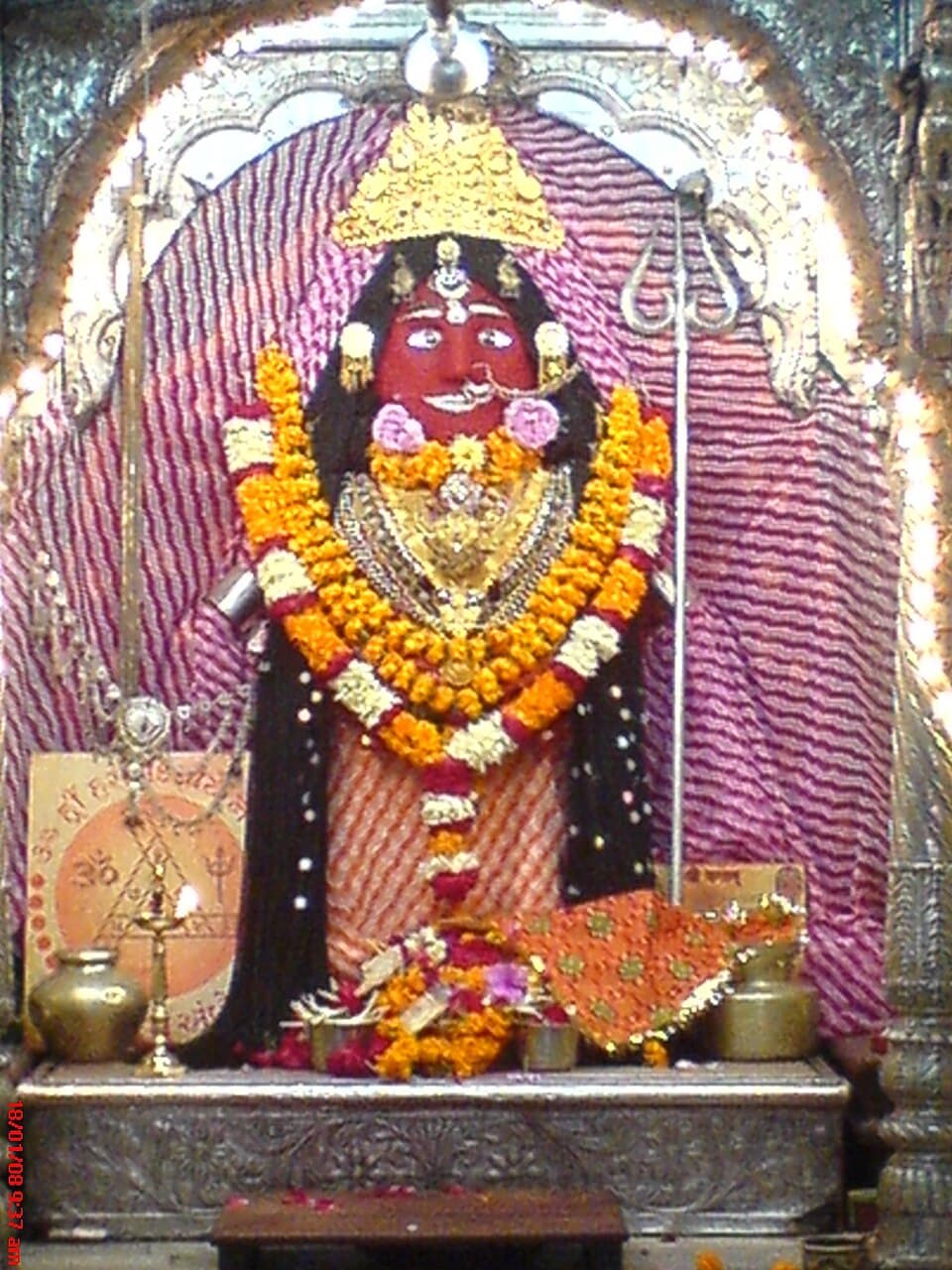
Harsidhhi, one of the aspects of Durga, is a regional Hindu goddess, popular in Gujarat, Madhya Pradesh, adjoining Maharashtra states of India.
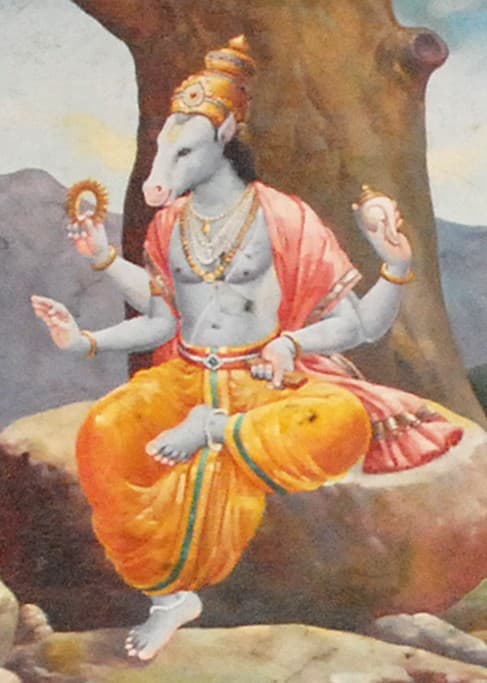
Hayagriva is a Hindu deity, the horse-headed avatar of Vishnu. The purpose of this incarnation was to slay a danava also named Hayagriva, who had the head of a horse and the body of a human.
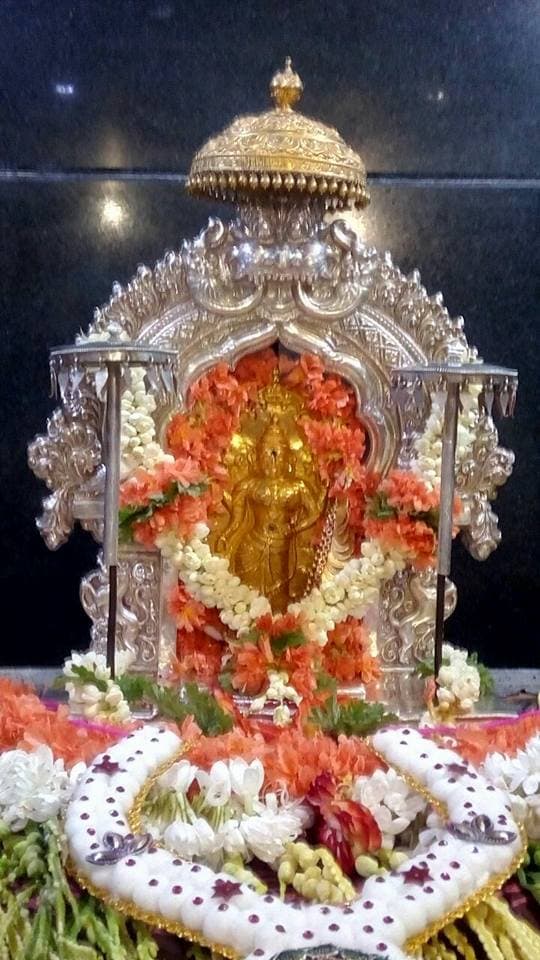
Hemadryambha is the golden goddess regarded as the grāmadevatā of the Bannur municipal town region located next to the Kodanda Rama Deva temple. She is regarded as one of the Saptha Matrukas where the other forms of the goddess are associated with nearby districts.
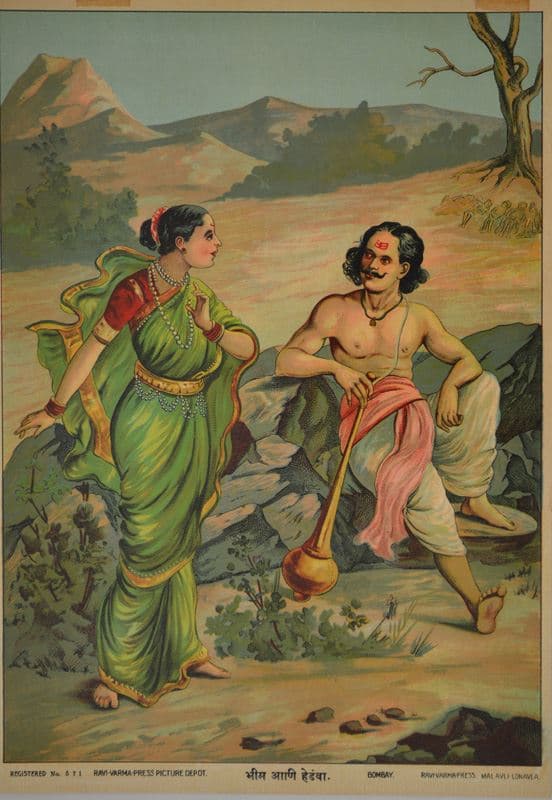
Hiḍimbī, also known as Hiḍimbā, is a character in the Mahabharata, one of the two great Sanskrit epics of ancient India. She is introduced as a man-eating Rakshasi (demoness) and the sister of Hidimba, a powerful demon who ruled a forested region. In the narrative, Hidimbi is tasked by her brother to deceive the Pandava brothers—the main characters of the epic—but instead falls in love with Bhima, second of the five Pandava brothers.
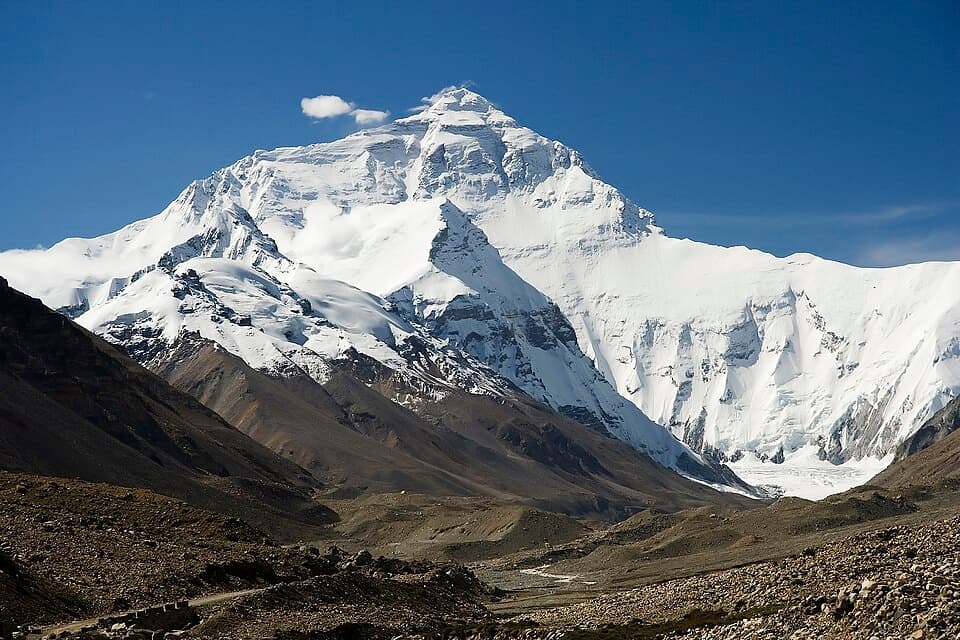
Himavat is the personification of the Himalayan mountains in Hinduism. He is the guardian deity of the Himalayas, and finds mention in the epic Mahabharata and other Hindu scriptures.

Hindu deities are the gods and goddesses in Hinduism. Deities in Hinduism are as diverse as its traditions, and a Hindu can choose to be polytheistic, pantheistic, monotheistic, monistic, or even agnostic, atheistic or humanistic. The terms and epithets for deities within the diverse traditions of Hinduism vary, and include Deva, Devi, Ishvara, Ishvari, Bhagavān and Bhagavati.

A Hindu temple, also known as a Mandir, Devasthanam, Pura, Kshetram, Ambalam or Kovil, is a sacred place where Hindus worship and show their devotion to deities through worship, sacrifice, and prayers. It is considered the house of the god to whom it is dedicated. Hindu temple architecture, which makes extensive use of squares and circles, has its roots in later Vedic traditions, which also influence the temples' construction and symbolism.

Hindu–Christian relations are a mixed affair. Hinduism's historical tendency has been to recognize the divine basis of various other religions, and to revere their founders and saintly practitioners; this continues today. The declaration Nostra aetate by the Second Vatican Council officially established inter-religious dialogue between Catholics and Hindus, promoting common values between the two religions.
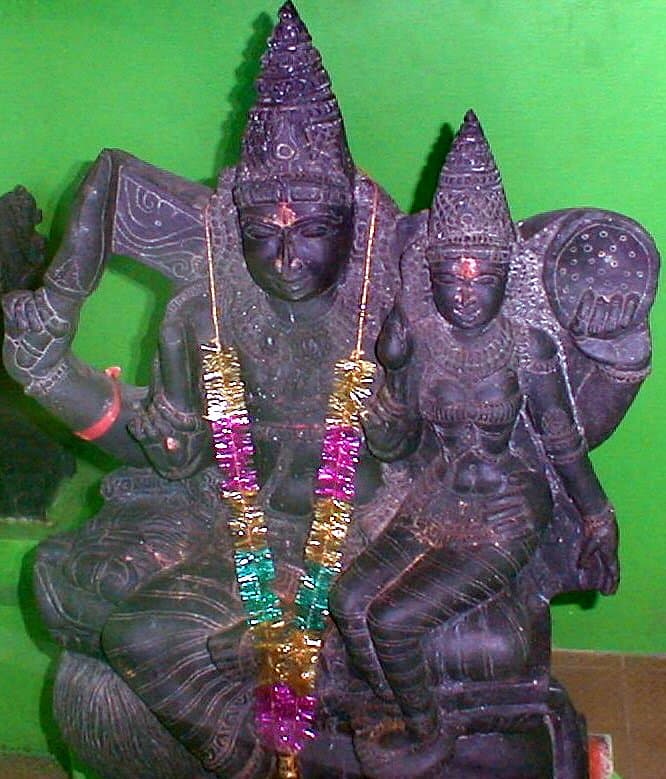
Ila or Idā is a deity in Hindu legends, known for their sex changes. As a man, he is known as Ila or Sudyumna and as a woman, is called Ilā. Ilā is considered the chief progenitor of the Lunar dynasty of Indian kings – also known as the Aillas.
Incarnation literally means embodied in flesh or taking on flesh. It is the conception and the embodiment of a deity or spirit in some earthly form or an anthropomorphic form of a god. It is used to mean a god, deity, or Divine Being in human or animal form on Earth.
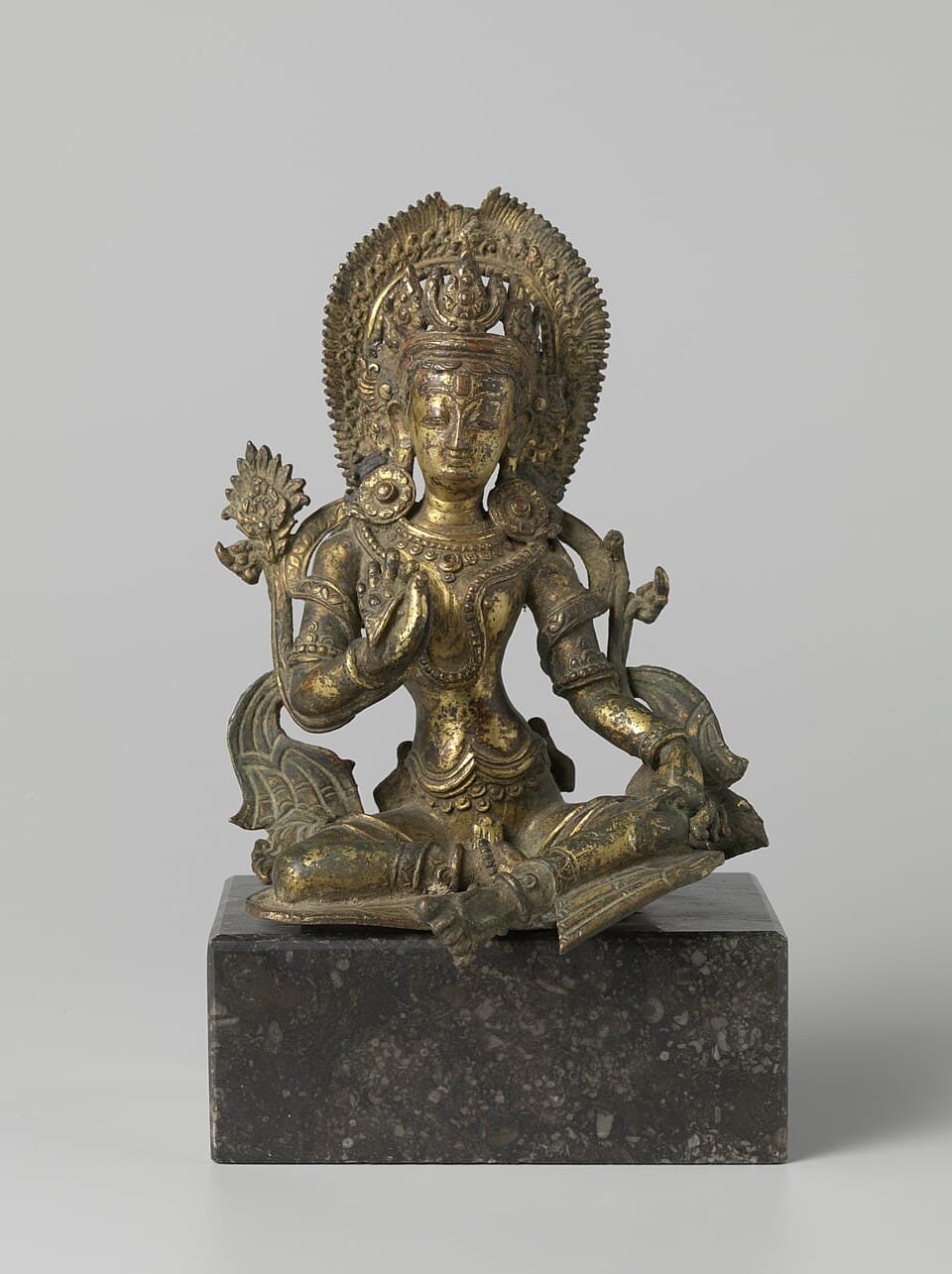
Indrani, also known as Shachi and Paulomi, is the queen of the devas in Hinduism. Described as tantalisingly beautiful, proud and kind, she is the daughter of the asura Puloman and the consort of the king of the devas, Indra.

The International Society for Krishna Consciousness (ISKCON), commonly known as the Hare Krishna Movement, is a Hindu religious organization. It follows the Gaudiya Vaishnava tradition, which emphasizes devotion (bhakti) to Krishna as the supreme deity. The ISKCON was founded on 13 July 1966 in New York City by A.
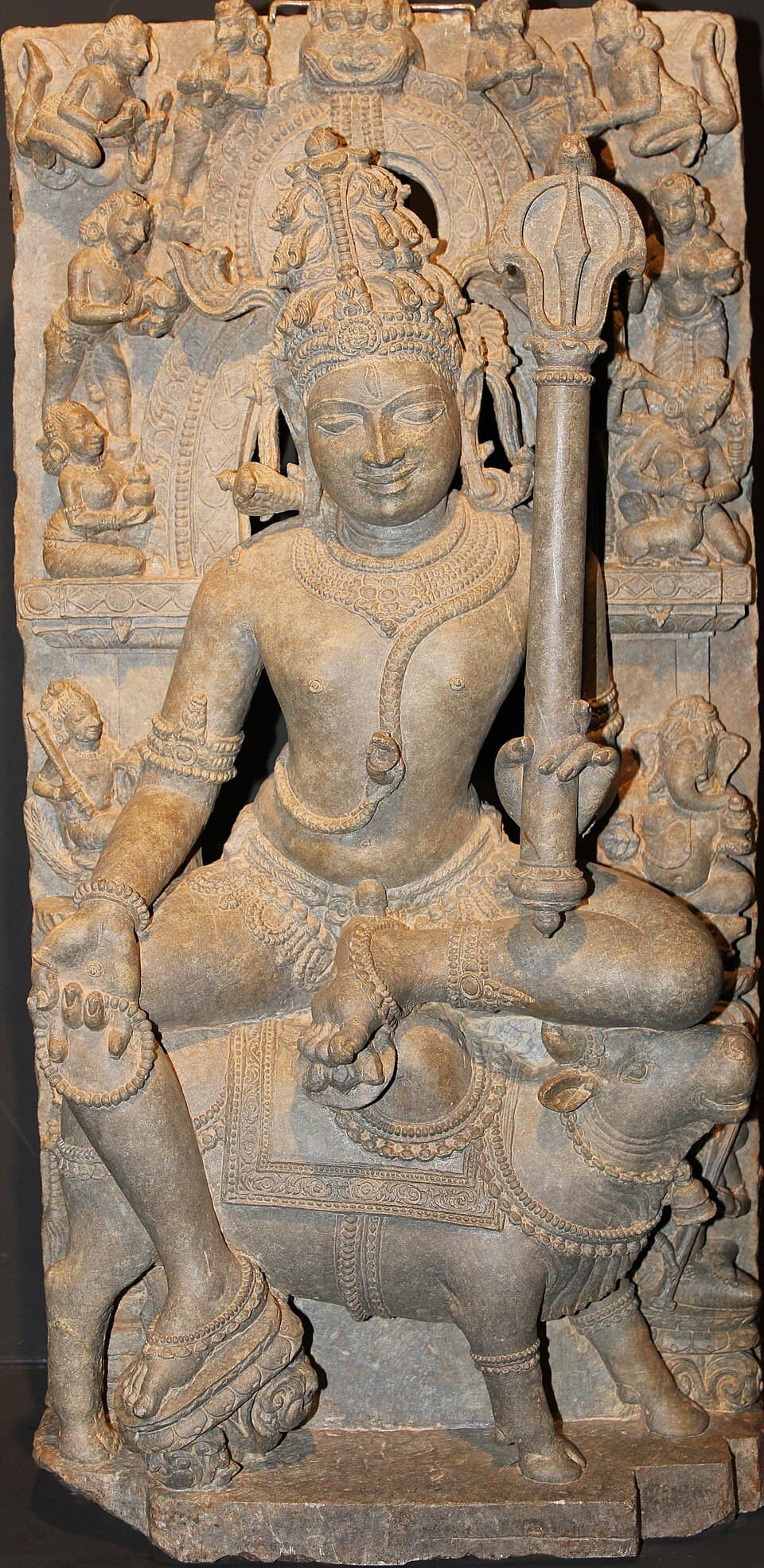
Ishaan, is a Hindu god and the dikpala of the northeast direction. He is often considered to be one of the forms of the god Shiva, and is also often counted among the eleven Rudras. He is venerated in Hinduism, some schools of Buddhism and Jainism.
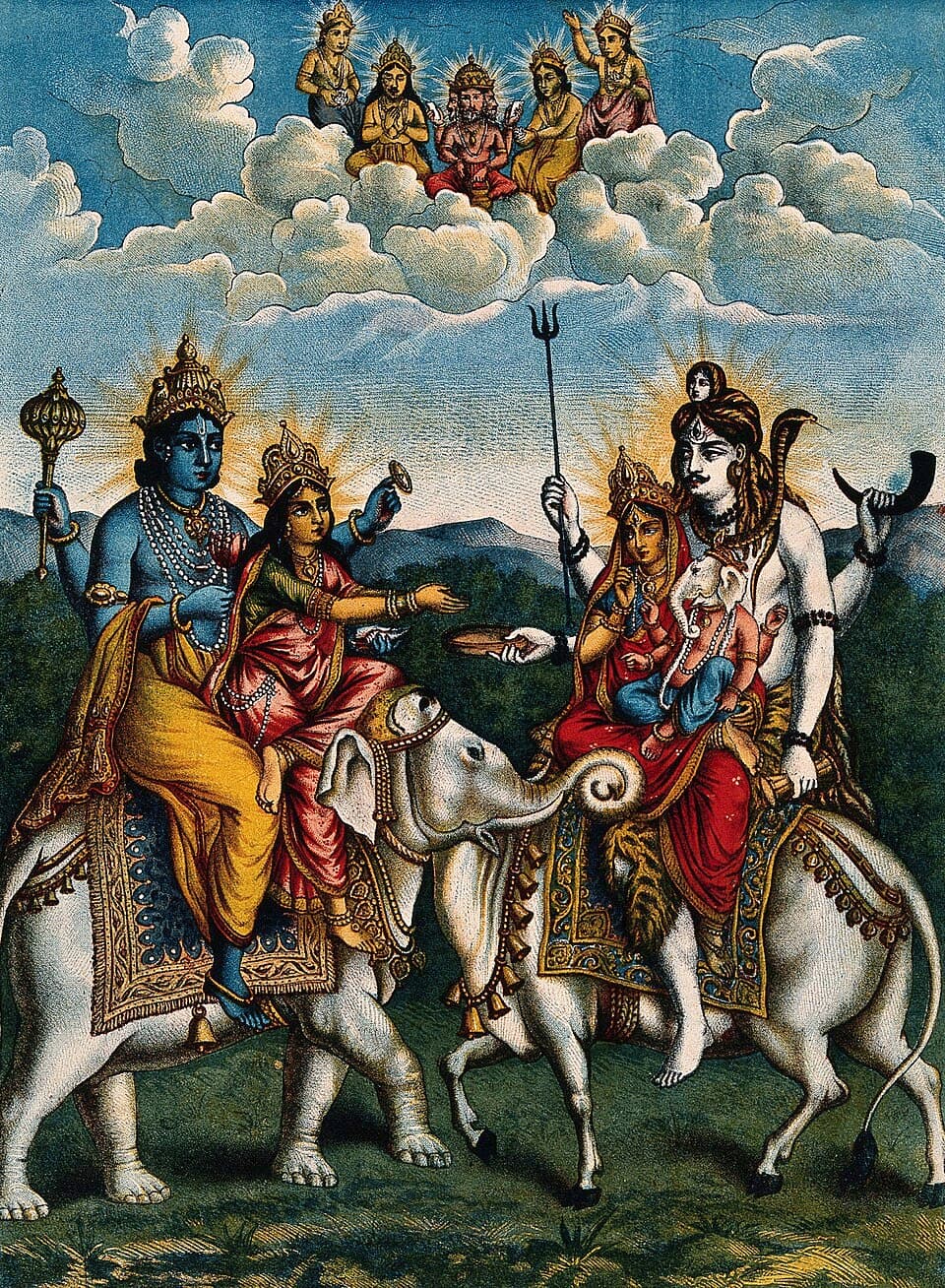
Ishvara is a concept in Hinduism, with a wide range of meanings that depend on the era and the school of Hinduism. In ancient texts of Hindu philosophy, depending on the context, Ishvara can mean lord, ruler, king, husband, queen, soul or the Supreme Self (Paramatman). In medieval-era Hindu texts, depending on the school of Hinduism, Ishvara means God, Supreme Being, personal God, or special Self.
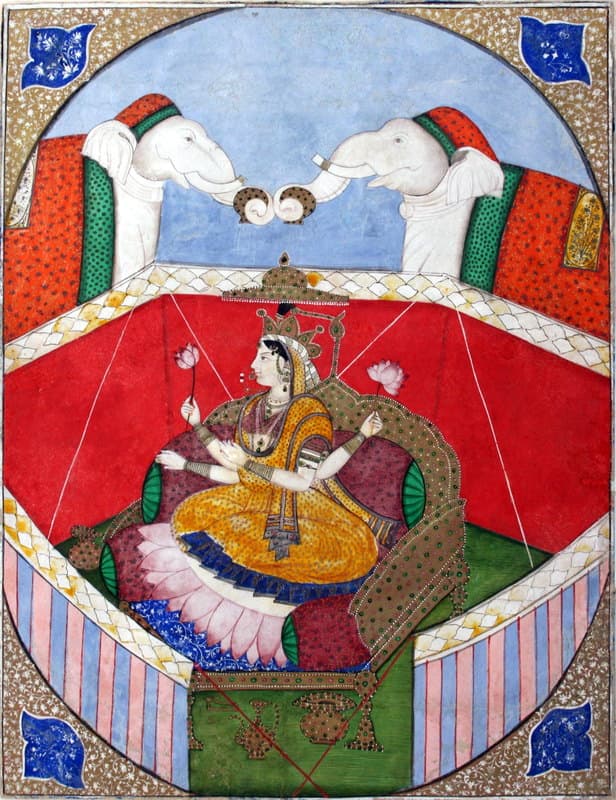
Ishvari is a Hindu epithet of Sanskrit origin, referring to the Goddess, the divine female counterpart of Ishvara. It is also a term that refers to the shakti, or the feminine energy of the Trimurti, which refer to Saraswati, Lakshmi, and Parvati.
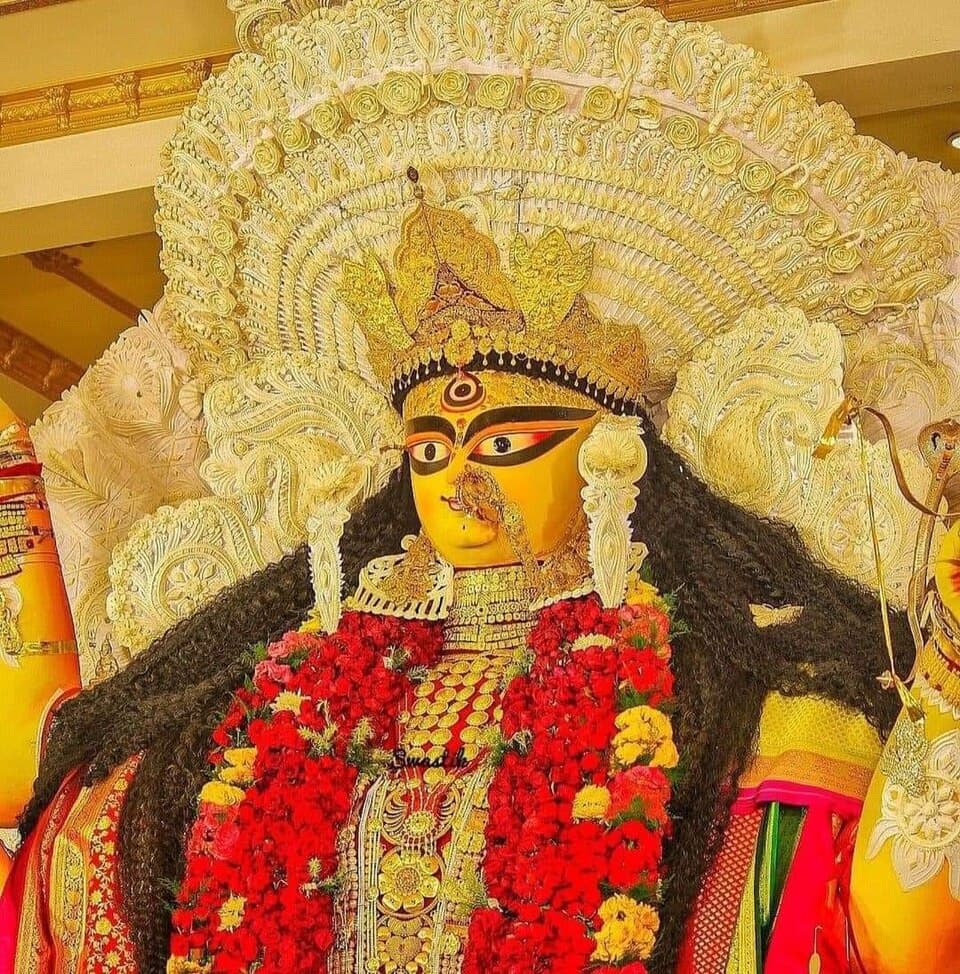
Jagatdhatri or Jagaddhatri or Mahadurga is an aspect of the Hindu goddess Durga, worshipped in the Indian state of West Bengal and other states like Odisha and Jharkhand. Maa Jagadhatri, the Goddess who is revered as the protector of the world. In Bengal, her puja is celebrated as the comeback of Devi, specifically in Krishnanagar, Chandannagar, Santipur, Rishra, Midnapore,Singur and Guptipara.
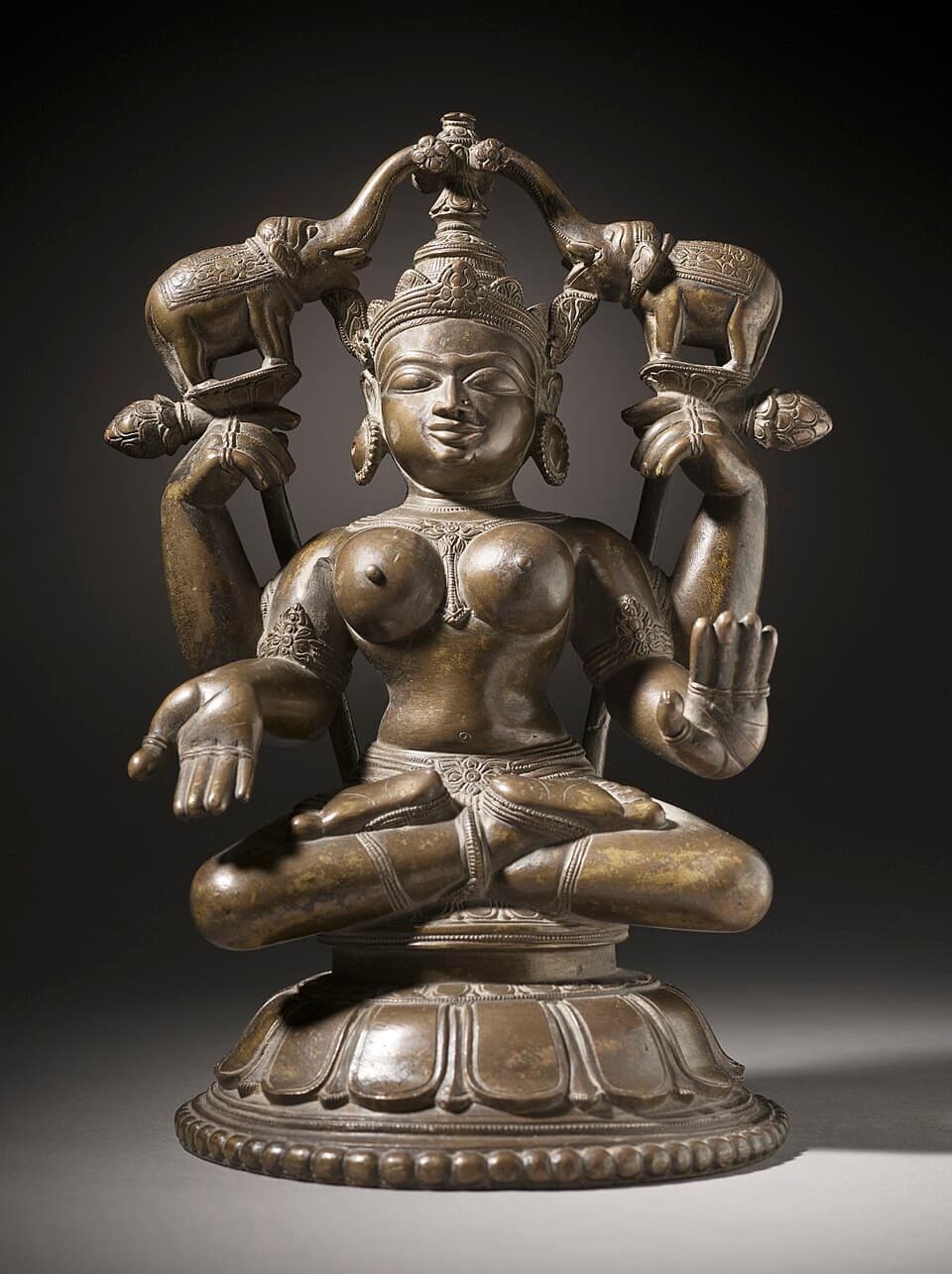
Jaganmata, also rendered as Lokamata, is primarily an epithet of the Hindu deity Lakshmi, the supreme goddess of Vaishnavism.
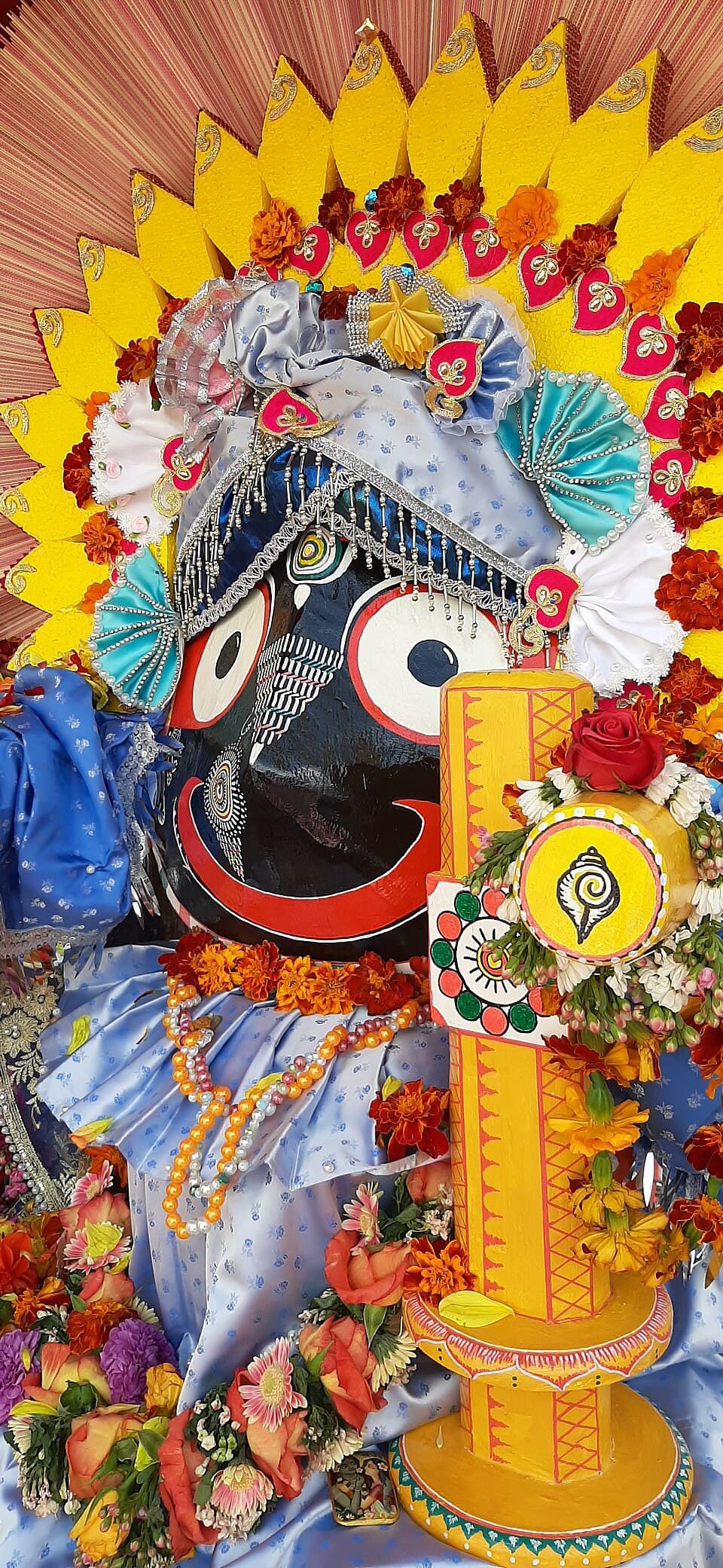
Jagannath is a Hindu deity worshipped as part of a triad along with his brother, Balabhadra, and his sister, Subhadra.
Jagannath is a Hindu deity worshipped as part of a triad along with his brother, Balabhadra, and his sister, Subhadra.
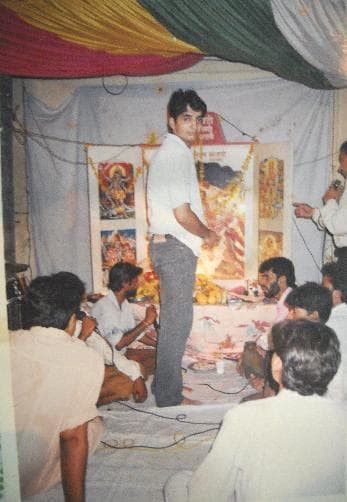
Jagarana, also rendered Jagran, Jagarata, and Jaga is a Hindu ritual, practised across India. It comprises the performance of all-night vigils, as well as puja, songs, and dances for the veneration of a deity. A jagarana is generally performed for the veneration of Hindu goddesses, major deities such as Shiva and Krishna, as well as various folk deities like Khandoba and Devnarayan.
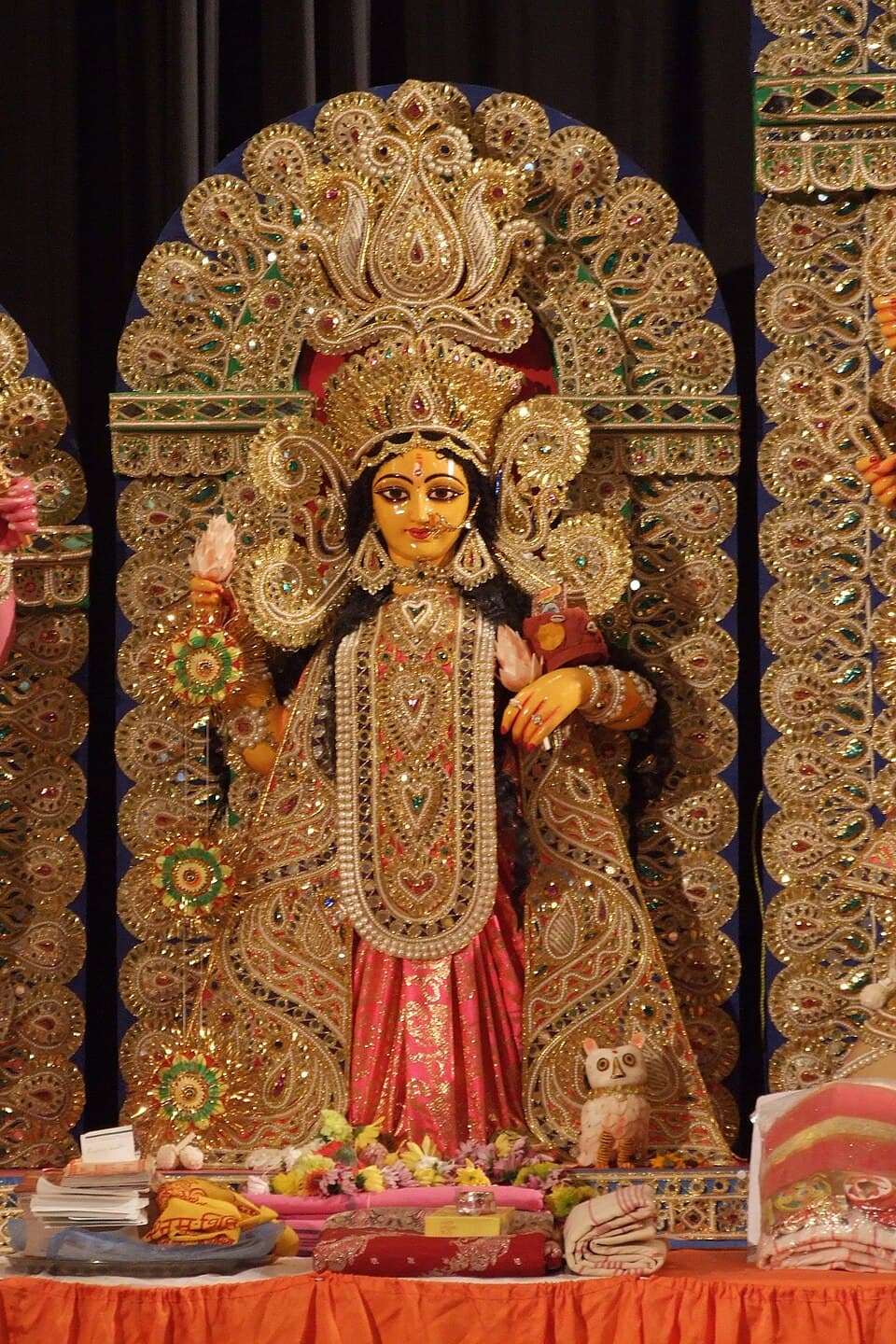
Jagadamba is an epithet used to address a Hindu goddess, primarily applied to Durga, Lakshmi and Parvati in literature.
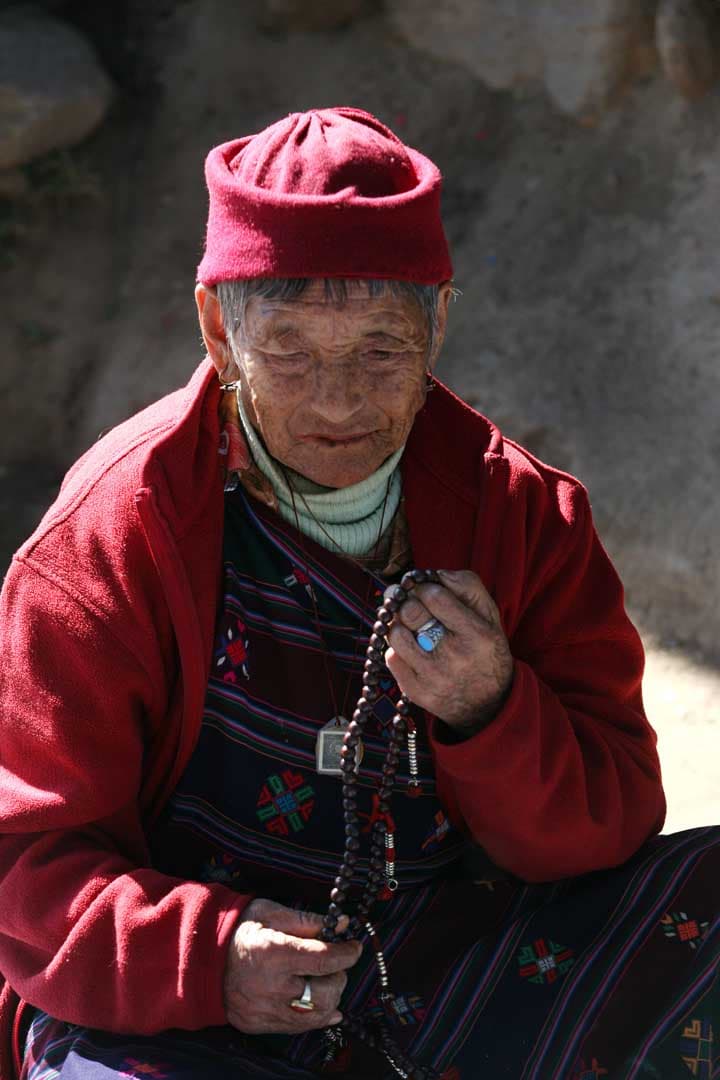
Japa is the meditative repetition of a mantra or a divine name. It is a practice found in Hinduism, Jainism, Sikhism, and Buddhism, with parallels found in other religions.
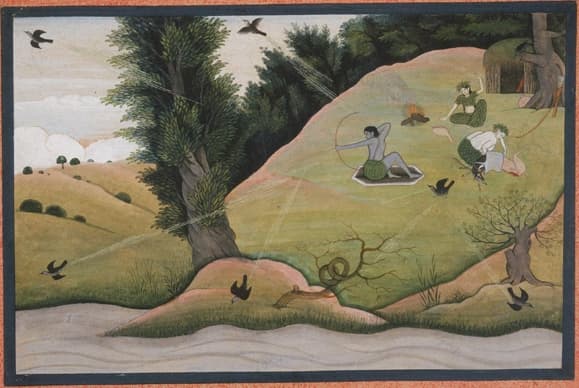
Jayanta ), is a character who appears in Hindu literature. He is the son of Indra, the king of the devas (gods), and his wife, Shachi (Indrani). He has a sister called Jayanti.
Jayanti is a character in Hindu mythology. She is the daughter of Indra, the king of the devas and the ruler of Svarga, and his consort, Shachi.
Jayatirtha, also known as Teekacharya, was a Hindu philosopher, dialectician, polemicist and the sixth pontiff of Madhvacharya Peetha from. He is considered to be one of the important seers in the history of Dvaita school of thought on account of his sound elucidations of the works of Madhvacharya. He structured the philosophical aspects of Dvaita and through his polemical works, elevating it to an equal footing with the contemporary schools of thought.

Jhandewali Mata , a form of Mahadevi. The name "Jhandewalan" or "Jhandewali" means "She of the flags" or "associated with flags", derived from the tradition of offering prayer flags (jhanda) at the temple. Jhandewalan Mata is revered as the most powerful divine feminine figure in Hinduism and is associated with Vaishno Devi.

Jivdani Mata is a Hindu goddess whose main temple is atop a hill in Virar, Maharashtra, India.
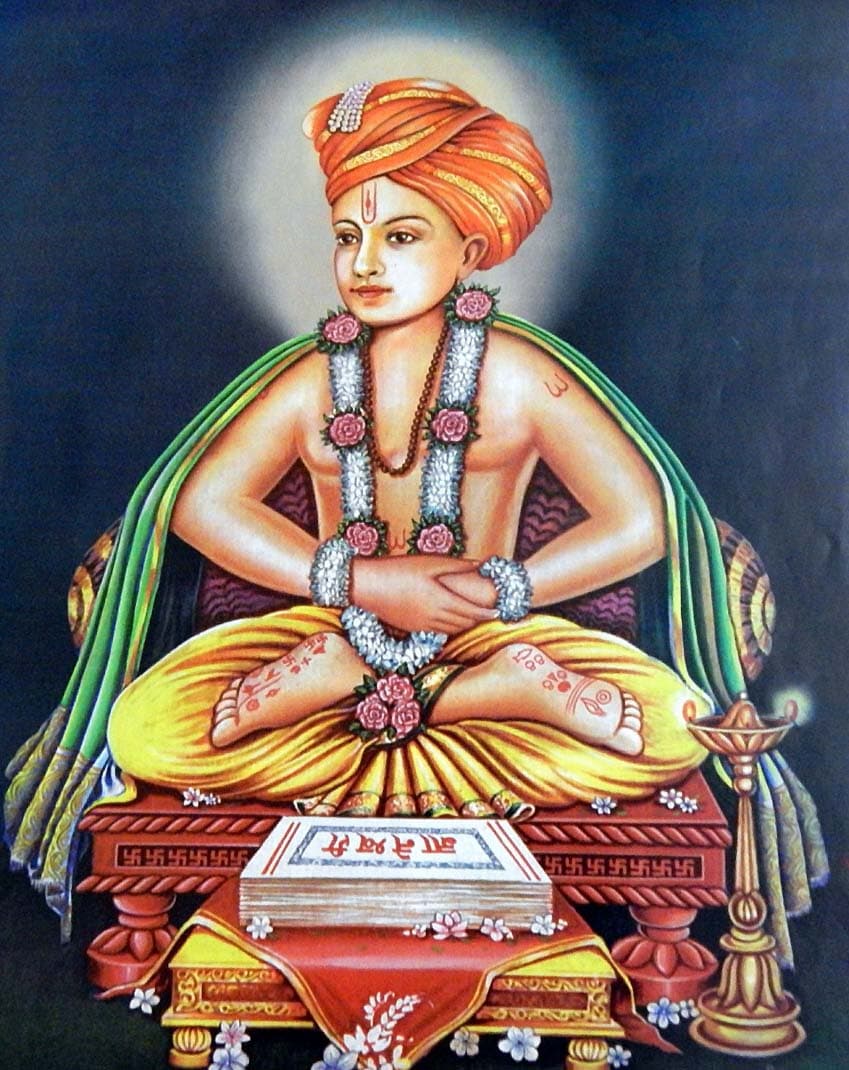
Sant Dnyaneshwar, , also referred to as Jñāneśvara, Jñānadeva, Dnyandev or Mauli or Dnyandev Vitthal Kulkarni, was a 13th-century Indian Marathi saint, poet, philosopher and yogi of the Nath and Varkari tradition. In his short life of 21 years, he authored Dnyaneshwari and Amrutanubhav. These are the oldest surviving literary works in the Marathi language, and considered to be milestones in Marathi literature.
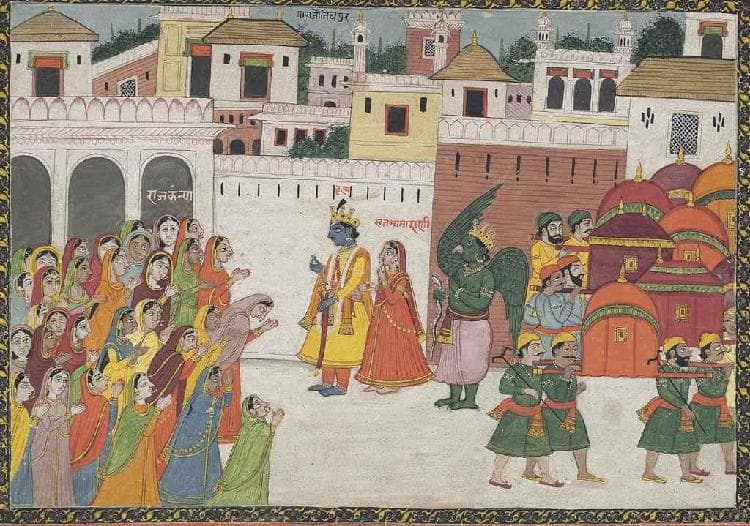
Besides the Ashtabharya, Krishna is described to have married several thousand women whom he rescued from the demon Narakasura. The Bhagavata Purana and the Mahabharata state that 16,000 women were rescued, however the Vishnu Purana and the Harivamsa differ and set the number as 16,100. These 16,000 junior queens are all identified as manifestations of goddess Lakshmi, the eternal consort of Krishna or Vishnu.

Jwala is a Hindu goddess. The physical manifestation of Jwala is typically a set of eternal flames. In Hindu culture she is generally revered as a wife of Mangala dev.

Jyestha or Jyeshtha is the Hindu goddess of adversity and misfortune. She is regarded as the elder sister and antithesis of Lakshmi, the goddess of prosperity and auspiciousness. She is commonly referred to as Moodevi in South India.

In modern Tamil Shaiva tradition, Jyoti is sometimes considered to be the personification of the female principle, an embodied representation of the vel of Murugan.
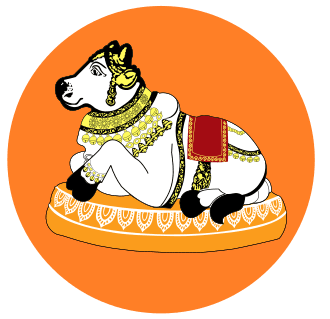
Ujjain
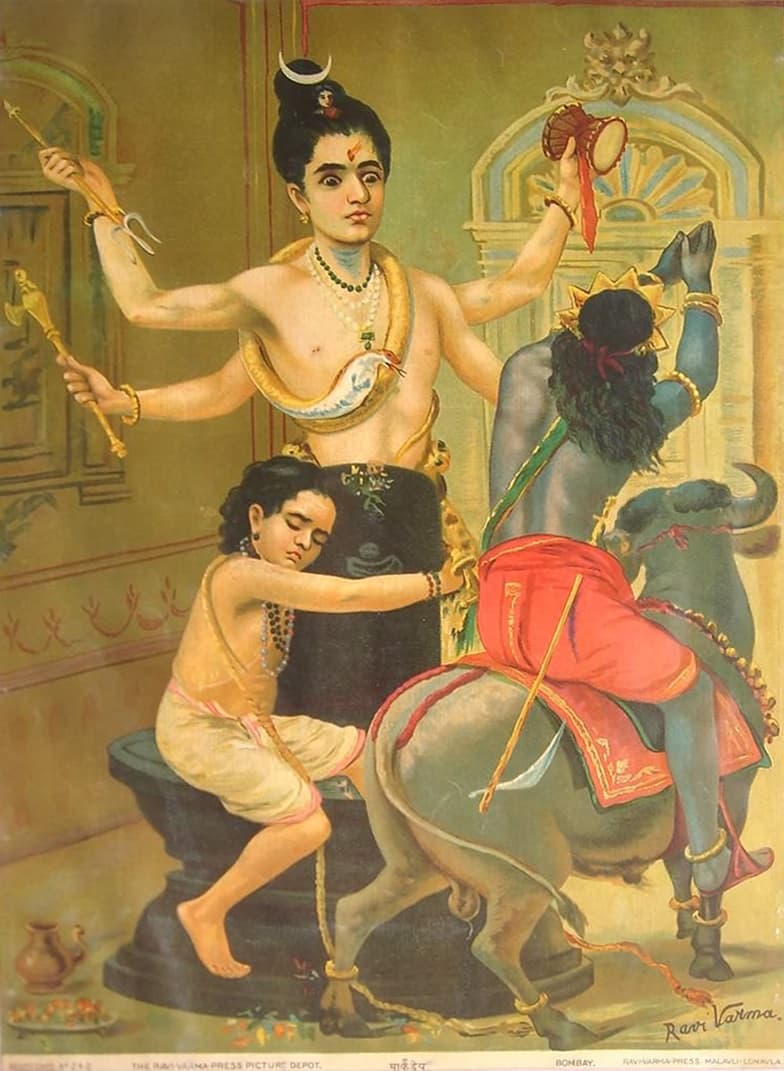
Kalantaka is an aspect of the Hindu god Shiva as the conqueror of time and death, itself personified by the god Yama. He is depicted as defeating or killing Yama when the latter comes to take the life of Shiva's devotee Markandeya. Shiva is often depicted as dancing on death, personified by Yama.
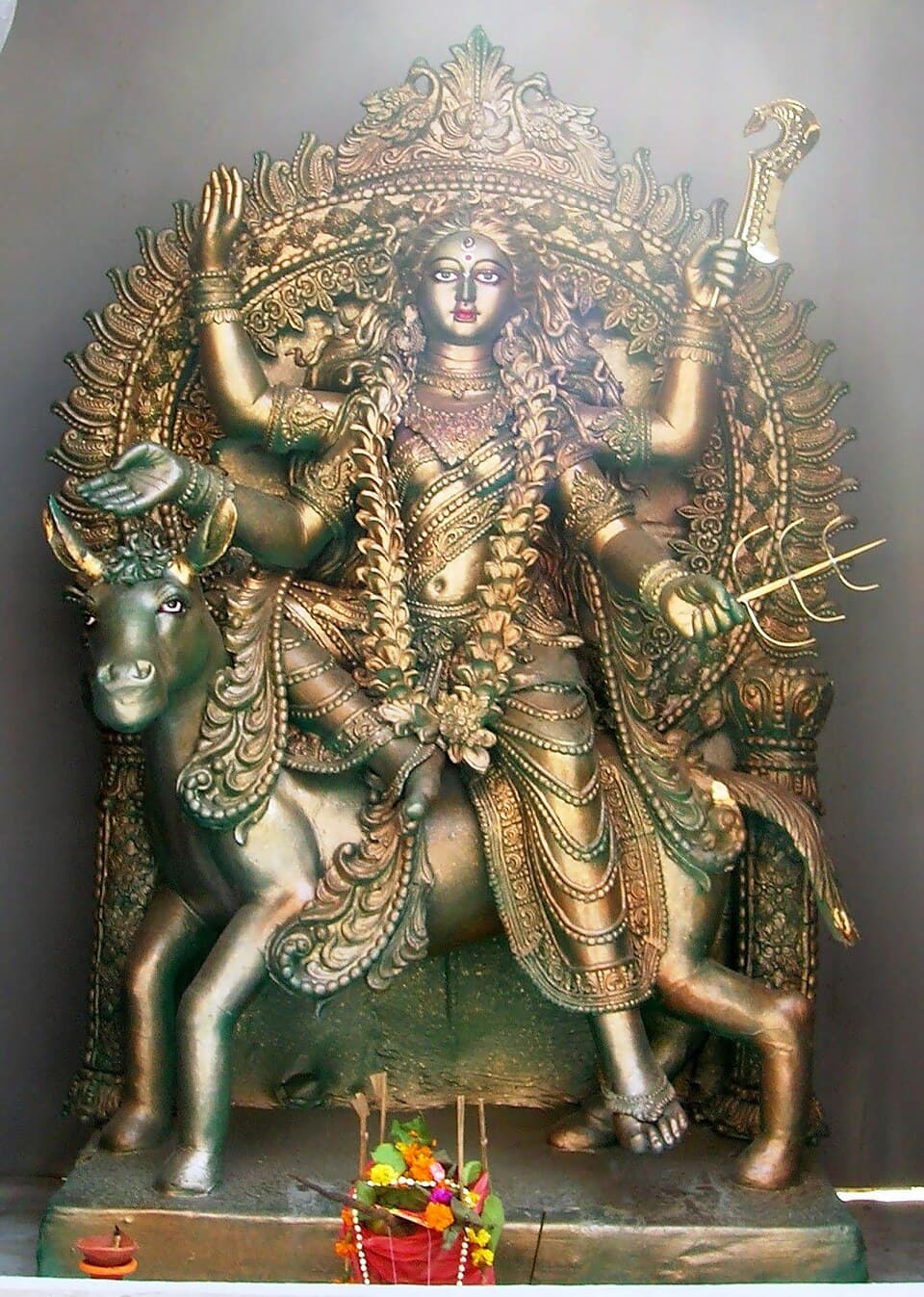
Kalaratri is the seventh of the nine Navadurga forms of the goddess Mahadevi. She is first referenced in the Devi Mahatmya. Kalaratri is one of the fearsome forms of the goddess.
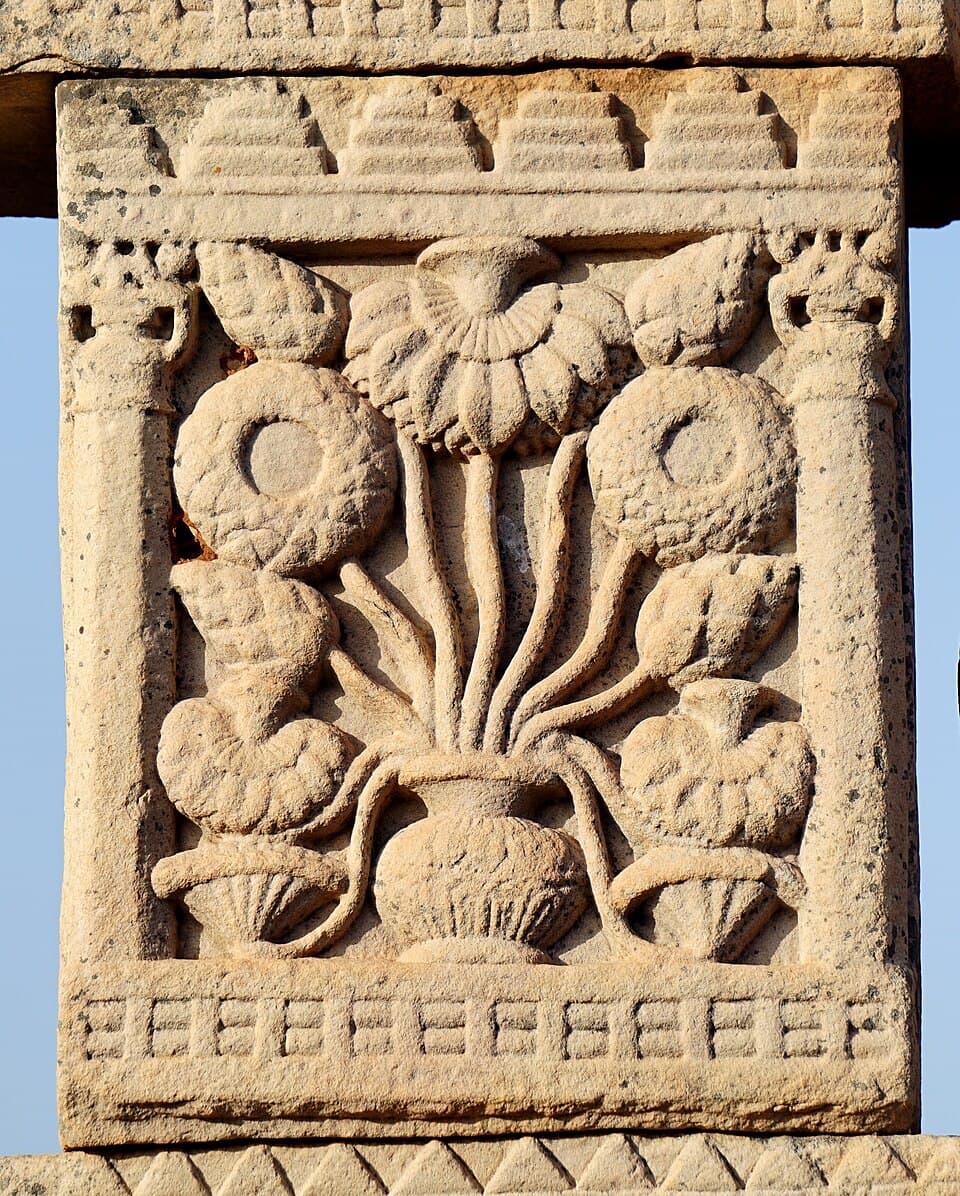
A kalasha, also called Pūrṇa-Kalaśa, Pūrṇa-Kumbha, Pūrṇa-Ghaṭa, also called ghat or ghot or kumbh, is a metal pot with a large base and small mouth. It is employed in the rituals in Hindu, Jain, and Buddhist traditions as a ceremonial offering to the deity or to an honoured guest and as an auspicious symbol used to decorate shrines and buildings.
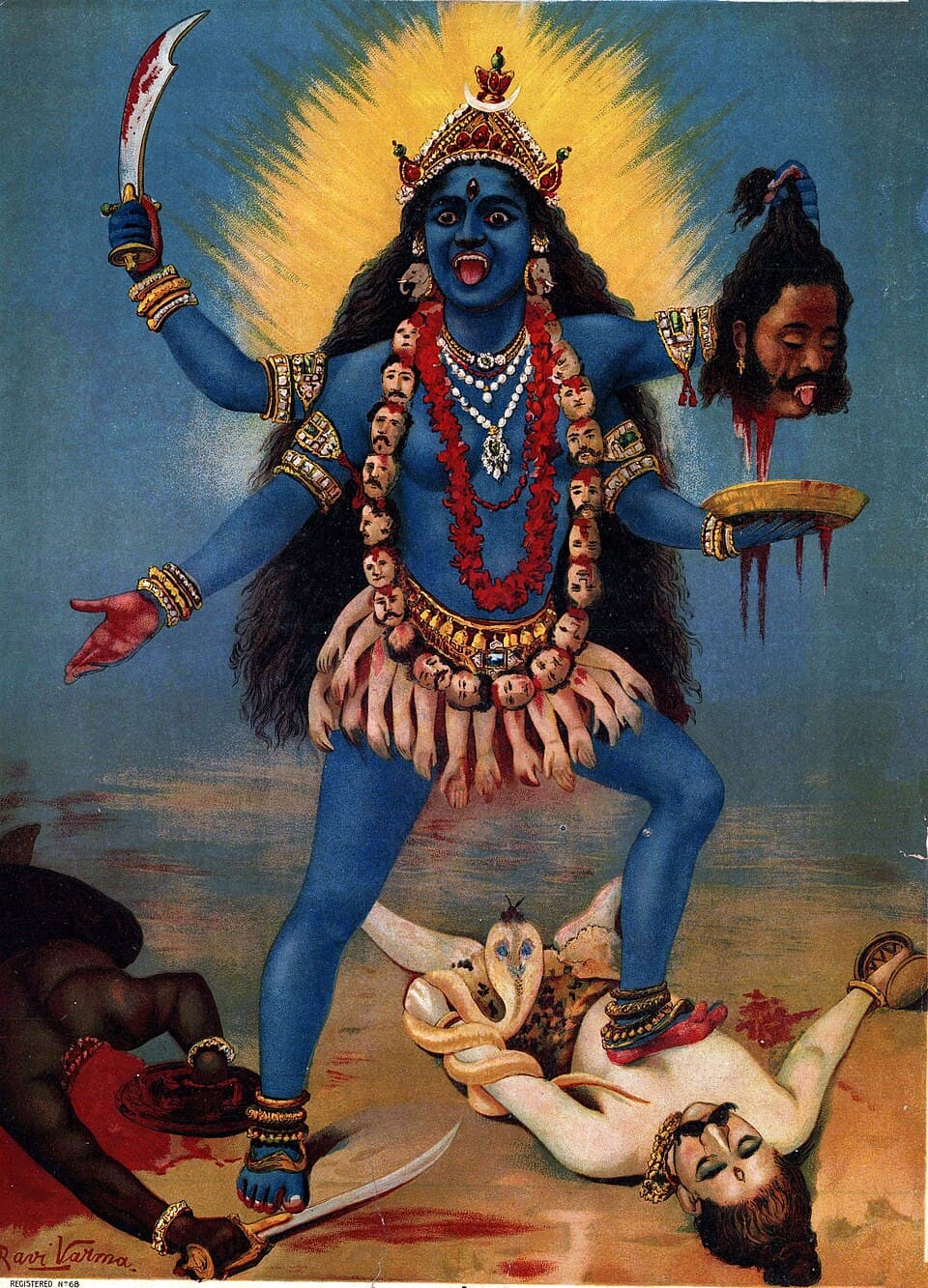
Kali, also called Kalika, is a major goddess in Hinduism, primarily associated with time, death, and destruction. Kali is also connected with transcendental knowledge and is the first of the ten Mahavidyas, goddesses who provide liberating knowledge. Of the numerous Hindu goddesses, Kali is held as the most famous.
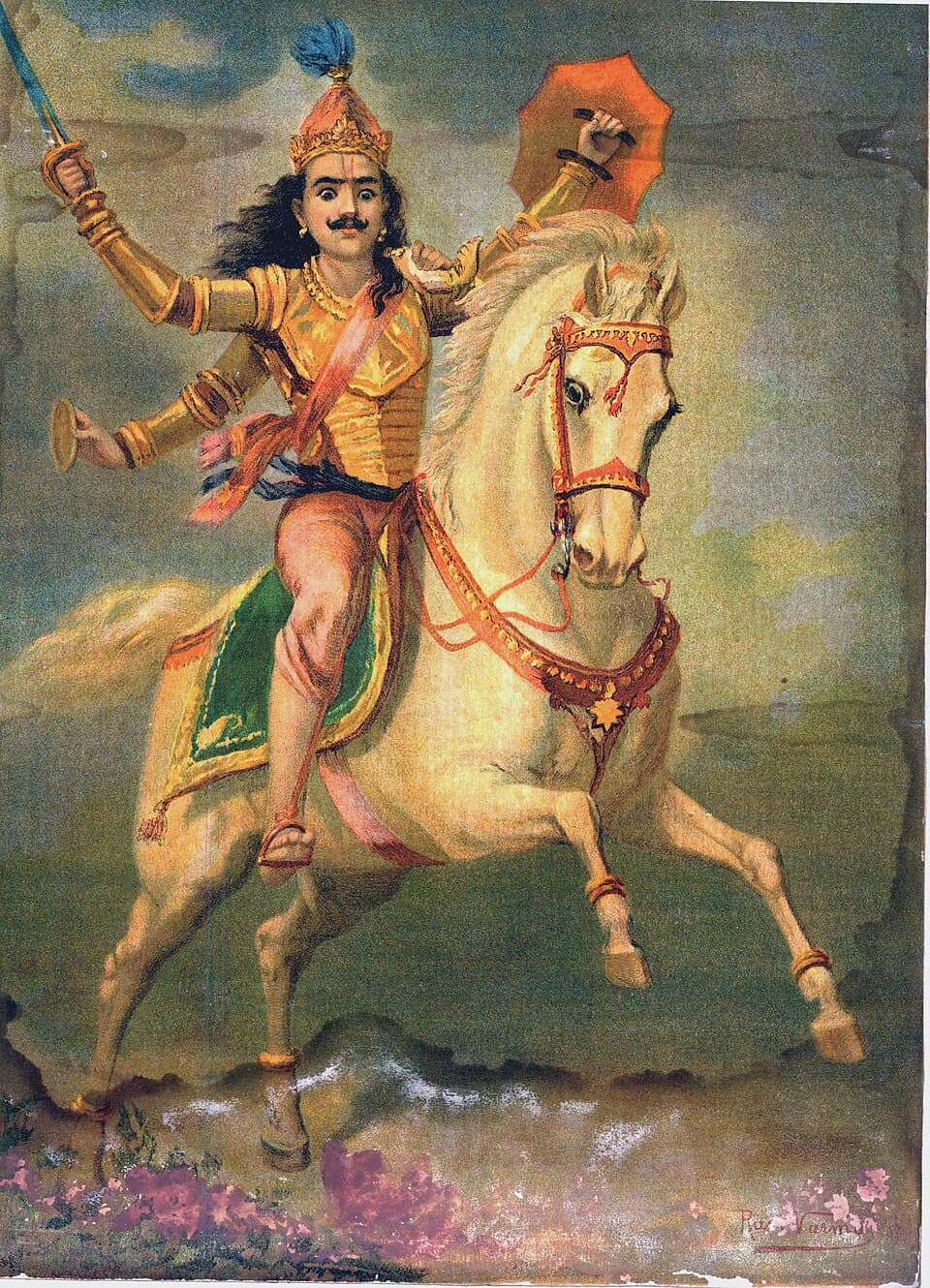
Kalki, also called Kalkin, is the prophesied tenth and final incarnation of the Hindu god Vishnu. According to Vaishnava cosmology, Kalki is destined to appear at the end of the Kali Yuga, the last of the four ages in the cycle of existence (Krita). His arrival will mark the end of the Kali Yuga and herald the beginning of the Satya Yuga, the most virtuous age, before the ultimate dissolution of the universe (Mahapralaya).