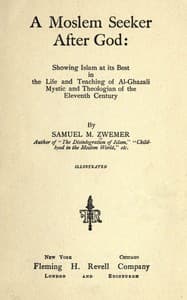
A Moslem seeker after God : $b showing Islam at its best in the life and teaching of al-Ghazali, mystic and theologian of the eleventh century
en
Ghazzali, 1058-1111
الغزالي
Persia
Theologian and mystic who reconciled Islamic orthodoxy with Sufism and critiqued the philosophers.
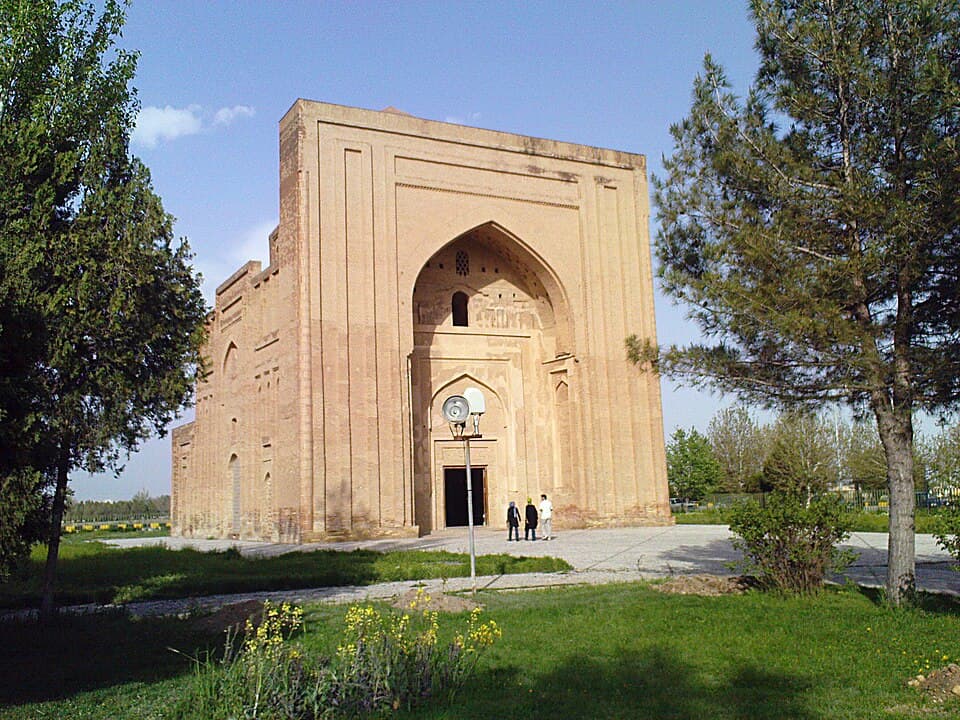
Al-Ghazali — Abu Hamid Muhammad, jurist of Tus, star professor at Baghdad's Nizamiyya at thirty-three — is the pivot on which Islamic thought turned. At the height of his fame, in 1095, his speech failed in the lecture hall: a crisis he describes in his autobiography, Deliverance from Error (al-Munqidh min al-Dalal), one of the great documents of religious experience. Certainty, he had discovered, could not be had from theology, philosophy, or authority. He abandoned his chair, wandered a decade as a Sufi through Damascus, Jerusalem, and the Hijaz, and returned convinced that direct spiritual "tasting" (dhawq) — not syllogism — is where certainty lives.
The Incoherence of the Philosophers (Tahafut al-Falasifa) is his most famous polemic: twenty theses of Ibn Sina and al-Farabi examined, three — the world's past eternity, God's knowledge of universals only, and the denial of bodily resurrection — condemned as unbelief. Its seventeenth discussion contains a stunning modern move: causation is not necessary connection but God's habit; fire does not burn cotton, God creates the burning — an occasionalism that anticipates Hume's analysis of causation by seven centuries, deployed to opposite ends.
Yet he was no enemy of reason: he wrote first-rate logic manuals and insisted jurists learn demonstration. His life's summa, The Revival of the Religious Sciences (Ihya Ulum al-Din), rebuilt ordinary observance — prayer, almsgiving, marriage, death — on inner intention, marrying law to Sufism so successfully that mysticism became mainstream Sunni piety rather than its rival.
Called Hujjat al-Islam, the Proof of Islam, he is blamed by some moderns for philosophy's decline in the Sunni world and credited by others with saving religion from arid scholasticism. Ibn Rushd spent a career answering him; the argument is not over.
en
Ghazzali, 1058-1111
Arabic
Quote Attribution
Identify the philosopher behind a quote using AI.
Works by and about Al-Ghazali — readable in full, right here in the Library.