Ibn Rushd
ابن رشد
Andalusia
Andalusian jurist and commentator on Aristotle, known in the Latin West as Averroes.
Biography
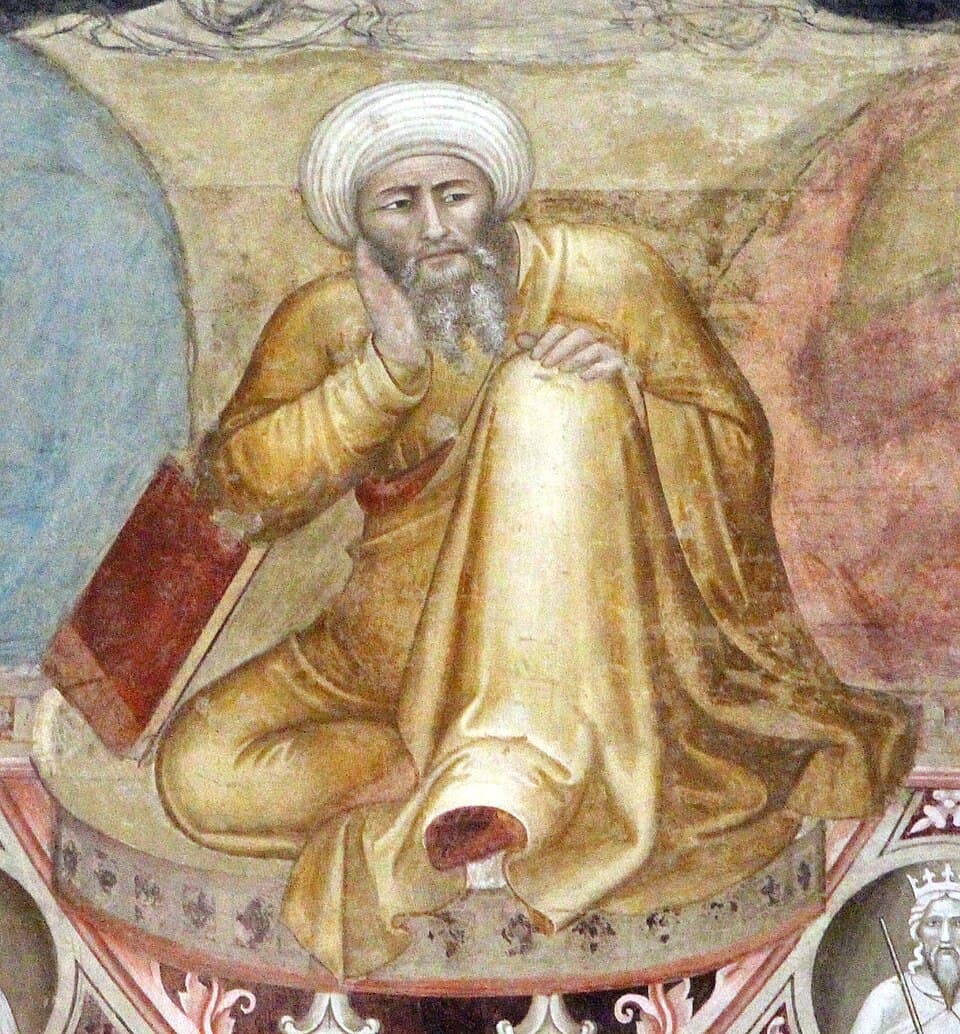
Ibn Rushd of Córdoba — Averroes in Latin — was a qadi (judge), court physician, and the most committed Aristotelian of the medieval world. Commissioned by the Almohad caliph to explain Aristotle, he produced commentaries so thorough — short, middle, and long, on nearly the whole corpus — that Latin Europe simply called him "the Commentator," as Dante does when placing him honorably in Limbo.
His philosophical war was with al-Ghazali. Where The Incoherence of the Philosophers had condemned the philosophers' positions as unbelief, Ibn Rushd answered point by point in The Incoherence of the Incoherence (Tahafut al-Tahafut), defending the eternity of the world, natural causation, and the power of demonstrative reason. In The Decisive Treatise (Fasl al-Maqal) he issued his most famous ruling: philosophy is not merely permitted by Islamic law but obligatory for those capable of it, since the Qur'an itself commands reflection on creation. Where demonstration and the apparent sense of scripture conflict, scripture must be interpreted allegorically — truth cannot contradict truth.
That principle detonated in Europe more than in Islam. Latin Averroism at the University of Paris — and the "double truth" doctrine attributed, fairly or not, to his followers — provoked the condemnations of 1277 and forced Christian theology to define the boundary between faith and reason. Aquinas built the Summa partly in argument with him.
His own world moved away from him. Late in life he was briefly banished and his books burned in Córdoba; falsafa as an independent tradition withered in the Sunni West after his death in Marrakesh. But his insistence that the same truth speaks in revelation and demonstration remains the classic statement of philosophical confidence within a revealed religion.
Works
No works listed yet.
Quote Attribution
Identify the philosopher behind a quote using AI.
Books by & about Ibn Rushd
Works by and about Ibn Rushd — readable in full, right here in the Library.