Discourses on the First Decade of Titus Livius
en
Livy. Ab urbe condita; Political science -- Early works to 1800; Rome -- Historiography
Florence
Florentine statesman whose The Prince founded modern political realism.
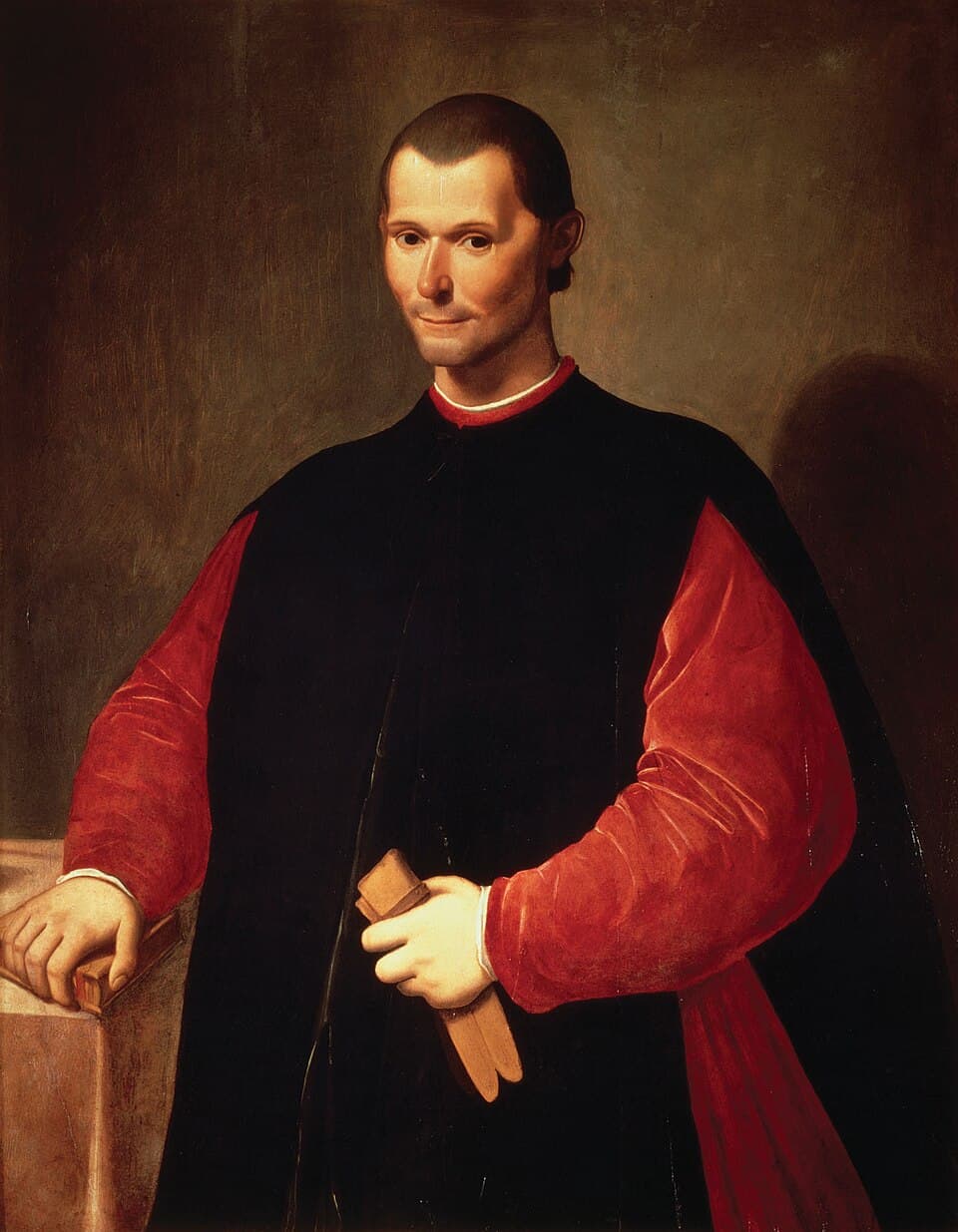
Niccolò Machiavelli spent fourteen years as the Florentine republic's tireless second chancellor — diplomat to popes, kings, and Cesare Borgia — until the Medici returned in 1512, sacked him, imprisoned and tortured him on a false conspiracy charge, and exiled him to his farm. There, in evenings he described in a famous letter — changing out of mud-caked clothes into "garments regal and courtly" to converse with the ancients in his study — he wrote the little book that made his name a synonym for devilry.
The Prince (1513, printed 1532) commits the original sin of political philosophy: it separates politics from morality. The effectual truth of things, not imagined republics, is his subject. A ruler who wants to keep his state "must learn to be able not to be good, and to use this and not use it according to necessity." Better to be feared than loved, if one must choose; cruelty well used is mercy to the whole; and fortune — half our master — favors the bold. Whether the book is cynical counsel, cold science, or (as Rousseau and Spinoza suspected) a covert warning to peoples about how princes actually operate, remains the liveliest question in its scholarship.
The Discourses on Livy, his longer and deeper work, shows a devoted republican who preferred Rome's tumultuous liberty to any principality. Its chapters on religion are the founding texts of the sociology of belief: Numa's piety did more than Romulus' arms; religion is the strongest instrument of civic order; and Christianity, by glorifying humility and contempt for worldly things, "has made the world weak" compared to antiquity's robust civil faiths. He was buried in Santa Croce under the epitaph: "To so great a name, no praise is adequate."
en
Livy. Ab urbe condita; Political science -- Early works to 1800; Rome -- Historiography

en
Florence (Italy) -- History; Italy -- History -- 476-1492; Italy -- Politics and government

en
Florence (Italy) -- History; Military art and science -- Early works to 1800; Political ethics; Political science -- Early works to 1800; War -- Early works to 1800

en
Adultery -- Fiction; Great Britain -- Politics and government -- Fiction; Man-woman relationships -- Fiction; Political fiction

en
Political ethics -- Early works to 1800; Political science -- Philosophy -- Early works to 1800; State, The -- Early works to 1800
en
Political ethics -- Early works to 1800; Political science -- Philosophy -- Early works to 1800; State, The -- Early works to 1800
en
Political ethics -- Early works to 1800; Political science -- Philosophy -- Early works to 1800; State, The -- Early works to 1800
Quote Attribution
Identify the philosopher behind a quote using AI.
Works by and about Niccolo Machiavelli — readable in full, right here in the Library.