John Shaqi
Greek470 BC – 399 BC

Socrates

Athens

The questioning gadfly of Athens whose method of dialectic founded Western philosophy.
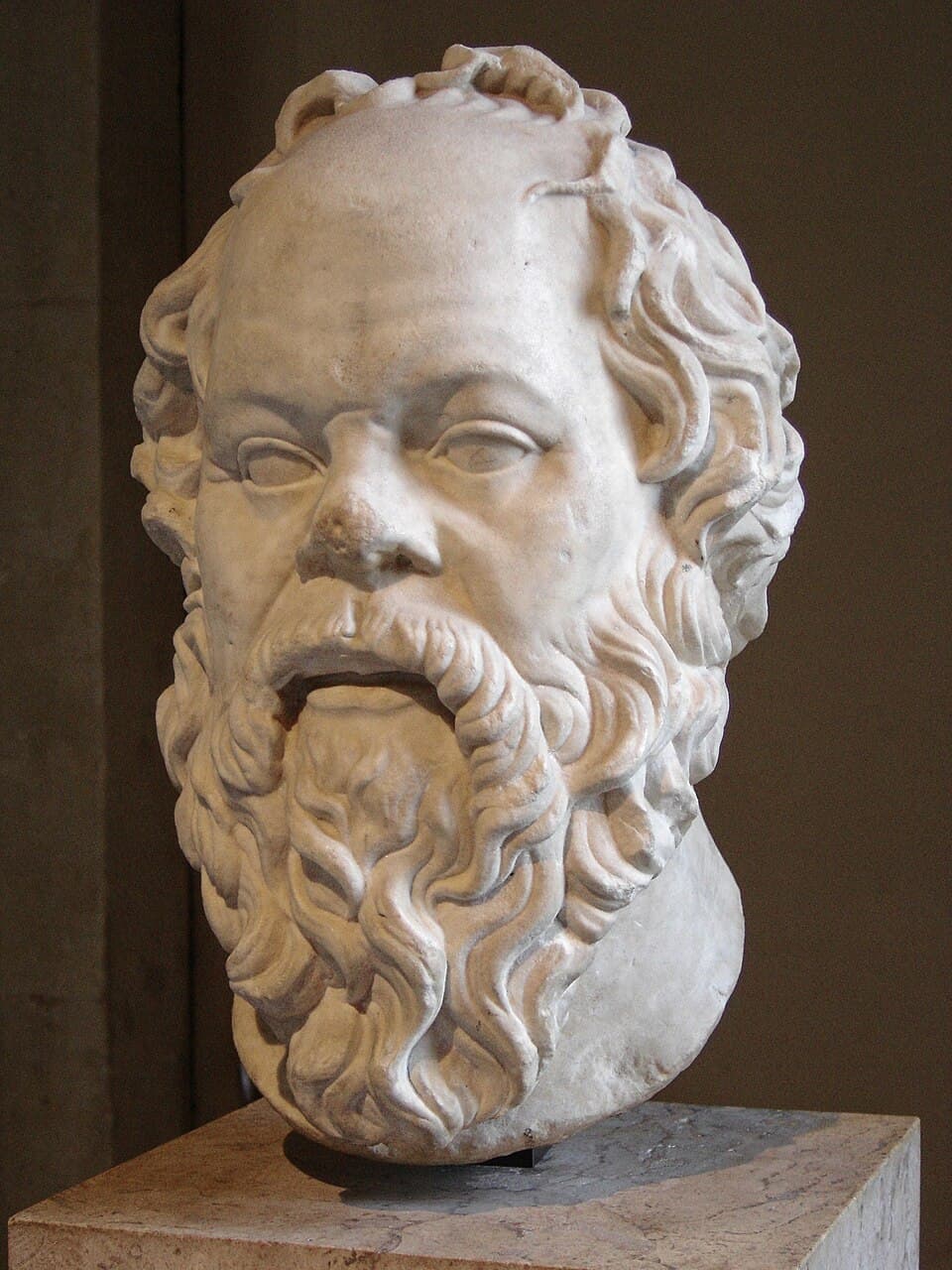
Socrates
Copy of Lysippos (?) · Public domain · Wikimedia Commons

Biography

Socrates wrote nothing, and yet Western philosophy begins with him. An Athenian stonemason's son who served as a hoplite in the Peloponnesian War, he spent his life in the agora practicing what he called elenchus — cross-examination. He would ask a general to define courage, a priest to define piety, an orator to define justice, and then show, question by question, that the confident answer collapsed under its own weight. What survives of him comes through his students, above all Plato, whose early dialogues — the Euthyphro, Apology, and Crito — are our closest witnesses.

Two convictions organize everything he did. First, that the unexamined life is not worth living for a human being: a claim he made at his own trial, as Plato records in the Apology. Second, that no one does wrong willingly — vice, for Socrates, is a form of ignorance, and virtue a form of knowledge. If a person truly knew what was good, they would do it; wrongdoing is always a miscalculation about what benefits the soul.

His method mattered as much as his doctrine. The Euthyphro poses a question that still shadows every theology: is the pious loved by the gods because it is pious, or pious because they love it? The dilemma — whether morality is independent of divine will or arbitrary — remains a live argument in philosophy of religion twenty-four centuries later.

In 399 BC, an Athenian jury convicted him of impiety and corrupting the young. Offered escape by his friends, he refused, arguing in the Crito that he owed the laws of Athens his obedience even when they erred against him. He drank the hemlock among his students. His death did what his life had begun: it made philosophy a calling for which a person might die, and every school that followed — Platonist, Cynic, Stoic, Skeptic — claimed him as its founder.

Works
Apology, Crito, and Phaedo of SocratesSocrates
Apology, Crito, and Phaedo of Socrates

Apology, Crito, and Phaedo of Socrates

en

Socrates, 470 BC-399 BC

Four Phases of Morals: Socrates, Aristotle, Christianity, UtilitarianismSocrates
Four Phases of Morals: Socrates, Aristotle, Christianity, Utilitarianism

Four Phases of Morals: Socrates, Aristotle, Christianity, Utilitarianism

en

Aristotle, 384 BC-322 BC; Christian ethics; Ethics -- Greece; Ethics -- History; Socrates, 470 BC-399 BC; Utilitarianism
Keeping Up with William: In which the Honorable Socrates Potter Talks of the Relative Merits of Sense Common and PreferredSocrates
Keeping Up with William: In which the Honorable Socrates Potter Talks of the Relative Merits of Sense Common and Preferred

Keeping Up with William: In which the Honorable Socrates Potter Talks of the Relative Merits of Sense Common and Preferred

en

World War, 1914-1918
SocratesSocrates
Socrates

Socrates

en

French drama -- 18th century -- Translations into English; Socrates -- Drama; Tragedies (Drama)
The Marryers: A History Gathered from a Brief of the Honorable Socrates PotterSocrates
The Marryers: A History Gathered from a Brief of the Honorable Socrates Potter

The Marryers: A History Gathered from a Brief of the Honorable Socrates Potter

en

Americans -- Italy -- Fiction; Courtship -- Fiction; Lawyers -- Fiction; Mate selection -- Fiction

The Memorable Thoughts of SocratesSocrates
The Memorable Thoughts of Socrates

The Memorable Thoughts of Socrates

en

Socrates, 470 BC-399 BC

The Second Story of Meno: A Continuation of Socrates' Dialogue with Meno in Which the Boy Proves Root 2 is IrrationalSocrates
The Second Story of Meno: A Continuation of Socrates' Dialogue with Meno in Which the Boy Proves Root 2 is Irrational

The Second Story of Meno: A Continuation of Socrates' Dialogue with Meno in Which the Boy Proves Root 2 is Irrational

en

Mathematics

Quote Attribution

Identify the philosopher behind a quote using AI.

Books by & about Socrates

Works by and about Socrates — readable in full, right here in the Library.

Apology, Crito, and Phaedo of SocratesPlato

Apology, Crito, and Phaedo of Socrates

Plato

Read on site →
A Discourse of a Method for the Well Guiding of Reason: and the Discovery of Truth in the SciencesDescartes, René

A Discourse of a Method for the Well Guiding of Reason: and the Discovery of Truth in the Sciences

Descartes, René

Read on site →
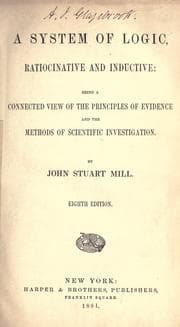
A System of Logic, Ratiocinative and InductiveMill, John Stuart
A System of Logic, Ratiocinative and Inductive

A System of Logic, Ratiocinative and Inductive

Mill, John Stuart

Read on site →
A Theological-Political Treatise [Part III]Spinoza, Benedictus de

A Theological-Political Treatise [Part III]

Spinoza, Benedictus de

Read on site →
A Theological-Political Treatise [Part IV]Spinoza, Benedictus de

A Theological-Political Treatise [Part IV]

Spinoza, Benedictus de

Read on site →
A Treatise of Human Nature: Being an Attempt to Introduce the Experimental Method Into Moral Subjects; and Dialogues Concerning Natural ReligionHume, David
A Treatise of Human Nature: Being an Attempt to Introduce the Experimental Method Into Moral Subjects; and Dialogues Concerning Natural Religion

A Treatise of Human Nature: Being an Attempt to Introduce the Experimental Method Into Moral Subjects; and Dialogues Concerning Natural Religion

Hume, David

Read on site →
Alice in Wonderland: A Dramatization of Lewis Carroll's "Alice's Adventures in Wonderland" and "Through the Looking Glass"Carroll, Lewis
Alice in Wonderland: A Dramatization of Lewis Carroll's "Alice's Adventures in Wonderland" and "Through the Looking Glass"

Alice in Wonderland: A Dramatization of Lewis Carroll's "Alice's Adventures in Wonderland" and "Through the Looking Glass"

Carroll, Lewis

Read on site →
Alice's Adventures in WonderlandCarroll, Lewis
Alice's Adventures in Wonderland

Alice's Adventures in Wonderland

Carroll, Lewis

Read on site →
An Enquiry Concerning Human UnderstandingHume, David
An Enquiry Concerning Human Understanding

An Enquiry Concerning Human Understanding

Hume, David

Read on site →
An Enquiry Concerning the Principles of MoralsHume, David
An Enquiry Concerning the Principles of Morals

An Enquiry Concerning the Principles of Morals

Hume, David

Read on site →
Analysis of the Phenomena of the Human MindMill, James
Analysis of the Phenomena of the Human Mind

Analysis of the Phenomena of the Human Mind

Mill, James

Read on site →
AnthemRand, Ayn
Anthem

Anthem

Rand, Ayn

Read on site →
ApologyPlato
Apology

Apology

Plato

Read on site →
Aristotle on the art of poetryAristotle
Aristotle on the art of poetry

Aristotle on the art of poetry

Aristotle

Read on site →
Aristotle's History of Animals: In Ten BooksAristotle
Aristotle's History of Animals: In Ten Books

Aristotle's History of Animals: In Ten Books

Aristotle

Read on site →
Aristotle's works:: Containing the Master-piece, Directions for Midwives, and Counsel and Advice to Child-bearing Women with Various Useful RemediesAristotle, pseud.

Aristotle's works:: Containing the Master-piece, Directions for Midwives, and Counsel and Advice to Child-bearing Women with Various Useful Remedies

Aristotle, pseud.

Read on site →
Auguste Comte and PositivismMill, John Stuart
Auguste Comte and Positivism

Auguste Comte and Positivism

Mill, John Stuart

Read on site →
AutobiographyMill, John Stuart
Autobiography

Autobiography

Mill, John Stuart

Read on site →
Beyond Good and EvilNietzsche, Friedrich Wilhelm
Beyond Good and Evil

Beyond Good and Evil

Nietzsche, Friedrich Wilhelm

Read on site →
CandideVoltaire
Candide

Candide

Voltaire

Read on site →
CharmidesPlato
Charmides

Charmides

Plato

Read on site →
Considerations on Representative GovernmentMill, John Stuart
Considerations on Representative Government

Considerations on Representative Government

Mill, John Stuart

Read on site →
CratylusPlato
Cratylus

Cratylus

Plato

Read on site →
CritiasPlato
Critias

Critias

Plato

Read on site →