Kinana ibn al-Rabi: The Khaybar Treasure, the Fire, and the Question of Authenticity
Ibn Ishaq records that Kinana ibn al-Rabi was tortured with fire over the hidden treasure of Khaybar and then beheaded — yet the report carries no chain of narrators, and Sahih al-Bukhari preserves an explicit prohibition of punishing with fire. Both sets of texts are presented here exactly as they stand. The reader decides.
By John Shaqi · July 24, 2026 · 15 min read
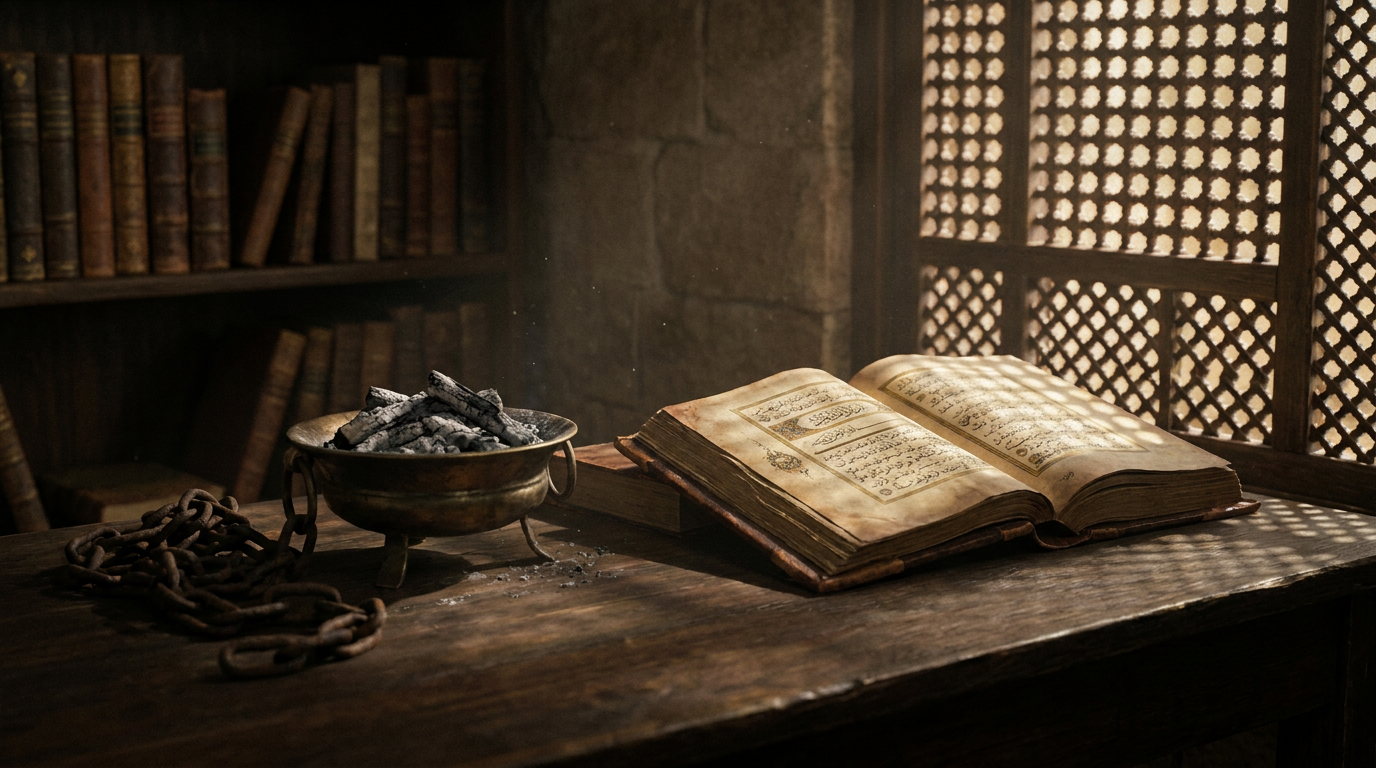
A Fire Kindled on a Man''s Chest
Muharram, 7 AH — May 628 CE. The fortresses of Khaybar, the wealthiest Jewish oasis of northern Arabia, have fallen one after another. Among the captives stands a young chief: Kinana ibn al-Rabi ibn Abi al-Huqayq — custodian of the famous treasure of Banu Nadir and husband of the young Safiyya bint Huyayy. He is brought before the Prophet of Islam and asked a single question: where is the treasure? What the earliest biography of the Prophet says happened next takes only a few lines. In those few lines there is a ruin, a buried hoard, a fire kindled on a man''s chest, and a sword. For twelve centuries, those few lines have been read in two completely different ways.
This article does not mock any religion. It will do what we always do: open the books, present the texts exactly as they are, and ask three questions: what did Ibn Ishaq and al-Tabari actually write? Does the report survive the scrutiny of hadith criticism? And what legal conclusions did Muslim jurists themselves draw from the episode? The verdict, as always, is yours.
Continue Reading
Continue reading this article
Sign in free to read in full. Become a member to join the discussion without limits.
Sign in free to read →- ✓Read every article
- ✓Comment and reply (up to 100 words, 10/month)
- ✓Browse the community
- ✓Reader badge