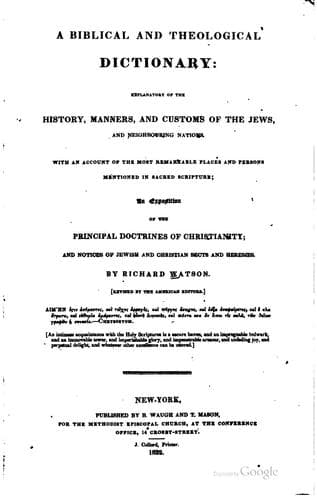
A Biblical and Theological Dictionary: explanatory of the history, manners, and customs of the Jews, and neighbouring nations — John Shaqi
A Biblical and Theological Dictionary: explanatory of the history, manners, and customs of the Jews, and neighbouring nationsWatson, Richard
Religion
A Biblical and Theological Dictionary: explanatory of the history, manners, and customs of the Jews, and neighbouring nations
Watson, Richard
Bible -- Dictionaries; Theology -- Dictionaries
3. The intentional offering up of Isaac is not to be supposed as viewed
by Abraham as an act sanctioned by the Pagan practice of human
sacrifice. The immolation of human victims, particularly of that which
was most precious, the favourite, the first-born child, appears to have
been a common usage among many early nations, more especially the tribes
by which Abraham was surrounded. It was the distinguishing rite among
the worshippers of Moloch; at a later period of the Jewish history, it
was practised by a king of Moab; and it was undoubtedly derived by the
Carthaginians from their Phenecian ancestors on the shores of Syria.
Where it was an ordinary usage, as in the worship of Moloch, it was in
unison with the character of the religion, and of its deity. It was the
last act of a dark and sanguinary superstition, which rose by regular
gradation to this complete triumph over human nature. The god, who was
propitiated by these offerings, had been satiated with more cheap and
vulgar victims; he had been glutted to the full with human suffering and
with human blood. In general it was the final mark of the subjugation of
the national mind to an inhuman and domineering priesthood. But the
Mosaic religion held human sacrifices in abhorrence; and the God of the
Abrahamitic family, uniformly beneficent, had imposed no duties which
entailed human suffering, had demanded no offerings which were repugnant
to the better feelings of our nature. The command to offer Isaac as “a
burnt offering,” was for these reasons a trial the more severe to
Abraham’s faith. He must therefore have been fully assured of the divine
command; and he left the mystery to be explained by God himself. His was
a simple act of unhesitating obedience to the command of God; the last
proof of perfect reliance on the certain accomplishment of the divine
promises. Isaac, so miraculously bestowed, could be as miraculously
restored; Abraham, such is the comment of the Christian Apostle,
“believed that God could even raise him up from the dead.”
Public-domain text, read in full here on John Shaqi.
Reviews
Reviews
No reviews yet
Be the first to share your thoughts on this work.
Join the Discussion
Join the discussion
Sign in to leave a comment or review.
Sign InorCreate an account