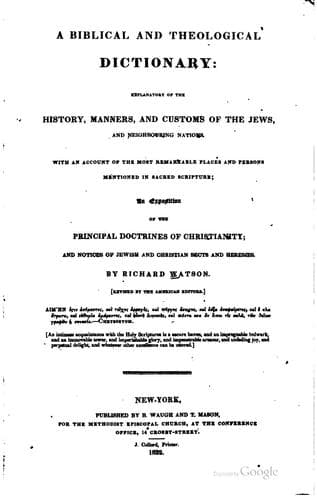
A Biblical and Theological Dictionary: explanatory of the history, manners, and customs of the Jews, and neighbouring nationsWatson, Richard
Religion
A Biblical and Theological Dictionary: explanatory of the history, manners, and customs of the Jews, and neighbouring nations
Watson, Richard
Bible -- Dictionaries; Theology -- Dictionaries
5. It must have been of the utmost importance in the early times of the
Gospel, and certainly not of less importance to every subsequent age, to
have an authentic account of the promised descent of the Holy Ghost, and
of the success which attended the first preachers of the Gospel both
among the Jews and Gentiles. These great events completed the evidence
of the divine mission of Christ, established the truth of the religion
which he taught, and pointed out in the clearest manner the
comprehensive nature of the redemption which he purchased by his death.
Œcumenius calls the Acts, the “Gospel of the Holy Ghost;” and St.
Chrysostom, the “Gospel of our Saviour’s resurrection,” or the Gospel of
Jesus Christ risen from the dead. Here, in the lives and preaching of
the Apostles, we have the most miraculous instances of the power of the
Holy Ghost; and in the account of those who were the first believers, we
have received the most excellent pattern of the true Christian life.
ADAM, the name given to man in general, both male and female in the
Hebrew Scriptures, Gen. i, 26, 27; v, 1, 2; xi, 5; Josh. xiv, 15; 2 Sam.
vii, 19; Eccl. iii, 21; Jer. xxxii, 20; Hosea vi, 7; Zech. xiii, 7: in
all which places mankind is understood; but particularly it is the name
of the first man and father of the human race, created by God himself
out of the dust of the earth. Josephus thinks that he was called Adam by
reason of the reddish colour of the earth out of which he was formed,
for Adam in Hebrew signifies red. God having made man out of the dust of
the earth, breathed into him the breath of life, and gave him dominion
over all the creatures of this world, Gen. i, 26, 27; ii, 7. He created
him after his own image and resemblance; and having blessed him, he
placed him in a delicious garden, in Eden, that he might cultivate it,
and feed upon its fruits, Gen. ii, 8; but under the following
injunction: “Of every tree of the garden thou mayest freely eat: but of
the tree of the knowledge of good and evil, thou shalt not eat of it;
for in the day thou eatest thereof, thou shalt surely die.” The first
thing that Adam did after his introduction into paradise, was to give
names to all the beasts and birds which presented themselves before him,
Gen. ii, 19, 20.
But man was without a fellow creature of his own species; wherefore God
said, “It is not good for man to be alone; I will make him a help meet
for him.” And the Lord caused a deep sleep to fall upon Adam, and while
he slept, he took one of his ribs, “and closed up the flesh instead
thereof;” and of that substance which he took from man made he a woman,
whom he presented to him. Then said Adam, “This is now bone of my bone,
and flesh of my flesh: she shall be called woman, because she was taken
out of man,” Gen. ii, 21, &c.
Public-domain text, read in full here on John Shaqi.
Reviews
Reviews
No reviews yet
Be the first to share your thoughts on this work.
Join the Discussion
Join the discussion
Sign in to leave a comment or review.
Sign InorCreate an account