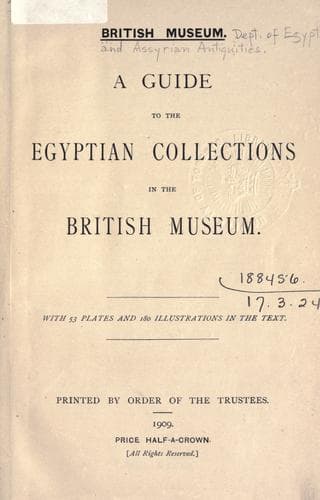
A guide to the Egyptian collections in the British MuseumBritish Museum. Department of Egyptian and Assyrian Antiquities
History
A guide to the Egyptian collections in the British Museum
British Museum. Department of Egyptian and Assyrian Antiquities
Egypt -- Antiquities
𓈚 SH ” שׁ.
𓎡 K ” כּ.
𓈎 Q ” ק.
𓎼 Ḳ ” ג.
𓏏 T ” תּ.
𓍿 ⎫ TH(?) ” ת (?).
𓍘 ⎭
𓂧 Ṭ ” ט.
𓆓 TCH or Ṣ (?) ” צ.
=Hieroglyphic writing.=—The hieroglyph is a =picture= of an object,
animate or inanimate, _e.g._, 𓁹 an eye, 𓃝 a ram, 𓃹 a hare, 𓅐 a vulture,
𓅧 a duck, 𓇼 a star, 𓉶 an obelisk, 𓁷 a face, 𓂾 a leg.
Now pictures may also represent =ideas=, _e.g._, 𓊊, a wall leaning on
one side represents “falling”; 𓄤, a musical instrument, symbolizes “joy,
happiness, pleasure,” etc.; 𓋩, a seal, represents something of which
great care is taken, _i.e._, “treasure”; 𓀋, a man holding a vessel placed
on his head, symbolizes “to bear, to carry”; , the sky with a star
hanging from it, suggests “night”; and so on. Hieroglyphs used in this
way are called =ideographs=. Every object had a name, therefore each
picture, or hieroglyph, was a word-sign, and a list of these would have
made a dictionary in the earliest times. At one time all hieroglyphs were
syllabic, and the Egyptians had no alphabetic hieroglyphs; and if scribes
had needed to write down letter by letter the name of some foreign
product, or the name of a foreign king, supposing they did not possess
syllables suitable in sound, they would have been unable to do so. In
fact the Egyptians needed an =alphabet=, and the oldest inscriptions of
any length show that they already possessed one.
Public-domain text, read in full here on John Shaqi.
Reviews
Reviews
No reviews yet
Be the first to share your thoughts on this work.
Join the Discussion
Join the discussion
Sign in to leave a comment or review.
Sign InorCreate an account