A Treatise on Bread, and Bread-making — John Shaqi
A Treatise on Bread, and Bread-makingGraham, Sylvester
History
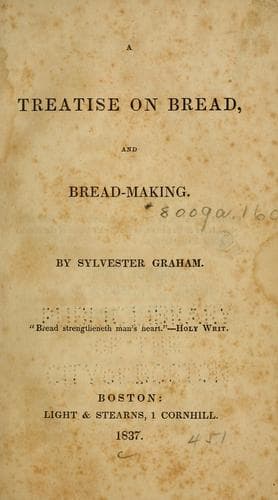
A Treatise on Bread, and Bread-making
Graham, Sylvester
Bread
“Put into one gallon of water a double handful of hops;—boil them
fifteen or twenty minutes, then strain off the water while it is
scalding hot;—stir in wheat flour or meal till it becomes a thick
batter, so that it will hardly pour;—let it stand till it becomes about
blood warm, then add a pint of good lively yeast, and stir it well; and
then let it stand in a place where it will be kept at a temperature of
about 70° F. till it becomes perfectly light, whether more or less time
is required; and then it is fit for use;—or if it is desired to keep a
portion of it, let it stand several hours and become cool; and then put
it into a clean jug and cork it tight, and place it in the cellar where
it will keep cool; and it may be preserved good, ten or twelve days, and
even longer.”
Another way by which yeast when thus made may be preserved much longer,
and perhaps more conveniently, is, to take it when it has become
perfectly light, and stir in good Indian meal until it becomes a hard
dough: then take this dough and make it into small thin cakes, and dry
them perfectly, without baking or cooking them at all. These cakes, if
kept perfectly dry, will be good for several weeks and even months.
When yeast is needed, take some of these cakes (more or less according
to the quantity of bread desired) and break them fine and dissolve them
in warm water, and then stir in some wheat flour till a batter is
formed, which should be kept at a temperature of about 60° F. till the
yeast becomes light and lively, and fitted for making bread.
Others, in making this yeast, originally put into the water with the
hops, a double handful of good clean wheat bran, and boil them up
together and strain off the water as above described: others again, boil
up a quantity of wheat bran without the hops, and make their yeast in
all other respects as above described.
The milk yeast is greatly preferred by many; and when it is well
managed, it certainly makes very handsome bread. The way of making it is
simple. Take a quart of milk fresh from the cow, (more or less according
to the quantity of bread desired,)—a little salt is generally added, and
some add about half a pint of water blood warm, but this is not
essential;—then stir wheat flour or meal into the milk till it forms a
moderately thick batter; and then cover it over, and place it where it
will remain at a temperature of from 60° to 70° F. till it becomes
perfectly light. It should then be used immediately: and let it be
remembered that dough made with this yeast will sour sooner than that
made with other yeast; and also that the bread after it is baked will
become extremely dry and _crumbly_ much sooner than bread made with
other yeast. Yet this bread, when a day old, is exceedingly light and
beautiful: albeit some dislike the animal smell and taste which it
derives from the milk.
Public-domain text, read in full here on John Shaqi.
Reviews
Reviews
No reviews yet
Be the first to share your thoughts on this work.
Join the Discussion
Join the discussion
Sign in to leave a comment or review.
Sign InorCreate an account