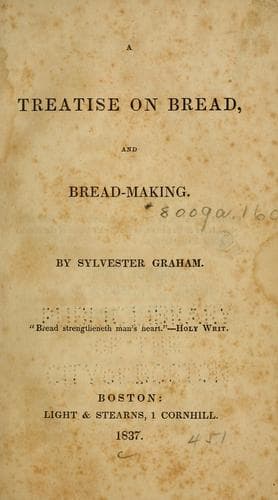
A Treatise on Bread, and Bread-makingGraham, Sylvester
History
A Treatise on Bread, and Bread-making
Graham, Sylvester
Bread
But cannot your domestics make good bread? I asked. “I have excellent
domestics,” answered Mrs. S., “and they can, perhaps, make as good bread
as I can; for they have been with me several years, and I have taken
pains to learn them how to do my work; and they are exceedingly faithful
and affectionate, and are always willing to do all they can to please
me; but they cannot feel for my husband and my children as I do, and
therefore they cannot feel that interest which I do, in always having
such bread as my husband and my children will love and enjoy. Besides,
if it were certain their care and vigilance and success in bread-making
would be always equal to mine, yet it is wholly uncertain how long they
will remain with me. Various circumstances may take place, which may
cause them to leave me, and bring me into dependence upon those who know
not how to make good bread; and therefore I choose to keep my own hand
in. But, apart from all other considerations, there is a pleasure
resulting from the performance of this duty, which richly rewards me for
all the labor of it. When my bread is made and brought upon the table,
and I see my husband and children eat it and enjoy it, and hear them
speak of its excellence, it affords me much satisfaction, and I am glad
to know that I have contributed so much to their health and happiness;
for, while my bread is so good that they prefer it to anything else upon
the table, there is little danger of their indulging, to any injurious
extent, in those articles of food which are less favorable to their
health.”
I need not say that this lady invariably had excellent bread upon her
table. But instances of this kind are, I regret to say, extremely rare,
even in christian communities; and therefore when such cases are known,
they ought to be held up as most noble examples of female virtue, and
receive such high commendations as their intrinsic merit deserves, and
such as will be calculated to beget in the minds of others an exalted
sense of the dignity and importance of such duties, and prompt every
wife and mother to the intelligent and affectionate performance of them.
For it should ever be remembered that, though our children, while they
depend on us for protection, are also properly the subjects of our
government, yet as soon as they are capable of appreciating our
authority and our influence, they are, like ourselves, moral agents, and
ought, in all respects, to be governed and nurtured as such; and
therefore it is not enough that we can give them such bread as we think
best for them, and _compel_ them to eat it; but the grand point at which
the mother should always aim, in this matter, is, to place before her
children such bread as is the very best for them, and at the same time,
to make it the most agreeable to them, and thereby make their duty and
their enjoyment perfectly coincide.
Public-domain text, read in full here on John Shaqi.
Reviews
Reviews
No reviews yet
Be the first to share your thoughts on this work.
Join the Discussion
Join the discussion
Sign in to leave a comment or review.
Sign InorCreate an account