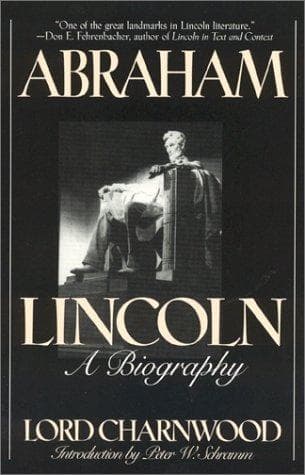
Abraham LincolnCharnwood, Godfrey Rathbone Benson, Baron
History
Abraham Lincoln
Charnwood, Godfrey Rathbone Benson, Baron
Lincoln, Abraham, 1809-1865; Presidents -- United States -- Biography
In the first place, there has been a tendency both in England and in
America to look at this history upside down. The epoch of the Revolution
and the Constitution has been regarded as a heroic age--wherein lived the
elder Brutus, Mucius Scaevola, Claelia and the rest--to be followed by
almost continuous disappointment, disillusionment and decline. A more
pleasing and more bracing view is nearer to the historic truth. The
faults of a later time were largely survivals, and the later history is
largely that of growth though in the face of terrific obstacles and many
influences that favoured decay. The nobility of the Revolution in the
eighteenth century may be rated higher or lower, but in the Civil War, in
which the elder brothers of so many men now living bore their part, the
people of the North and of the South alike displayed far more heroic
qualities.
In the second place, the War of Independence and of the Revolution lacked
some of the characteristics of other national uprisings. It was not a
revolt against grievous oppression or against a wholly foreign
domination, but against a political system which the people mildly
resented and which only statesmen felt to be pernicious and found to be
past cure. The cause appealed to far-seeing political aspiration and
appealed also to turbulent and ambitious spirits and to whatever was
present of a merely revolutionary temper, but the ordinary law-abiding
man who minded his own business was not greatly moved one way or the
other in his heart.
The subsequent movement which, in a few years after independence was
secured, gave the United States a national and a working Constitution was
altogether the work of a few, to which popular movement contributed
nothing. Of popular aspiration for unity there was none. Statesmen knew
that the new nation or group of nations lay helpless between pressing
dangers from abroad and its own financial difficulties. They saw clearly
that they must create a Government of the Union which could exercise
directly upon the individual American citizen an authority like that of
the Government of his own State. They did this, but with a reluctant and
half-convinced public opinion behind them.
Public-domain text, read in full here on John Shaqi.
Reviews
Reviews
No reviews yet
Be the first to share your thoughts on this work.
Join the Discussion
Join the discussion
Sign in to leave a comment or review.
Sign InorCreate an account