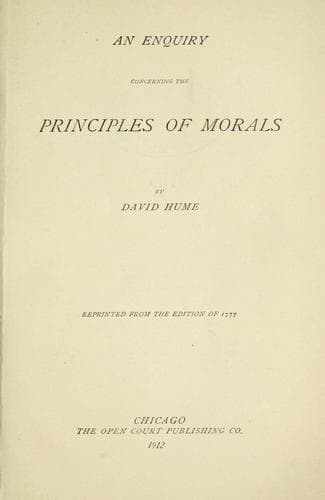
An Enquiry Concerning the Principles of Morals — John Shaqi
An Enquiry Concerning the Principles of MoralsHume, David
PhilosophyPhilosophy
An Enquiry Concerning the Principles of Morals
Hume, David
Conduct of life; Ethics
The end of all moral speculations is to teach us our duty; and, by
proper representations of the deformity of vice and beauty of virtue,
beget correspondent habits, and engage us to avoid the one, and
embrace the other. But is this ever to be expected from inferences and
conclusions of the understanding, which of themselves have no hold of
the affections or set in motion the active powers of men? They discover
truths: but where the truths which they discover are indifferent, and
beget no desire or aversion, they can have no influence on conduct and
behaviour. What is honourable, what is fair, what is becoming, what is
noble, what is generous, takes possession of the heart, and animates us
to embrace and maintain it. What is intelligible, what is evident,
what is probable, what is true, procures only the cool assent of the
understanding; and gratifying a speculative curiosity, puts an end to
our researches.
Extinguish all the warm feelings and prepossessions in favour of virtue,
and all disgust or aversion to vice: render men totally indifferent
towards these distinctions; and morality is no longer a practical study,
nor has any tendency to regulate our lives and actions.
These arguments on each side (and many more might be produced) are so
plausible, that I am apt to suspect, they may, the one as well as the
other, be solid and satisfactory, and that reason and sentiment concur
in almost all moral determinations and conclusions. The final sentence,
it is probable, which pronounces characters and actions amiable or
odious, praise-worthy or blameable; that which stamps on them the mark
of honour or infamy, approbation or censure; that which renders morality
an active principle and constitutes virtue our happiness, and vice our
misery; it is probable, I say, that this final sentence depends on some
internal sense or feeling, which nature has made universal in the whole
species. For what else can have an influence of this nature? But
in order to pave the way for such a sentiment, and give a proper
discernment of its object, it is often necessary, we find, that
much reasoning should precede, that nice distinctions be made, just
conclusions drawn, distant comparisons formed, complicated relations
examined, and general facts fixed and ascertained. Some species of
beauty, especially the natural kinds, on their first appearance, command
our affection and approbation; and where they fail of this effect, it is
impossible for any reasoning to redress their influence, or adapt
them better to our taste and sentiment. But in many orders of beauty,
particularly those of the finer arts, it is requisite to employ much
reasoning, in order to feel the proper sentiment; and a false relish
may frequently be corrected by argument and reflection. There are just
grounds to conclude, that moral beauty partakes much of this latter
species, and demands the assistance of our intellectual faculties, in
order to give it a suitable influence on the human mind.
Public-domain text, read in full here on John Shaqi.
Reviews
Reviews
No reviews yet
Be the first to share your thoughts on this work.
Join the Discussion
Join the discussion
Sign in to leave a comment or review.
Sign InorCreate an account