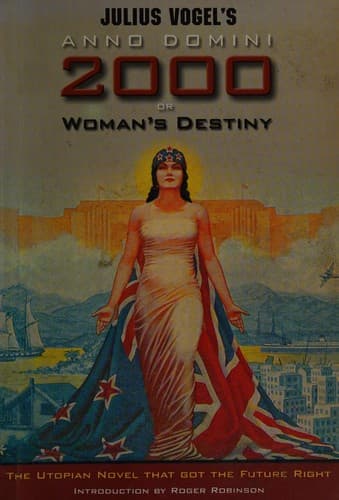
Anno Domini 2000; or, Woman's DestinyVogel, Julius, Sir
Science
Anno Domini 2000; or, Woman's Destiny
Vogel, Julius, Sir
Feminist fiction; New Zealand -- Fiction; Two thousand, A.D. -- Fiction; Utopian fiction; Utopias -- Fiction; Women -- Fiction
"I think that there is a great deal to be said on both sides, and this
is constantly the case with important controversies. Between the metal
and the flint the spark of truth is struck. I should think it no
disgrace to be defeated on a subject about which we could show good
cause. I might even come to think that better cause had been shown
against us after the discussion was over; but to flee the discussion, to
sacrifice conviction to expediency--that would be disgraceful."
"Then," said Mrs. Hardinge, with some interest, "if the Emperor were to
ask your opinion, you would try to persuade him to our side?"
"Yes and no. I would urge strongly my sense of the question and my
opinion that it is better to settle at once a controversy about which
there is so much difference of opinion. But I should respect his views;
and if they were conscientious, I should not dare to advise him to
sacrifice them."
An interruption unexpected by Miss Fitzherbert, but apparently not
surprising to Mrs. Hardinge, occurred. An aide-de-camp of the Emperor
entered. After bowing low to the ladies, he briefly said, "His Imperial
Majesty desires the presence of Miss Fitzherbert."
A summons so unusual raised a flush to the girl's cheek. She looked at
Mrs. Hardinge.
"I had intended to tell you," said that lady, "that the Emperor
mentioned he would like to speak to you on the subject we have been
considering." Then, turning to the aide-de-camp, she said, "Miss
Fitzherbert will immediately wait on his Majesty."
The officer left the room.
Hilda archly turned to Mrs. Hardinge. "So, dear mamma, you were
preparing me for this interview?"
"Dear child," said the elder lady, "you want no preparation. Whatever
the consequences to me, I will not ask you to put any restraint on the
expression of your opinions."
FOOTNOTE:
[A] Every adult of eighteen years of age was allowed to vote and was
consequently, by the laws of the Empire, eligible for election.
CHAPTER II.
THE EMPEROR AND HILDA FITZHERBERT.
The Emperor received Miss Fitzherbert with a cordial grace, infinitely
pleasing and flattering to that young lady. She of course had often seen
his Majesty at Court functions, but never before had he summoned her to
a separate audience. And indeed, high though her official position and
reputation were, she did not hold Cabinet rank; and a special audience
was a rare compliment, such as perhaps no one in her position had ever
previously enjoyed.
Public-domain text, read in full here on John Shaqi.
Reviews
Reviews
No reviews yet
Be the first to share your thoughts on this work.
Join the Discussion
Join the discussion
Sign in to leave a comment or review.
Sign InorCreate an account