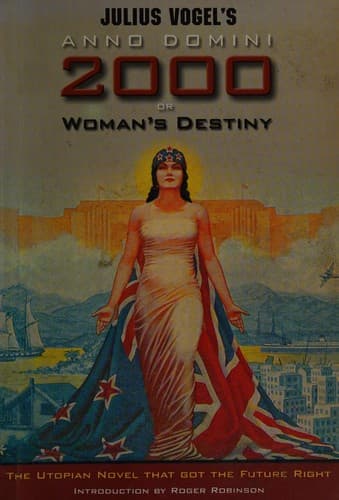
Anno Domini 2000; or, Woman's DestinyVogel, Julius, Sir
Science
Anno Domini 2000; or, Woman's Destiny
Vogel, Julius, Sir
Feminist fiction; New Zealand -- Fiction; Two thousand, A.D. -- Fiction; Utopian fiction; Utopias -- Fiction; Women -- Fiction
Time has passed. There have been many alterations, few of an extreme
character. The changes are mostly the results of gradual developments
worked out by the natural progress of natural laws. But as constant
dropping wears away a stone, constant progression, comparatively
imperceptible in its course, attains to immense distances after the
lapse of time. This applies though the momentum continually increases
the rate of the progress. Thus the well-being of the human kind has
undoubtedly increased much more largely during the period between 1900
and 2000 than during the previous century, but equally in either century
would it be difficult to select any five years as an example of the
turning-point of advancement. Progression, progression, always
progression, has been the history of the centuries since the birth of
Christ. Doubtless the century we have now entered on will be yet more
fruitful of human advancement than any of its predecessors. The
strongest point of the century which
"Has gone, with its thorns and its roses,
With the dust of dead ages to mix,"
has been the astonishing improvement of the condition of mankind and the
no less striking advancement of the intellectual power of woman.
The barriers which man in his own interest set to the occupation of
woman having once been broken down, the progress of woman in all
pursuits requiring judgment and intellect has been continuous; and the
sum of that progress is enormous. It has, in fact, come to be accepted
that the bodily power is greater in man, and the mental power larger in
woman. So to speak, woman has become the guiding, man the executive,
force of the world. Progress has necessarily become greater because it
is found that women bring to the aid of more subtle intellectual
capabilities faculties of imagination that are the necessary adjuncts of
improvement. The arts and caprices which in old days were called
feminine proved to be the silken chains fastened by men on women to lull
them into inaction. Without abating any of their charms, women have long
ceased to submit to be the playthings of men. They lead men, as of yore,
but not so much through the fancy or the senses as through the
legitimate consciousness of the man that in following woman's guidance
he is tending to higher purposes. We are generalising of course to a
certain extent. The variable extent of women's influence is now, as it
has been throughout the ages past, the point on which most of the dramas
of the human race depend.
Public-domain text, read in full here on John Shaqi.
Reviews
Reviews
No reviews yet
Be the first to share your thoughts on this work.
Join the Discussion
Join the discussion
Sign in to leave a comment or review.
Sign InorCreate an account