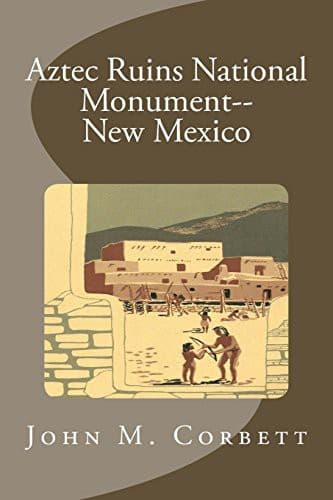
Aztec Ruins National Monument, New MexicoCorbett, John M. (John Maxwell)
History
Aztec Ruins National Monument, New Mexico
Corbett, John M. (John Maxwell)
Aztec Ruins National Monument (N.M.)
A newer style of pottery, reminiscent of the Mesa Verde-type pottery,
was prevalent. The majority of burials found within the ruins, 149 out
of a total of 186, seemed to belong to a different period as shown by
the type of artifacts associated with them. T-shaped doorways, an
architectural trait characteristic of Mesa Verde times, was prevalent in
the later parts of the pueblo. Keyhole-shaped kivas, another Mesa Verde
trait, were inserted into and between rooms of the earlier period. And
finally, the Great Kiva in the central plaza, which had fallen into
disuse, was rehabilitated—in a much poorer style of construction,
surely, but nonetheless obviously repaired and temporarily put back into
use.
These factors inclined Morris to feel that some time after A.D. 1124 the
pueblo at Aztec was abandoned by the Chacoan builders. Then about 1225,
a new group arrived, bringing with them the general styles and culture
of the area we know as Mesa Verde.
As with the earlier occupation at Aztec, we do not know exactly who
these second people were or exactly where they came from, although it is
obvious that they had a close affiliation with the people of the Mesa
Verde area. Nor do we know if they were a large group, representing a
mass migration, or whether once again some of the local population may
have decided to attempt building a large community. Perhaps for a second
time a few people, possessing special abilities or representing a
religious organization, prevailed upon either the local population of
the Animas Valley or wandering migrant groups to assist them in erecting
large community structures.
We do know that at about this time there was a considerable population
shift all over the Mesa Verde area. The people were dispersing from
their normal habitats and moving into more protected locations or
consolidating into larger, more defensible units. In the Mesa Verde
itself, for example, they were abandoning their mesatop pueblos and
crowding together in the caves or moving out of the area entirely. In
the Hovenweep area, they retreated to the heads of the canyons and built
watchtowers along the canyon sides and bottoms to protect their
dwindling water supplies. It was evidently a period of considerable
strife and turmoil. There were short periods of recurrent drought, and
possibly many of these groups had begun to fight among themselves over
land and water rights and other necessities of life.
[Illustration: Cobblestone walls at Aztec Ruins.]
Public-domain text, read in full here on John Shaqi.
Reviews
Reviews
No reviews yet
Be the first to share your thoughts on this work.
Join the Discussion
Join the discussion
Sign in to leave a comment or review.
Sign InorCreate an account