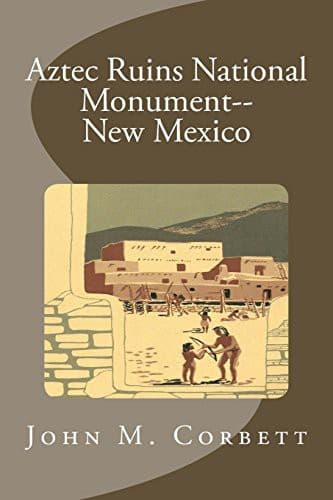
Aztec Ruins National Monument, New MexicoCorbett, John M. (John Maxwell)
History
Aztec Ruins National Monument, New Mexico
Corbett, John M. (John Maxwell)
Aztec Ruins National Monument (N.M.)
As the glaciers disappeared and the climate became warmer, the lakes,
swamps, and lagoons gradually dried up, the grasslands became
desiccated, the hardwoods disappeared from the valley bottoms. Small
regional differences in climate, sometimes due to altitude, left some
areas more desirable than others. Large mammals disappeared entirely,
and the hunting and gathering people had to turn to smaller types of
game such as elk, deer, rabbit, bear, and rodents. No doubt wild edible
plants, berries, fruits, nuts, and even roots were gathered and eaten.
In the Four Corners country, however, evidence for occupation by man
during the Altithermal (or second post-glacial period) is almost
entirely lacking. This was an exceptionally dry period, and few if any
people could live there. It wasn’t until the climate became wetter and
cooler again, more like it is today, that man once again inhabited the
Four Corners area in any great numbers.
THE BASKETMAKERS.
About the time of Christ, in some parts perhaps even earlier, small
bands of Indians entered the Four Corners country. It is possible that a
few small groups of wandering hunters and gatherers who had survived the
Altithermal were already living there, but the archeological evidence
for their presence is very scanty. Under the impetus of new ideas, such
as agriculture, these people may have been slowly settling down to
become farmers.
Or possibly under the pressure of expanding populations elsewhere,
groups seeking new lands suitable for agriculture moved into the area
and either amalgamated with, or drove out, any local groups. If so, we
do not know exactly where these people came from. Perhaps they came from
the south, around the Mogollon Rim country of New Mexico where there is
evidence that even earlier an agriculturally-based sedentary population
had developed. Corn had been known in parts of the Southwest for a
considerable time. (At Bat Cave in New Mexico, archeologists have
uncovered a primitive type of corn which was grown at least several
thousand years before the birth of Christ.)
Only with an assured food supply, part of which can be stored against
bad years, can a group find time to devote its energies to the arts and
to the development of greater skill in crafts. The idea of agriculture
must have spread slowly, for it forced a radical change in the living
habits of those who practiced it, compared to their old subsistence
pattern of hunting and gathering. At first, the hunting group would
regard this new plant as just another seed crop—to be gathered when it
was ripe. They dumped the seed in the ground and went on about their
business; when it ripened they returned to harvest the crop, much as
they went each year to harvest the pinyon crop when it was ripe.
Public-domain text, read in full here on John Shaqi.
Reviews
Reviews
No reviews yet
Be the first to share your thoughts on this work.
Join the Discussion
Join the discussion
Sign in to leave a comment or review.
Sign InorCreate an account